
Antihistamine Overdose Risk Calculator
Determine Your Risk Level
When someone takes too much of an antihistamine, the clock starts ticking. It’s not just about feeling drowsy - it’s about your heart, your breathing, and whether you’ll make it through the next few hours. Antihistamine overdose is more common than most people think, especially in kids who grab bottles left on nightstands or in purses. In 2022, over 5.7% of all pediatric poisonings in the U.S. involved antihistamines, and diphenhydramine - the active ingredient in Benadryl - was behind 83% of the serious cases. The good news? With the right first steps, survival rates are nearly 100%. The bad news? Waiting for symptoms to show up can be deadly.
What Happens When You Take Too Much?
Not all antihistamines are the same. First-generation ones like diphenhydramine, chlorpheniramine, and promethazine cross the blood-brain barrier and block acetylcholine - a key brain chemical. This causes anticholinergic syndrome: dry mouth, blurred vision, flushed skin, racing heart, trouble peeing, and confusion. In high doses, they also block sodium channels in the heart, which can widen the QRS complex on an EKG. When that number goes past 100 milliseconds, you’re at risk for dangerous arrhythmias. In extreme cases, the heart can stop. Second-generation antihistamines like cetirizine, loratadine, and fexofenadine don’t usually cause these problems. They’re designed not to enter the brain, so even big doses mostly cause mild dizziness or a fast heartbeat. But if someone swallows 10 times the normal dose - say, 100 mg of cetirizine - they can still need emergency care. The risk isn’t zero, but it’s far lower.The First Thing You Must Do: Call Poison Control
Do not wait. Do not Google symptoms. Do not try to make the person throw up. The single most important action is calling 1-800-222-1222 in the U.S. Poison control centers have toxicology experts on standby 24/7, and they’ve handled over 2 million calls in 2022 alone. They’ll ask for the medication name, how much was taken, the person’s weight, and their age. That’s enough to tell you whether to rush to the ER or stay home and watch closely. For example, if a 5-year-old weighing 18 kg swallows 50 mg of diphenhydramine, that’s 2.8 mg/kg - under the 7.5 mg/kg threshold for home observation. But if a 150-pound adult takes 400 mg? That’s over 5 times the maximum single dose. That’s an emergency.What to Do While Waiting for Help
If the person swallowed the pills:- Remove any remaining pills or liquid from their mouth.
- Keep them awake and sitting up if possible.
- Do NOT induce vomiting - it increases the risk of choking, especially if they’re drowsy.
- Collect all medication bottles. Emergency teams need to know exactly what was taken - brand names, strengths, and whether it was a combo product like NyQuil or Advil PM.
- Rinse the area with cool water for 15 to 20 minutes.
- Flush with clean water for at least 20 minutes, holding the eyelids open.
What Happens in the Emergency Room
Once at the hospital, the team will check vital signs and do an EKG. If the QRS complex is wider than 100 milliseconds, they’ll start monitoring continuously. For adults who took more than 300 mg of diphenhydramine, or any child with signs of toxicity, they’ll admit for at least 24 hours. Activated charcoal is given within 1-2 hours of ingestion - 50 grams for adults, 1 gram per kilogram for kids. It binds the drug in the gut and stops more from being absorbed. But after two hours, it’s usually not helpful. If the heart rate is over 120 bpm and QRS is wider than 120 milliseconds, doctors may give sodium bicarbonate - an IV solution that helps normalize the heart’s electrical activity. A 2022 study in the New England Journal of Medicine showed it can shrink a widened QRS in minutes. Agitation, hallucinations, or seizures? They’ll give benzodiazepines like lorazepam or midazolam. These calm the nervous system. They’re safer than older drugs like physostigmine, which can trigger dangerous heart rhythms. Don’t expect dialysis or urine acidification. Antihistamines are 70-95% bound to proteins in the blood and stored deep in fat tissue. Your kidneys can’t flush them out fast enough.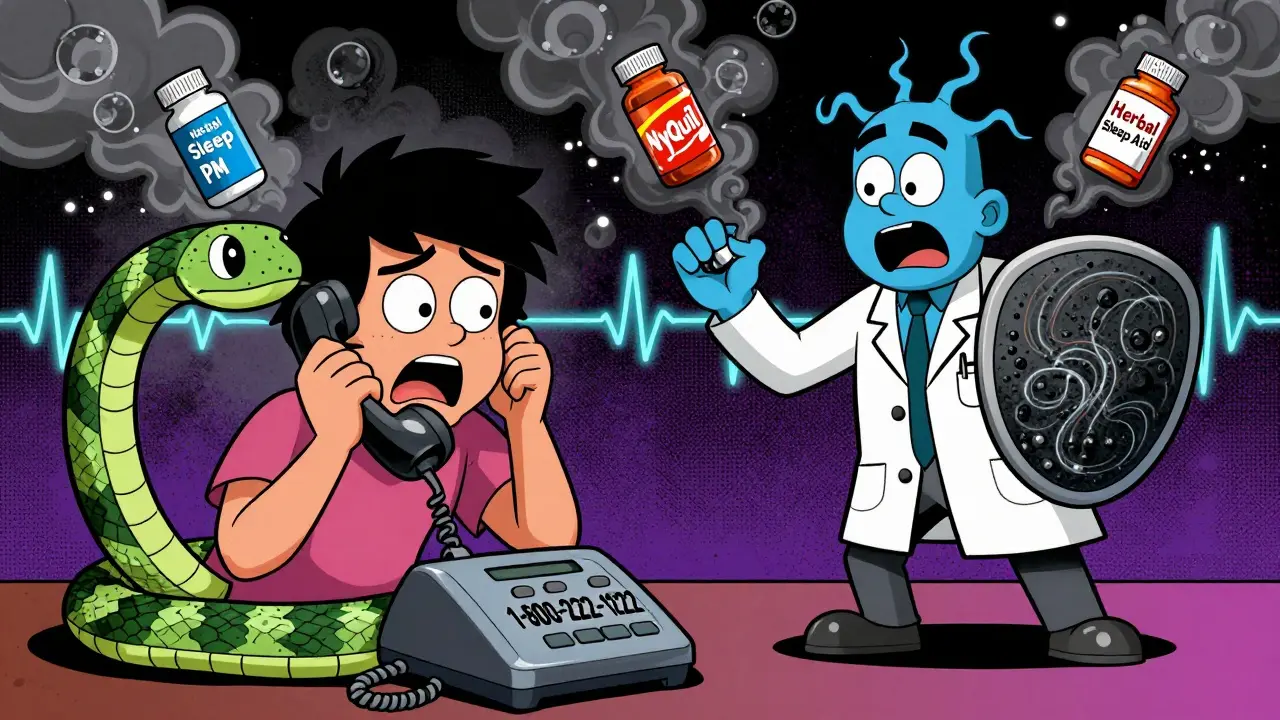
Why Some Antihistamines Are Far More Dangerous
Diphenhydramine is the big offender. It’s cheap, widely available, and many people think it’s harmless because it’s sold over the counter. But it’s also one of the most toxic. In 2022, IMS Health data showed diphenhydramine caused 62% of serious overdoses, even though it only made up 28% of total antihistamine sales. Why? Because people use it as a sleep aid, for allergies, or even to get high. A single tablet is 25 mg. Taking 8-10 at once is not uncommon - and that’s enough to crash the heart. Promethazine, found in many cough syrups, is especially dangerous in infants. The FDA banned its use in children under 2 in 2006 after linking it to sudden infant death. Even a teaspoon can be fatal. Cetirizine and loratadine? Much safer. A 2020 study of 9,000 pediatric cases found only 0.2% of second-gen overdoses led to hospitalization, compared to 1.8% for first-gen. Still, don’t assume they’re harmless. Massive doses can cause QT prolongation - another heart rhythm risk.Common Mistakes That Make Things Worse
Parents often double-dose liquid antihistamines because the dosing cups are confusing. The AAPCC found 42% of pediatric exposures come from dosing errors. Using a kitchen spoon instead of the provided syringe? That’s a recipe for trouble. Some people think “natural” allergy remedies are safe. But in 2023, poison centers started seeing cases where “herbal” supplements contained hidden diphenhydramine. No label. No warning. Just a lethal surprise. And then there’s the myth that vomiting helps. It doesn’t. It can cause aspiration - when vomit gets into the lungs - which is far more dangerous than the overdose itself.How Long Should You Be Watched?
Symptoms usually start within 30 minutes to 2 hours. Peak toxicity hits between 4 and 6 hours. That’s why hospitals observe patients for at least 6 hours - or until they’re completely symptom-free. For mild cases, home observation may be enough, but only if poison control says so. In the hospital, the average stay is 22.7 hours. That’s because heart rhythms can go haywire even after the person seems fine. One false sense of security can cost a life.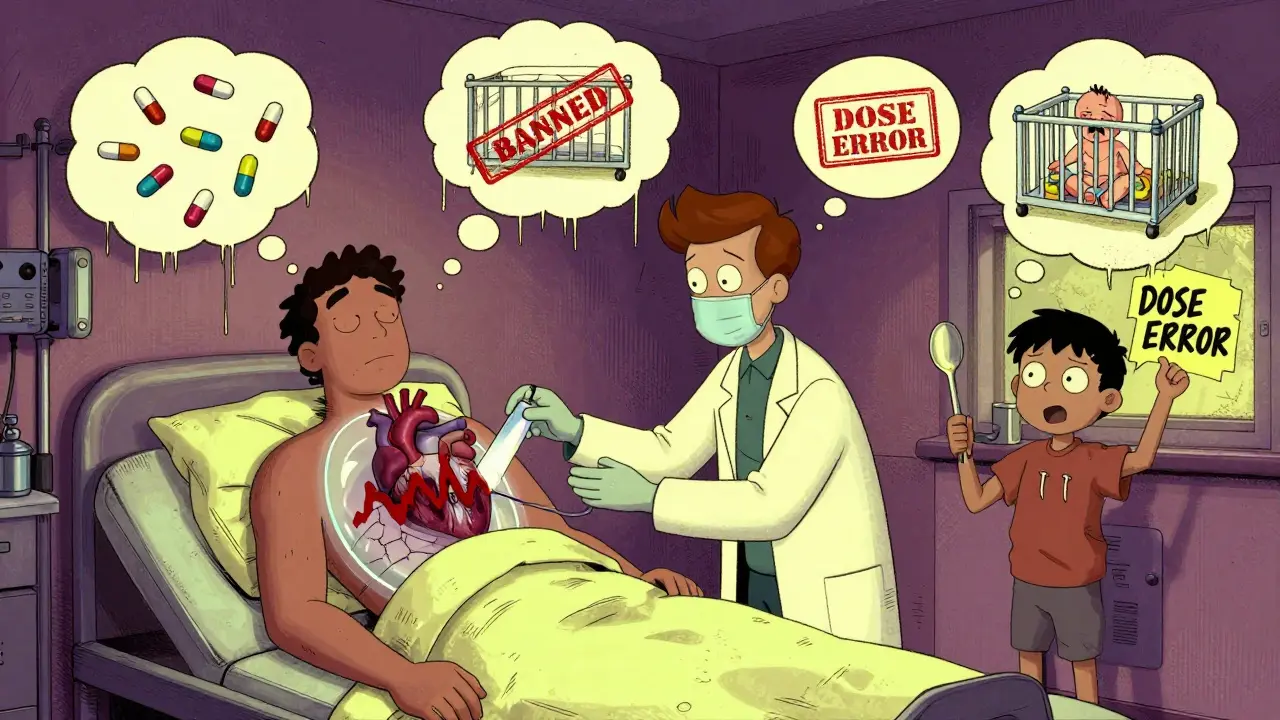
How to Prevent This From Happening
- Keep all medications locked up - not just in cabinets, but in childproof containers. - Never use antihistamines to sedate a child. Even one tablet can cause respiratory depression. - Read labels. Many cold and sleep medicines contain antihistamines. Don’t combine them. - Use the dosing tool that comes with the bottle - never a spoon. - Teach older kids that “sleep aids” aren’t candy. Only 38% of parents know when to call for help after a medication overdose. That’s why education matters. A single moment of awareness - calling poison control instead of waiting - can save a child’s life.What to Do After the Emergency
Even if the person recovers fully, follow up. Antihistamine overdose can be a sign of deeper issues - especially in teens or adults who intentionally overdosed. Mental health support, medication safety training, and home safety checks are just as important as the ER visit. And if you’ve ever thought, “It’s just Benadryl,” think again. It’s not. It’s a powerful drug with a narrow safety margin. Treat it like any other prescription - because it can kill just as fast.Can you die from an antihistamine overdose?
Yes, but it’s rare with prompt treatment. Death usually happens when people delay care, especially with first-generation antihistamines like diphenhydramine. Cardiac arrest from QRS widening or respiratory failure can occur within hours. Survival rates jump to 99.9% when medical help is received within the first 6 hours.
Is it safe to give activated charcoal at home?
No. Activated charcoal should only be given under medical supervision. Giving it incorrectly can cause choking, especially if the person is drowsy or unconscious. Poison control will tell you if it’s appropriate - never self-administer.
How do I know if it’s an antihistamine overdose or something else?
Symptoms like dry mouth, flushed skin, fast heartbeat, confusion, and trouble urinating point to anticholinergic toxicity. But these can look like tricyclic antidepressant overdose, serotonin syndrome, or even a stroke. Only a doctor can tell for sure - that’s why EKGs and lab tests are essential. Never guess.
Can second-generation antihistamines like Zyrtec cause overdose?
Yes, but it’s rare and usually less severe. Massive overdoses (over 10 times the dose) can cause dizziness, fast heart rate, or QT prolongation. Unlike diphenhydramine, they rarely cause seizures, coma, or cardiac arrest. Still, any overdose needs medical evaluation.
What should I do if my child ate a whole bottle of children’s Benadryl?
Call poison control immediately at 1-800-222-1222. Do not wait for symptoms. Even if your child seems fine, they may develop dangerous heart rhythm changes hours later. Bring the bottle to the ER. The dose per kilogram will determine if they need to be monitored or can go home.
Why can’t they just pump the stomach or use dialysis?
Antihistamines bind tightly to proteins in the blood and spread into fatty tissues. Stomach pumping is ineffective after 1-2 hours, and dialysis doesn’t work because the drug isn’t free in the bloodstream - it’s locked up. The body has to metabolize it naturally, which takes time. That’s why supportive care and monitoring are the only proven treatments.
Sandeep Jain
December 27, 2025 AT 03:02man i just read this and my heart dropped. my cousin did this last year-thought benadryl was just for sleep, took 12 pills ‘cause he was stressed. got lucky, called poison control right away. they told him to sit tight, don’t puke, just wait. EMS showed up in 12 mins. he’s fine now, but dude, i’m locking all meds in my house from now on. #neveragain
roger dalomba
December 28, 2025 AT 23:45Wow. A whole article about something that’s literally in every drugstore aisle. Next you’ll tell us oxygen can kill you if you inhale too much. Maybe we should all just stop breathing.
Brittany Fuhs
December 29, 2025 AT 18:13As an American who actually reads labels, i’m ashamed. How is this even a topic? We’ve had childproof caps since the 70s. If your kid gets into medicine, maybe don’t leave it on the nightstand like a candy dish. Also, why is this on reddit? This belongs in a medical journal. Or a parenting class. Not here.
Sophia Daniels
December 30, 2025 AT 08:49OH MY GOD. I just read this and i’m literally shaking. Diphenhydramine is the silent killer hiding in your medicine cabinet like a villain in a horror movie. 🤯 I had no idea a single bottle could be a death sentence. My sister used to take 4 Benadryl to chill out-she’s lucky she’s alive. I just threw out every single OTC sleep aid in my house. No more ‘just a little help’ nonsense. This isn’t a snack. It’s a grenade with the pin pulled.
Nikki Brown
December 31, 2025 AT 08:15People who use antihistamines as sleep aids are just lazy. If you can’t sleep without a drug, you need therapy, not a chemical crutch. And don’t get me started on parents who think ‘it’s just Benadryl’-you’re not a responsible adult if you don’t know the risks. 😔
Steven Destiny
January 1, 2026 AT 17:45THIS IS THE MOST IMPORTANT POST I’VE READ THIS YEAR. STOP WAITING. STOP GOOGLEING. CALL POISON CONTROL. RIGHT NOW. IF YOU’RE READING THIS AND YOU HAVE MEDS IN YOUR HOUSE, LOCK THEM UP. TODAY. I’M NOT ASKING. I’M TELLING YOU. YOU COULD BE SAVING A LIFE.
Erwin Asilom
January 3, 2026 AT 00:59Good breakdown. I’m an ER nurse and this is exactly what we see. The biggest mistake? People waiting. The second biggest? Trying to make them vomit. I’ve seen kids nearly die from aspiration because someone followed an old wives’ tale. Poison control is your best friend. Keep the number saved. Share it. Save a life.
Sumler Luu
January 4, 2026 AT 05:37Thank you for writing this. I’m a mom of two, and I used to keep Benadryl on the counter ‘just in case.’ Not anymore. I’ve locked everything up, bought childproof containers, and even put up a little sign on the cabinet: ‘This isn’t candy.’ I hope others do the same.