
When you hear the word biosimilar, you might think it’s just a cheaper version of a biologic drug-like a generic pill but for complex proteins. But here’s the catch: biosimilars aren’t copies. They’re not identical. And that tiny difference-so small it’s invisible to the naked eye-can trigger your immune system in ways the original drug never did.
What Makes Biosimilars Different from Generics?
Think of a generic aspirin. It’s the same chemical compound, made in a lab using the same formula, down to the last atom. That’s why a generic aspirin works just like the brand name. But biologics? They’re made from living cells-human or animal-grown in bioreactors. Even two batches of the same reference drug made by the same company can vary slightly. Now imagine a different company tries to replicate it. They use different cell lines, different growth conditions, different purification methods. The result? A product that’s highly similar, but not identical. That’s where immunogenicity comes in. It’s not about whether the drug works. It’s about whether your body sees it as a threat.How Your Body Reacts to a Foreign Protein
Your immune system is always scanning for things that don’t belong. Viruses, bacteria, even pollen. But it also reacts to proteins that look just a little off. Biologics are large, complex proteins-sometimes over 150,000 atoms. Even a tiny change in how sugars are attached (glycosylation), or how the protein folds, can create new spots on the surface that your immune system recognizes as foreign. These spots are called epitopes. When that happens, your body starts making anti-drug antibodies (ADAs). These aren’t bad by themselves. But if they’re neutralizing antibodies (NAbs), they can block the drug from working. In rare cases, they can cause serious reactions-like anaphylaxis. That’s what happened with cetuximab, where a sugar molecule on the drug triggered IgE-mediated allergic shock in some patients. Biosimilars don’t cause this more often than the original-but they can. And that’s the question every regulator, doctor, and patient needs to ask: Could this version trigger a different immune response?Why the Differences Happen
It’s not just one thing. It’s a mix of factors. First, the manufacturing process. Most biologics are made in Chinese hamster ovary (CHO) cells. But one company might grow them at 37°C, another at 36.5°C. Temperature affects how sugars are added to the protein. A small shift in sialic acid or galactose levels-just 5-10%-can change how the immune system sees the drug. One study found that protein aggregates over 5% in mass increased ADA risk by more than three times. Even tiny impurities-host cell proteins left behind from manufacturing-can act like immune alarms. If there’s more than 100 parts per million, ADA rates jump by 87%. Then there’s the formulation. One biosimilar version of rituximab uses polysorbate 80 as a stabilizer. The original uses polysorbate 20. Sounds minor? Maybe. But these surfactants can affect how the protein behaves in solution. If it starts clumping, your immune system notices. And don’t forget how you get the drug. Injecting it under your skin (subcutaneous) is more likely to cause an immune reaction than giving it through an IV. Why? Because your skin is full of immune cells. Every time you get a shot, your body is being exposed to the protein in a way that’s more likely to trigger a response. Studies show subcutaneous delivery increases immunogenicity risk by 30-50% compared to IV.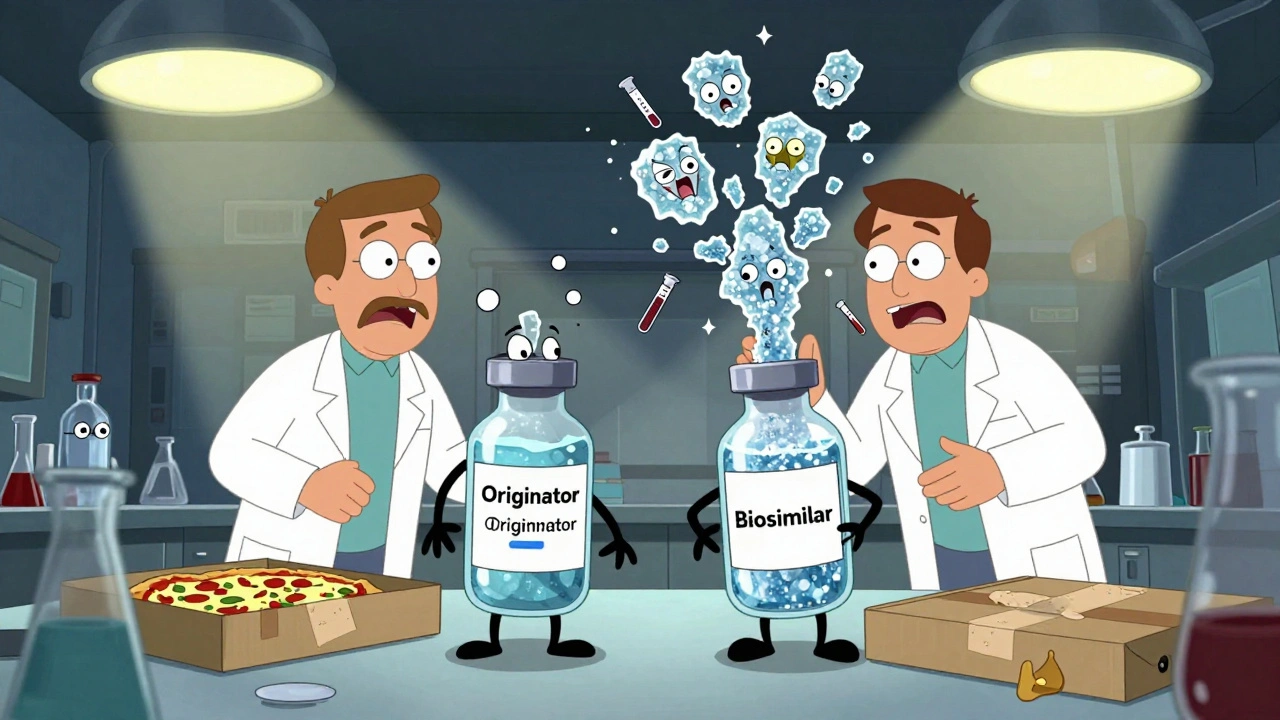
Who’s Most at Risk?
Not everyone reacts the same way. Your genetics matter. If you carry the HLA-DRB1*04:01 gene variant, you’re nearly five times more likely to develop ADAs to certain biologics. Your disease state matters too. People with rheumatoid arthritis have 2.3 times higher risk than healthy volunteers. Why? Their immune systems are already turned up. They’re primed to react. Age, other medications, and how long you’ve been on treatment also play a role. Methotrexate, a common rheumatoid arthritis drug, cuts ADA rates by 65% when used with TNF inhibitors. That’s why doctors often prescribe them together. Chronic use also increases risk. After six months, your body may start breaking tolerance. It’s not that the drug changed. It’s that your immune system learned to see it as a problem.What Does the Evidence Say?
Real-world data gives mixed signals. The NOR-SWITCH trial in 2016 followed 481 patients who switched from originator infliximab to its biosimilar. The biosimilar group had slightly higher ADA rates-11.2% versus 8.5%. But here’s the key: no difference in clinical outcomes. No more flare-ups. No more hospital visits. A 2021 study of 1,247 rheumatoid arthritis patients found almost identical ADA rates: 12.3% for the original, 11.8% for the biosimilar. No statistical difference. But then there’s the Danish registry. For adalimumab, the biosimilar Amgevita had a 23.4% ADA rate versus 18.7% for Humira. That’s a real difference. And yet, both groups had similar disease control. Patients on Reddit report both sides. One person had severe injection site reactions after switching to a biosimilar etanercept. Another switched between originator and biosimilar rituximab for three years and noticed zero difference. So what’s the truth? Most of the time, biosimilars perform just like the original. But sometimes, they don’t-and we don’t always know why.How Do We Measure This?
Testing for ADAs isn’t simple. There are different methods. Some labs use electrochemiluminescence (ECL) assays. Others use ELISA. ECL is more sensitive-it can detect ADA rates as high as 13.1%. ELISA might only catch 6%. If one study uses ECL and another uses ELISA, you’re not comparing apples to apples. You’re comparing apples to oranges. Regulators know this. The EMA requires head-to-head testing with identical methods. The FDA insists on parallel or crossover trials using the same assays. But not all studies follow this. And when they don’t, you get confusing results. Neutralizing antibodies are even trickier to measure. Cell-based assays are the gold standard because they show if the antibody actually blocks the drug’s function. But they’re messy. Their precision can vary by 25-30%. Ligand-binding assays are more precise but might miss functional effects. The bottom line: if you’re comparing immunogenicity, you need to use the same test, on the same population, under the same conditions. Otherwise, you’re not measuring the drug-you’re measuring the method.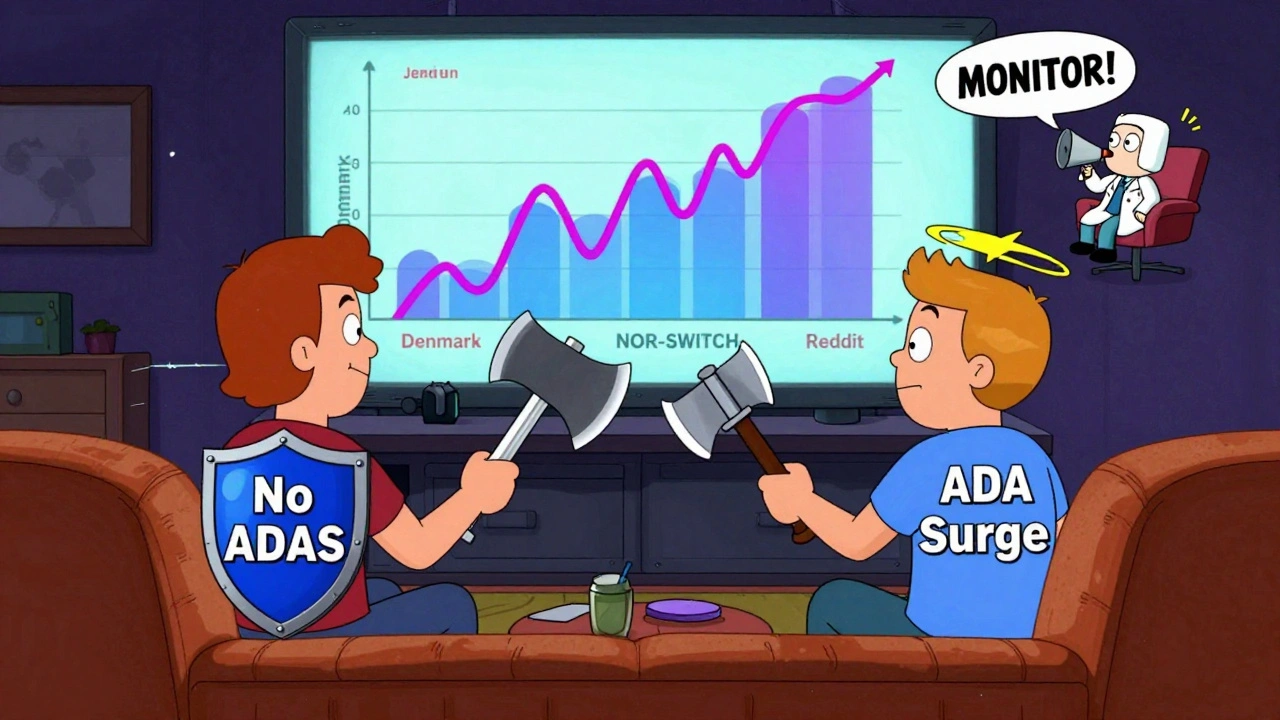
What’s Changing Now?
The field is moving fast. Advanced mass spectrometry is now able to map protein structures with 99.5% accuracy. By 2027, we’ll be able to see glycosylation patterns down to the individual sugar molecule. That means manufacturers won’t just guess if their biosimilar is similar-they’ll know. Some labs are already using multi-omics: combining proteomics, glycomics, and immunomics to predict immune risk before a single patient even gets the drug. The University of California, San Francisco is running trials using these tools to screen patients for genetic risk factors before they start treatment. And regulators are catching up. The FDA’s “totality of evidence” approach means biosimilar makers must prove similarity across every layer: analytical, functional, animal, and clinical. Immunogenicity isn’t an afterthought anymore. It’s a core requirement.Should You Worry?
If you’re on a biologic and your doctor suggests switching to a biosimilar, here’s what you need to know: - For most people, the switch is safe. The data supports it. - If you’ve had no side effects so far, you’re unlikely to develop new ones. - If you’ve had allergic reactions or high ADA levels before, talk to your doctor. Your risk profile might be different. - If you’re switching because of cost, know that the savings are real-and the safety record is strong. The fear of immunogenicity is real. But the evidence shows it’s often overblown. The American College of Rheumatology found that 68% of rheumatologists believe immunogenicity concerns are exaggerated. Only 22% have seen a clinically meaningful difference in practice. Still, we can’t ignore the outliers. One patient. One reaction. One unexpected flare-up. That’s why monitoring matters. If you start feeling worse after a switch-more fatigue, more pain, more injection site redness-tell your doctor. Get tested for ADAs. It’s not paranoia. It’s vigilance.The Future Is Clearer Than Ever
Biosimilars aren’t perfect. But they’re getting closer. The global market is growing fast-from $2.1 billion in 2017 to $10.5 billion in 2022. By 2028, it could hit $34.5 billion. More patients are getting access. More doctors are prescribing. More insurers are covering. The science is catching up too. We’re moving from asking, “Is it similar?” to asking, “How similar, and for whom?” Immunogenicity won’t disappear. But with better tools, better data, and better testing, we’ll know when it matters-and when it doesn’t.For now, the message is simple: biosimilars are safe for most people. But biology is never simple. And that’s why we keep asking the question: Why do responses differ? Because sometimes, the smallest difference makes the biggest impact.
Adam Everitt
December 12, 2025 AT 21:04so biosimilars are like that one friend who looks exactly like your ex but somehow makes you feel weird every time you see them? not the same, but close enough to trigger all the memories. i dont know why, but my body just… reacts. like, why does my immune system have trust issues?
wendy b
December 14, 2025 AT 02:08Actually, the notion that biosimilars are ‘not identical’ is a gross oversimplification. The EMA and FDA require analytical similarity across hundreds of parameters-structural conformation, post-translational modifications, impurity profiles. To claim immunogenicity is somehow ‘unpredictable’ ignores the rigorous comparability protocols. It’s not magic-it’s science. And yes, glycosylation patterns are monitored to the single-sugar level now. Stop fearmongering.
Ashley Skipp
December 15, 2025 AT 18:45people are so scared of biosimilars but they’ll take a random supplement from Amazon with no regulation. funny how that works. your body doesn’t care if it’s branded or not. if it works and doesn’t kill you stop overthinking it
Nathan Fatal
December 17, 2025 AT 12:01There’s a critical point here that’s often missed: immunogenicity isn’t about the drug being different-it’s about the immune system’s context. The same biosimilar can trigger ADA in a patient with active inflammation but remain inert in a clinically quiescent one. That’s why we need personalized monitoring, not blanket bans or blanket approvals. It’s not the molecule-it’s the milieu.
Robert Webb
December 18, 2025 AT 16:18Let’s not forget that even the reference biologic isn’t perfectly consistent batch to batch. The manufacturing process for biologics is inherently variable-it’s biology, not chemistry. So when we say ‘biosimilar,’ we’re really saying ‘similar enough to meet a predefined similarity margin.’ The real question isn’t whether they’re identical-it’s whether the differences matter clinically. And for the vast majority, they don’t. The data from NOR-SWITCH and other real-world studies prove that. We’re overcomplicating a solution that’s already working for millions.
nikki yamashita
December 20, 2025 AT 16:12switching to biosimilar = less stress on my wallet and same results. win win. my body didn’t notice a thing. if you’re feeling off after the switch, talk to your doc-not the internet. 💪
Donna Anderson
December 21, 2025 AT 20:30i switched to the biosimilar and my skin got super itchy for like 2 days then it was fine. i thought it was the end of the world but turns out it was just my body adjusting. dont panic. just watch. its fine
Levi Cooper
December 22, 2025 AT 03:36they’re trying to trick us. why would a company outside the US make a drug that’s ‘similar’ but not the same? it’s a ploy to lower quality and save money. you think they care about your health? they care about profit. and now you’re the guinea pig.
sandeep sanigarapu
December 22, 2025 AT 22:43in india, biosimilars have saved thousands from financial ruin. the science is sound. the regulatory standards are strict. if a patient has no prior reaction, switching is safe. fear comes from ignorance, not evidence.
Rob Purvis
December 24, 2025 AT 18:44Wait-I’m confused. If the glycosylation differences are so tiny, and the FDA requires head-to-head testing with identical assays, then why do some registries show higher ADA rates? Is it possible that the assays themselves are the variable-not the drug? And if so, shouldn’t we be questioning the measurement tools before we question the biosimilar?
Laura Weemering
December 26, 2025 AT 15:55So… you’re telling me that the immune system… reacts… to… sugar? On a protein? That’s… that’s like… the body having an existential crisis over a misplaced hyphen. And we’re giving this to people? Who’s testing the testers? Who’s auditing the assays? Who’s responsible when someone gets anaphylaxis from a sugar? This isn’t medicine-it’s Russian roulette with a syringe.
Audrey Crothers
December 26, 2025 AT 17:13My rheumatologist switched me to a biosimilar last year and I’ve been feeling better than ever! No more joint pain, no more fatigue, and my insurance paid 90% less 😍 Honestly? I’m living proof it works. Don’t let fear stop you from saving money AND feeling good. You got this! 💖
Stacy Foster
December 27, 2025 AT 01:11They’re hiding something. The same company that makes the original biologic also owns the biosimilar patent through a shell corporation. The FDA is in their pocket. Look at the funding sources. Look at the clinical trial data-only 30% of participants were over 65. That’s not science. That’s a cover-up. And if you’re not asking these questions, you’re part of the problem.
Reshma Sinha
December 29, 2025 AT 00:10From a glycomics perspective, the heterogeneity in sialylation profiles between biosimilars and innovators is measurable via LC-MS/MS with sub-picomolar sensitivity. However, immunogenic potential correlates more strongly with high-mannose content than sialic acid levels, which is why newer platforms are engineering glycosylation pathways via CRISPR-modified CHO cells. The data is clear: process control reduces ADA risk by >70%.
Lawrence Armstrong
December 29, 2025 AT 10:13Been on biosimilar infliximab for 2 years. Zero issues. My doctor said the data is solid. I trust science, not hype. 🤝