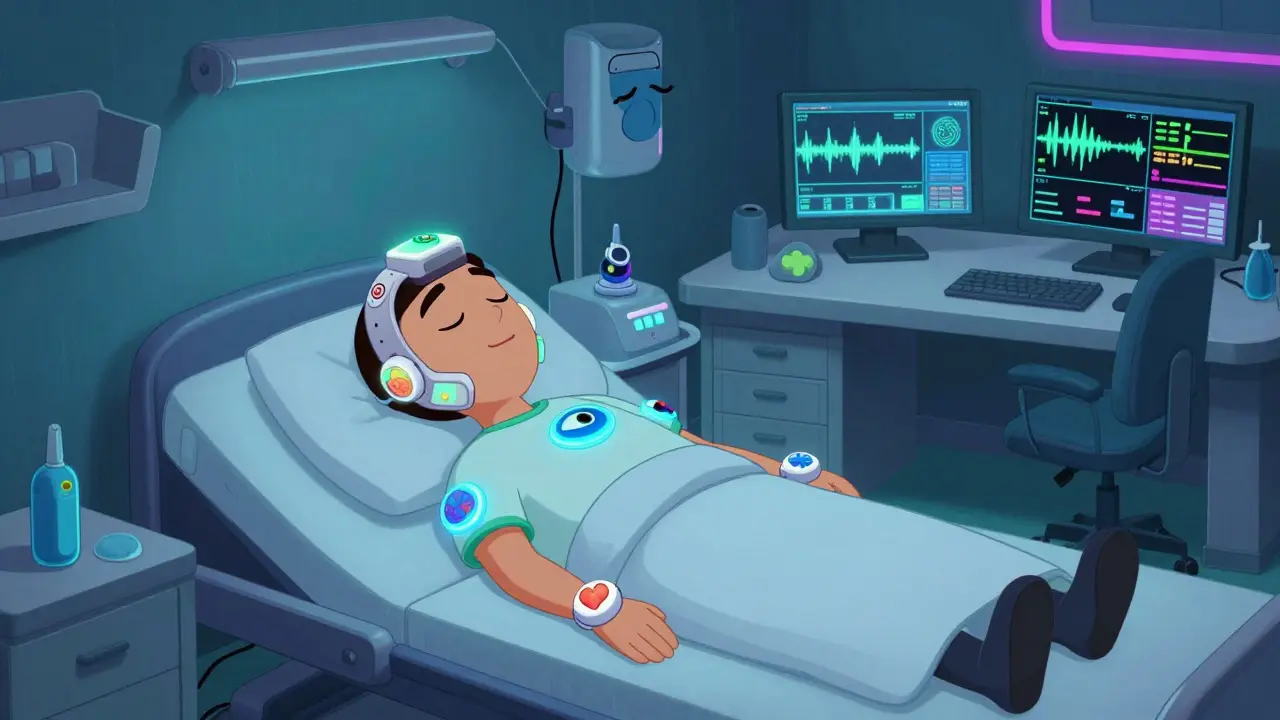
Have you ever tossed and turned all night, only to wake up exhausted despite being in bed for eight hours? Or maybe your partner says you snore loudly, stop breathing, or even kick in your sleep? These aren’t just annoyances-they could be signs of a sleep disorder. That’s where polysomnography comes in. It’s not a scary lab experiment. It’s a detailed, overnight test that tells doctors exactly what’s going wrong when you sleep.
What Exactly Is Polysomnography?
Polysomnography, or PSG, is a full-night sleep study that records multiple body functions while you sleep. The word itself breaks down into "poly" (many), "somno" (sleep), and "graphy" (recording). So it’s literally a recording of many things happening during sleep. Unlike home sleep tests that only check breathing, polysomnography looks at your brain, eyes, muscles, heart, breathing patterns, oxygen levels, and even body position-all at once.
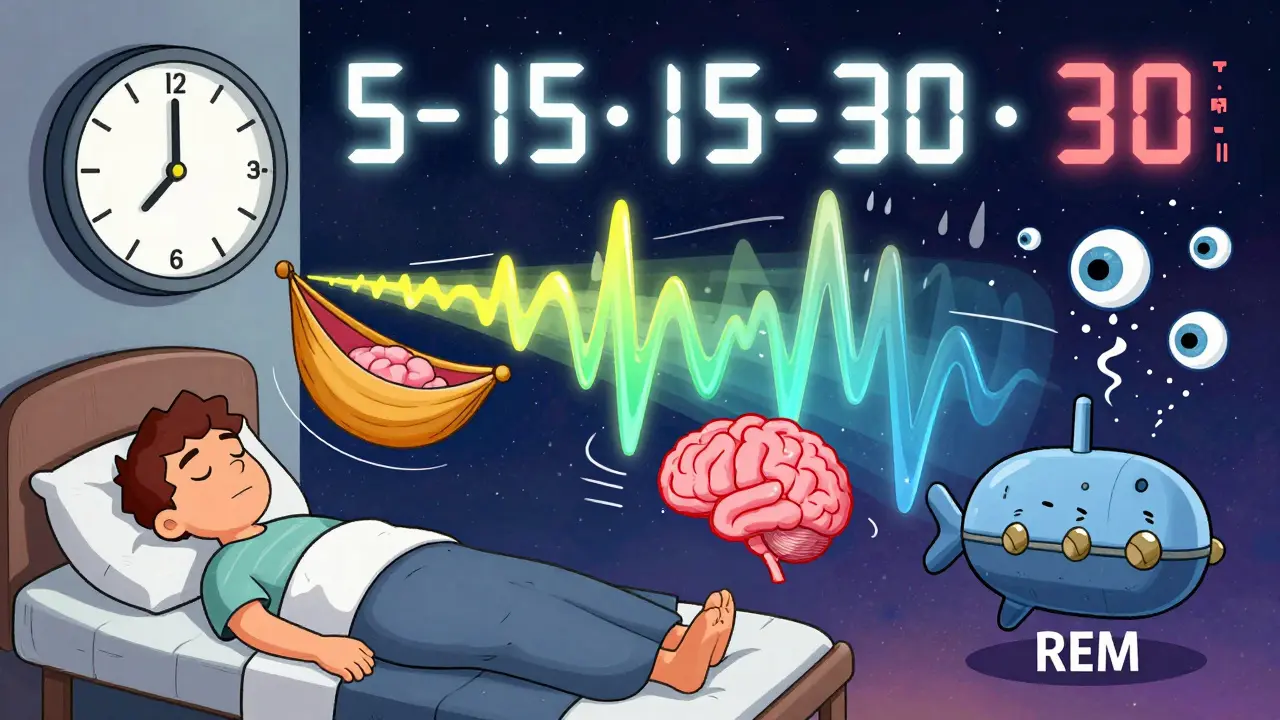
This is the gold standard for diagnosing sleep disorders because it doesn’t just guess. It shows how your sleep cycles shift between deep sleep and REM sleep, where dreaming happens. Normal sleep moves through stages in 90-minute cycles. But with disorders like narcolepsy or sleep apnea, those cycles get messed up. PSG catches those breaks.
What Gets Measured During the Test?
When you arrive at the sleep center, a sleep technologist will attach sensors to your body. Don’t worry-it’s not needles or shocks. These are small, sticky patches and belts that gently monitor your physiology. Here’s what they track:
- Brain waves (EEG): Electrodes on your scalp measure electrical activity to determine if you’re in light sleep, deep sleep, or REM sleep.
- Eye movements (EOG): Sensors near your eyes detect rapid eye movements, which signal when you enter REM sleep.
- Muscle activity (EMG): Sensors on your chin and legs watch for twitching, leg jerks, or abnormal movements like sleepwalking.
- Heart rhythm (ECG): A small patch on your chest tracks your heartbeat for irregularities that might happen only at night.
- Breathing effort: Two elastic belts around your chest and abdomen measure how hard you’re trying to breathe.
- Airflow: A thin tube under your nose detects whether air is flowing in and out-or if it’s blocked.
- Blood oxygen: A tiny clip on your finger (like at the doctor’s office) shows if your oxygen drops during breathing pauses.
- Body position: A sensor tells if you’re sleeping on your back, side, or stomach, since some disorders worsen in certain positions.
- Audio and video: A camera and microphone record snoring, gasping, talking, or unusual behaviors like kicking or sitting up.
All this data comes together to paint a full picture. One study found that 22 sensors are typically used, but newer wireless systems now cut that down to just 5-7, making it much more comfortable. The room is kept at 68-72°F (20-22°C) to help you sleep better. You’ll have a private room with a regular bed, a TV, and even your own bathroom.
How Is It Different From Home Sleep Tests?
You might have heard about home sleep apnea tests (HSAT). They’re cheaper and easier-just a small device you wear at home. But they only measure 3-4 things: airflow, oxygen levels, breathing effort, and heart rate. That’s fine if your doctor suspects simple obstructive sleep apnea. But they miss everything else.
Polysomnography can diagnose:
- Narcolepsy (falling into REM sleep too fast)
- Restless legs syndrome (leg jerks that wake you up)
- Sleepwalking or night terrors (parasomnias)
- Central sleep apnea (when your brain stops telling your body to breathe)
- Periodic limb movement disorder
- Nocturnal seizures
Home tests fail about 15-20% of the time because people don’t wear them right, or they don’t capture enough data. In-lab polysomnography fails less than 5% of the time. And if you have symptoms beyond snoring and daytime tiredness-like sudden muscle weakness, vivid dreams, or unexplained nighttime movements-polysomnography is the only way to find out why.
What Happens During the Night?
You’ll arrive at the sleep center 1-2 hours before your usual bedtime. The setup takes 30-45 minutes. Technologists are trained to make you feel at ease. They’ll explain each sensor, answer your questions, and even help you relax if you’re nervous.
Once you’re ready, they leave you alone. But they’re watching you the whole time-from a nearby room with monitors. If you roll over, scratch your nose, or start snoring loudly, they can adjust sensors without waking you. They can also talk to you through an intercom if you need to use the bathroom or feel uncomfortable.
Most people sleep enough for a diagnosis-even if it’s not perfect. About 85% of patients get usable data. The room is quiet, dark, and designed to feel like home. Some people take a night or two to adjust, but that’s normal. You’re not expected to sleep like you do on a Saturday morning. You just need enough sleep for the patterns to show up.
What Happens After the Test?
When you wake up, the sensors are removed. You can get dressed and go home. No downtime. No recovery.
But the real work begins after you leave. The machine recorded over 1,000 pages of raw data. A board-certified sleep physician spends 2-3 hours analyzing every breath, every brain wave, every movement. They look for:
- How many times you stopped breathing per hour (Apnea-Hypopnea Index or AHI)
- How low your oxygen dropped during those pauses
- How long you spent in each sleep stage
- Whether you entered REM sleep too early
- Any abnormal leg movements or muscle activity
- Heart rhythm changes tied to breathing events
Their report will say whether you have sleep apnea, narcolepsy, or something else. It will also show how severe it is. For example:
- AHI of 5-15 = mild sleep apnea
- AHI of 15-30 = moderate
- AHI over 30 = severe
Some patients get a split-night study. If severe sleep apnea is found in the first half of the night, the second half is used to test CPAP pressure settings. That means you might leave with a prescription for a breathing machine the same night.
Who Needs This Test?
Doctors usually order polysomnography if you have:
- Chronic snoring with witnessed breathing pauses
- Excessive daytime sleepiness (falling asleep while driving or talking)
- Unexplained fatigue that doesn’t improve with more sleep
- High blood pressure that doesn’t respond to medication
- History of stroke or heart disease with sleep complaints
- Strange nighttime behaviors (talking, screaming, walking)
- Leg jerks or restless legs that disrupt sleep
Medicare and most private insurers cover polysomnography if your symptoms match clinical guidelines. But they usually require documentation-like a sleep diary or a questionnaire filled out by your doctor-before approving it.
What Are the Limitations?
No test is perfect. Some people sleep worse in a lab than at home. That’s called the "first-night effect." It can make sleep apnea look milder than it really is. That’s why some doctors recommend a second test if results are borderline.
Also, polysomnography doesn’t explain why you have the disorder. It only shows what’s happening. Finding the root cause-like obesity, nasal obstruction, or neurological issues-takes more steps.
And while AI tools are now helping analyze data faster, the final call still needs a human sleep specialist. Machines can flag patterns, but only a trained doctor can interpret them in context.
How to Prepare for Your Sleep Study
Here’s what actually works:
- Stick to your normal sleep schedule for at least 3 days before the test. Don’t try to "catch up" on sleep.
- Avoid caffeine after noon on the day of the test. That includes coffee, tea, soda, and chocolate.
- Don’t nap in the afternoon. Even a 20-minute nap can interfere with your ability to sleep at night.
- Don’t drink alcohol the night before. It can suppress breathing and mask sleep apnea.
- Bring your own pillow, pajamas, and toiletries. Make it feel like home.
- Let the technologist know if you’re anxious. They’ve seen it all-and they can help.
Most patients say the biggest surprise? How little it hurts. No needles. No pain. Just sensors. And the peace of mind afterward? Priceless.
What Happens After the Diagnosis?
If you have sleep apnea, you’ll likely get a CPAP machine. The sleep doctor will prescribe the right pressure setting based on your study. For narcolepsy, you might get medication to stay alert during the day. For restless legs, iron supplements or nerve-targeting drugs help.
But treatment isn’t just about machines or pills. Lifestyle changes matter too-losing weight, sleeping on your side, quitting smoking, and avoiding alcohol can dramatically improve outcomes. Many patients report feeling like a new person after just a few weeks of treatment.
Polysomnography doesn’t just diagnose. It changes lives. People who thought they were just "tired all the time" suddenly have energy. Relationships improve. Blood pressure drops. Depression lifts. It’s not magic. It’s science. And it’s available right now.
Is polysomnography painful?
No, polysomnography is not painful. Sensors are attached with adhesive patches and belts, not needles. Some people feel a little awkward with wires, but there’s no discomfort or invasive procedure involved. Most patients report the experience as surprisingly comfortable.
Can I sleep with all those sensors on?
Yes, most people do. The sensors are lightweight and designed to let you move naturally. Technologists use flexible cords and wireless options to minimize tangles. While it might take 15-30 minutes to adjust, over 85% of patients get enough sleep for accurate results. Even if you don’t sleep deeply, the patterns are still detectable.
How long does it take to get results?
It usually takes 7-14 days to receive your full report. The raw data (over 1,000 pages) must be reviewed by a board-certified sleep physician, which takes 2-3 hours per study. Some centers offer a preliminary summary within 48 hours if urgent, but the final diagnosis requires full analysis.
Is polysomnography covered by insurance?
Yes, most insurance plans-including Medicare-cover polysomnography when ordered for specific symptoms like snoring with witnessed apneas, excessive daytime sleepiness, or unexplained fatigue. Medicare typically covers 80% of costs. Private insurers often require prior authorization based on documented symptoms and a sleep questionnaire completed by your doctor.
Can I do this test at home instead?
Home sleep tests are available but only for suspected obstructive sleep apnea. They miss up to 80% of other sleep disorders like narcolepsy, sleepwalking, or periodic limb movement disorder. Home tests also have a 15-20% failure rate due to improper setup. If your symptoms are complex, polysomnography in a lab is the only reliable option.

Andrew Poulin
March 7, 2026 AT 06:41Weston Potgieter
March 9, 2026 AT 06:38Vikas Verma
March 10, 2026 AT 09:38Sean Callahan
March 10, 2026 AT 22:53phyllis bourassa
March 11, 2026 AT 14:47Susan Purney Mark
March 12, 2026 AT 20:07Ian Kiplagat
March 14, 2026 AT 12:50Amina Aminkhuslen
March 16, 2026 AT 05:59Pranay Roy
March 16, 2026 AT 12:08Joe Prism
March 16, 2026 AT 19:21Bridget Verwey
March 17, 2026 AT 17:52Ferdinand Aton
March 19, 2026 AT 14:41William Minks
March 21, 2026 AT 09:37Jeff Mirisola
March 22, 2026 AT 02:31amber carrillo
March 23, 2026 AT 22:04