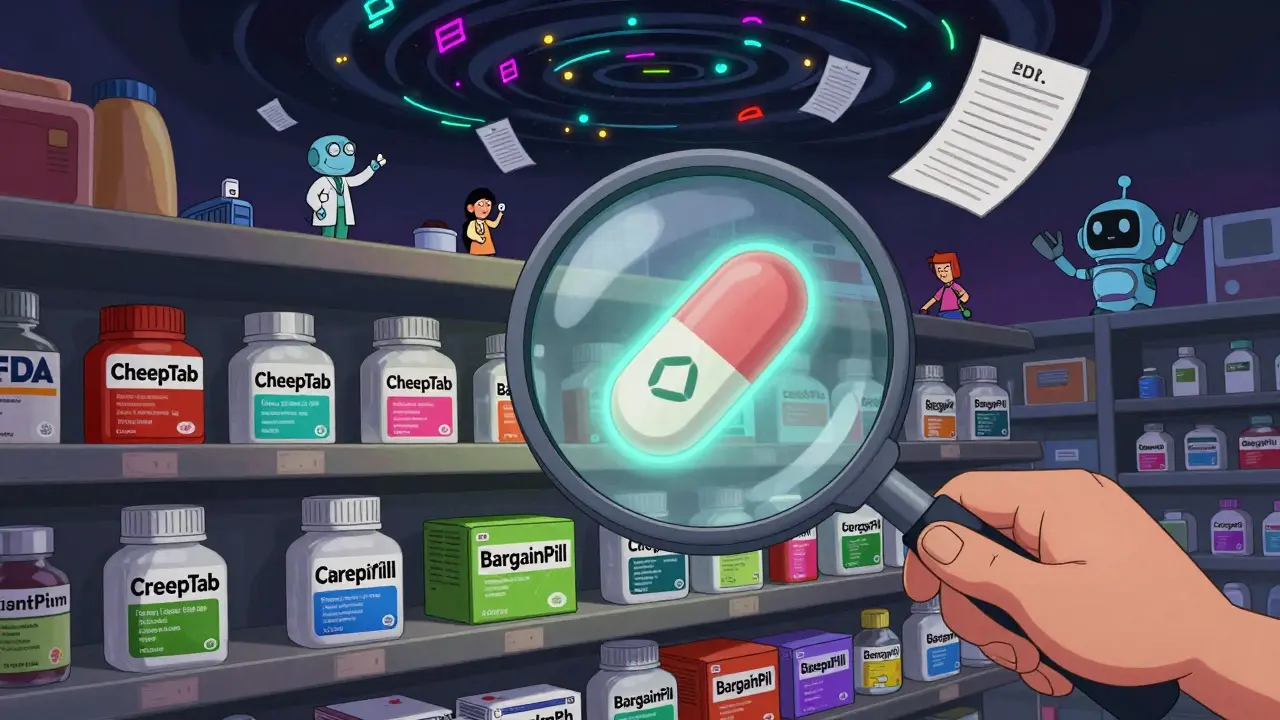
When you pick up a generic pill at the pharmacy, you expect it to work just like the brand-name version. But how does the FDA make sure it actually does-after it’s already on the shelf? Unlike new drugs, generics don’t go through years of clinical trials. They only need to prove they’re bioequivalent to the original. That means the same amount of active ingredient enters your bloodstream at the same rate. But bioequivalence doesn’t guarantee everything will be the same in real life. That’s where post-market surveillance kicks in.
Why Monitoring Doesn’t Stop at Approval
The FDA approves over 1,000 generic drugs every year. By 2020, generics made up 90% of all prescriptions filled in the U.S. That’s more than 3 billion prescriptions annually. Most of these drugs are simple copies-low-cost, high-volume, and critical to keeping healthcare affordable. But here’s the catch: clinical trials for generics usually involve a few hundred people. That’s enough to catch major issues, but not rare side effects that might show up in 1 in 10,000 patients. Or problems that only appear after months of use. Or differences caused by minor changes in inactive ingredients-fillers, coatings, or release mechanisms-that can affect how a drug behaves in some people. That’s why the FDA doesn’t walk away after approval. It keeps watching. And it has a whole system built for it.The Tools the FDA Uses to Watch Generic Drugs
The FDA doesn’t rely on guesswork. It uses three main systems to track what’s happening with generics once they’re out in the wild. First is the FDA Adverse Event Reporting System (FAERS). It’s a database where doctors, pharmacists, patients, and drug companies report side effects, allergic reactions, or cases where a drug didn’t work as expected. Anyone can submit a report through MedWatch, the FDA’s online portal. In 2023 alone, over 1.5 million reports came in-including thousands tied to generic drugs. The FDA doesn’t take every report as proof of danger. But when a pattern emerges-say, five different people report severe dizziness after switching to a new generic version of a blood pressure pill-that’s a signal. And signals get investigated. Second is the Sentinel Initiative. Launched in 2008, Sentinel uses real-world data from millions of patients. It taps into electronic health records and insurance claims from hospitals, clinics, and pharmacies across the country. By 2023, it covered over 200 million Americans. That’s not just a big number-it’s powerful. Sentinel can spot trends like increased hospital visits after a new generic hits the market. It can compare outcomes between brand-name and generic users. It can even track whether certain batches of a generic drug are linked to more side effects than others. Third is manufacturing inspections. The FDA doesn’t just check the drug’s chemistry. It sends inspectors-unannounced-to factories where generics are made. These aren’t routine visits. They’re targeted. If a company has had past issues, or if a batch of pills is linked to a safety signal, inspectors show up. They check for cleanliness, accuracy in dosing, and whether the product matches what was approved. A single change in the manufacturing process-even something as small as a different machine-can alter how a drug dissolves in the body. That’s why inspections are non-negotiable.Complex Generics: The Harder Cases
Not all generics are created equal. Simple tablets? Easy to copy. Inhalers? Creams? Injectables? Those are complex generics. And they’re where things get tricky. Take an asthma inhaler. The active ingredient might be identical. But the propellant, the nozzle design, the particle size-all those affect how deeply the drug reaches your lungs. Two inhalers can be labeled the same but behave differently in practice. Same with topical creams. A slight change in the base can change how much of the drug gets absorbed through the skin. And bioequivalence studies? They can’t always catch that. That’s why the FDA created the Center for Research on Complex Generics in 2020, partnering with universities to study these harder cases. The agency also published draft guidance in 2019 outlining how to better monitor these products. The goal? To move beyond just chemical similarity and start measuring real-world performance.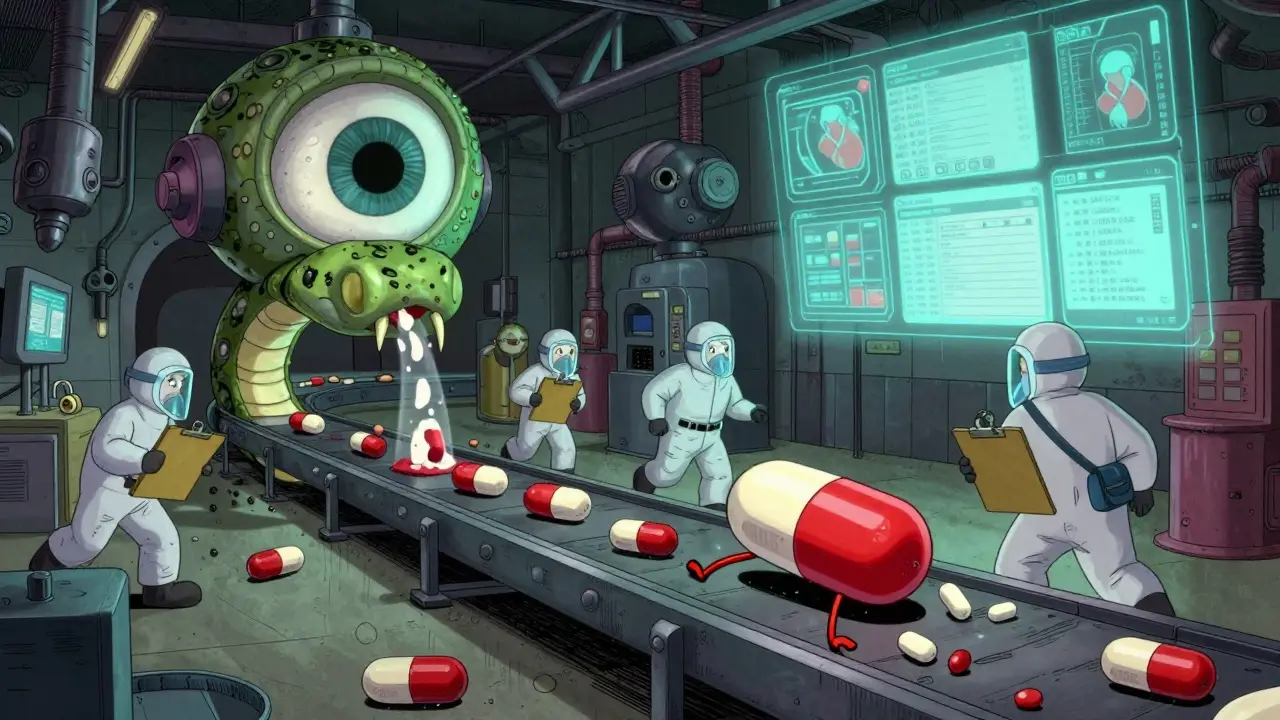
What Happens When Something Goes Wrong?
When the FDA finds a red flag-say, a spike in reports of seizures linked to a new generic version of an epilepsy drug-it doesn’t wait. The Office of Generic Drugs teams up with the Office of Surveillance and Epidemiology. They dig into the data. They check manufacturing records. They talk to doctors. They compare patient outcomes. If the evidence points to a real safety issue, they have options:- Update the drug’s label to add new warnings
- Issue a “Dear Healthcare Provider” letter alerting doctors
- Require the manufacturer to conduct additional studies
- Order a voluntary recall
- Block future shipments if the problem is widespread
Perception vs. Reality: The Nocebo Effect
Sometimes, the problem isn’t the drug-it’s the mind. Studies show that when patients switch from a brand-name drug to a generic, they’re more likely to report side effects-even when the drugs are identical. This is called the nocebo effect. It’s the opposite of placebo. Instead of expecting to feel better, you expect to feel worse. And your body responds. A 2019 study in JAMA Internal Medicine looked at 47,000 patient reports. About 15% of complaints about generics were about “feeling different” or “not working as well.” But when researchers checked lab results and clinical outcomes, there was no difference in effectiveness or safety. The problem? Perception. And that perception can lead to patients stopping their meds-putting their health at risk. The FDA knows this. That’s why they train doctors to explain the difference between actual side effects and psychological reactions. They also encourage patients to report concerns-even if they think it’s “just in their head.” Because sometimes, those reports turn out to be real.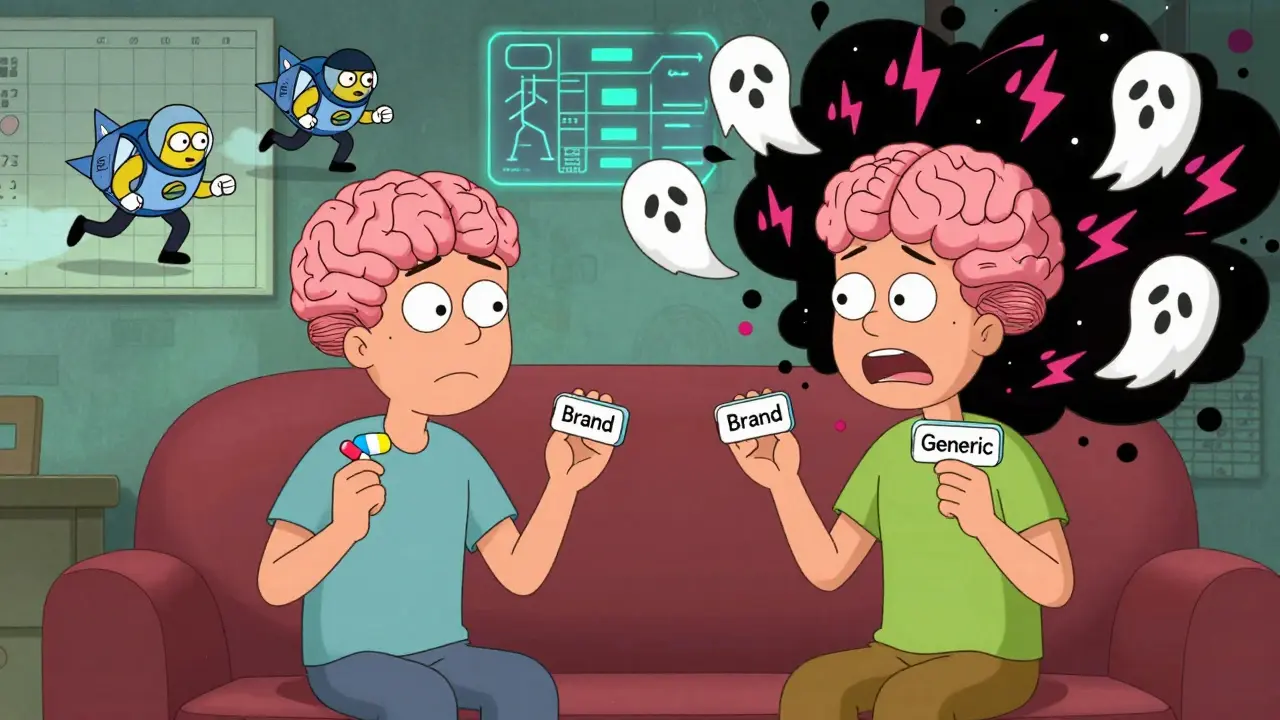
The Future: AI and Real-Time Monitoring
The FDA is now investing in artificial intelligence to make surveillance faster and smarter. In 2023, the agency allocated $5.2 million to develop AI tools that can scan millions of reports and medical records to spot patterns humans might miss. Imagine this: a new generic hits the market. Within days, AI analyzes claims data from 200 million people. It flags a small uptick in kidney-related ER visits among users of that specific generic. It compares it to other versions. It checks manufacturing logs. It alerts scientists within hours-not months. That’s the goal. By 2027, experts predict AI could cut signal detection time by 60-70% for complex generics. That’s not just efficiency-it’s lifesaving.What You Can Do
You don’t have to wait for the FDA to find a problem. You can help.- If you notice a new side effect after switching to a generic, report it. Go to MedWatch and file a report. Even if you’re not sure-it matters.
- Keep track of the manufacturer’s name on your prescription. If one batch causes issues and another doesn’t, that’s critical data.
- Don’t assume all generics are the same. If you feel different on a new version, talk to your doctor. It might be your body reacting to an inactive ingredient.
Are generic drugs as safe as brand-name drugs?
Yes, when they’re properly manufactured and monitored. The FDA requires generics to meet the same quality, strength, and purity standards as brand-name drugs. The main difference is that generics don’t need new clinical trials-they prove they’re bioequivalent to the original. But because they’re used by far more people, post-market surveillance is critical to catch rare or delayed side effects that clinical trials might miss.
How does the FDA know if a generic drug is causing side effects?
The FDA uses multiple systems: the FDA Adverse Event Reporting System (FAERS) collects reports from doctors, patients, and manufacturers; the Sentinel Initiative analyzes real-world health data from over 200 million people; and inspectors visit manufacturing sites to check for quality issues. When patterns emerge-like a spike in reports of dizziness after a new generic is released-the FDA investigates further to determine if the drug is the cause.
Can a generic drug be different from the brand-name version?
The active ingredient must be identical. But inactive ingredients-like fillers, dyes, or coatings-can differ. For simple pills, this rarely matters. But for complex drugs like inhalers, creams, or extended-release tablets, these differences can affect how the drug is absorbed or released. That’s why the FDA has special monitoring rules for complex generics and is investing in new tools to detect these subtle differences.
What should I do if I think my generic drug isn’t working?
Don’t stop taking it without talking to your doctor. Write down your symptoms, when they started, and which manufacturer’s version you’re taking. Then report it to MedWatch and ask your doctor to file a report too. Sometimes, it’s a psychological reaction. Other times, it’s a real issue with the formulation. Either way, reporting helps the FDA catch problems early.
How often does the FDA take action against unsafe generics?
Actions aren’t common, but they happen. The FDA has ordered recalls, updated labels, and issued safety alerts for generics when evidence showed a clear risk. For example, in 2021, a specific batch of a generic heart drug was pulled after linked to increased arrhythmias. The FDA doesn’t act on single reports-it looks for patterns across thousands of cases. When the evidence is strong, they act quickly.

Mike Rengifo
December 18, 2025 AT 17:53So they just trust the bioequivalence numbers and hope for the best? Wild. I’ve been on generics for years and never had an issue, but I’ve also seen people swear their blood pressure meds stopped working after a switch. Guess it’s a crapshoot.
Meenakshi Jaiswal
December 19, 2025 AT 20:44As a pharmacist in Mumbai, I see this daily. Patients panic when the pill color changes. But 95% of the time? Same effect. The real issue is lack of education. Tell folks it’s not magic, just chemistry. And sometimes, the brand-name placebo effect is stronger than the drug itself.
Elaine Douglass
December 21, 2025 AT 06:46My grandma switched to a generic for her thyroid med and started feeling dizzy. We reported it. Turns out it was a different filler. She went back to the brand and felt fine. Glad the FDA listens.
Tim Goodfellow
December 23, 2025 AT 00:48Imagine if your Netflix algorithm could detect when your antidepressant started acting up. That’s basically what Sentinel is doing. It’s like having a national health radar scanning for weird glitches in the system. Mind blown.
Vicki Belcher
December 24, 2025 AT 07:42Thank you for this! 💙 I’ve been telling my friends for years: if you feel weird after a generic switch, report it. Even if you think you’re being dramatic. You’re not. The FDA needs your voice. 🙏
Marsha Jentzsch
December 26, 2025 AT 06:55Oh, here we go again-another ‘trust the system’ lecture. 😒 You think they’re watching? They’re asleep. I got a generic that made me hallucinate. I reported it. Nothing happened. For months. And now? They’re selling the SAME BATCH again. This isn’t surveillance-it’s a joke. 🤡
Laura Hamill
December 28, 2025 AT 00:47THEY’RE LYING TO US!!! 😱 I read this article and I knew it! Generics are made in China in dirty factories!! They put rat poison in the fillers!!! Why won’t anyone listen?? I saw a video on TikTok where a guy’s tongue turned blue after a generic! It’s a COVER-UP!! 🚨
mark shortus
December 28, 2025 AT 12:23Okay, but what if the ‘bioequivalence’ is just a number they cooked up? I mean, the FDA approves 1,000 generics a year. That’s like 3 a day. Someone’s gotta be cutting corners. And don’t get me started on the ‘inactive ingredients’-those are just fancy words for ‘we threw in whatever was cheap.’
Alana Koerts
December 29, 2025 AT 10:12Wow. So the whole system is just a glorified suggestion box? You report something and hope it shows up in a spreadsheet? And you call that ‘surveillance’? I’ve seen more proactive monitoring in my smart fridge.
Moses Odumbe
December 31, 2025 AT 00:19Let’s be real: the FDA’s got 300 people monitoring 3 BILLION prescriptions. That’s 10 million per person. 🤯 They’re not watching-they’re praying. AI might help, but until Congress stops starving them of funding, this is all theater. And don’t even get me started on how half the inspections are scheduled weeks in advance. 😅
Aboobakar Muhammedali
January 1, 2026 AT 07:40in india we get generics from everywhere. some good some bad. but people dont report because they think no one cares. maybe we need local community pharmacists to be the eyes on the ground. not just the big system.
Takeysha Turnquest
January 2, 2026 AT 15:47So we’re trusting algorithms to catch the sins of capitalism disguised as medicine? The real question isn’t whether the drug works-it’s whether the system cares enough to save you before you become a data point.