
Imagine your liver as a complex plumbing system designed to filter toxins and move bile into your intestines. Now, imagine that plumbing slowly narrowing, scarring, and eventually clogging. That is the reality for people living with Primary Sclerosing Cholangitis is a rare, progressive autoimmune disorder where chronic inflammation causes the bile ducts to scar and narrow, leading to impaired bile flow and potential liver failure. Also known as PSC, it typically strikes adults between 30 and 50, though it can appear at any age. Because it moves slowly and often hides behind vague symptoms, many people don't get a diagnosis for years, leaving them to wonder why they are constantly exhausted or itching uncontrollably.
The Core Problem: What is Actually Happening?
In a healthy liver, bile ducts are wide open (usually 3-8mm in diameter) to let bile flow freely. In someone with PSC, the body's own immune system mistakenly attacks these ducts. This triggers a cycle of inflammation and scarring called fibrosis. Over time, the ducts narrow to less than 1.5mm, creating "strictures" that act like bottlenecks. When bile can't get out, it backs up into the liver, causing damage to the surrounding tissue.
This isn't a sudden event but a slow progression. Doctors generally track this through four histological stages: it starts with portal inflammation, moves to periportal fibrosis, advances to bridging fibrosis, and finally ends in Cirrhosis, where the liver is heavily scarred and loses its ability to function. For many, the journey from the first symptom to cirrhosis takes about 12 to 15 years, though this varies wildly depending on whether the patient was symptomatic at the time of diagnosis.
The Gut-Liver Connection and Genetics
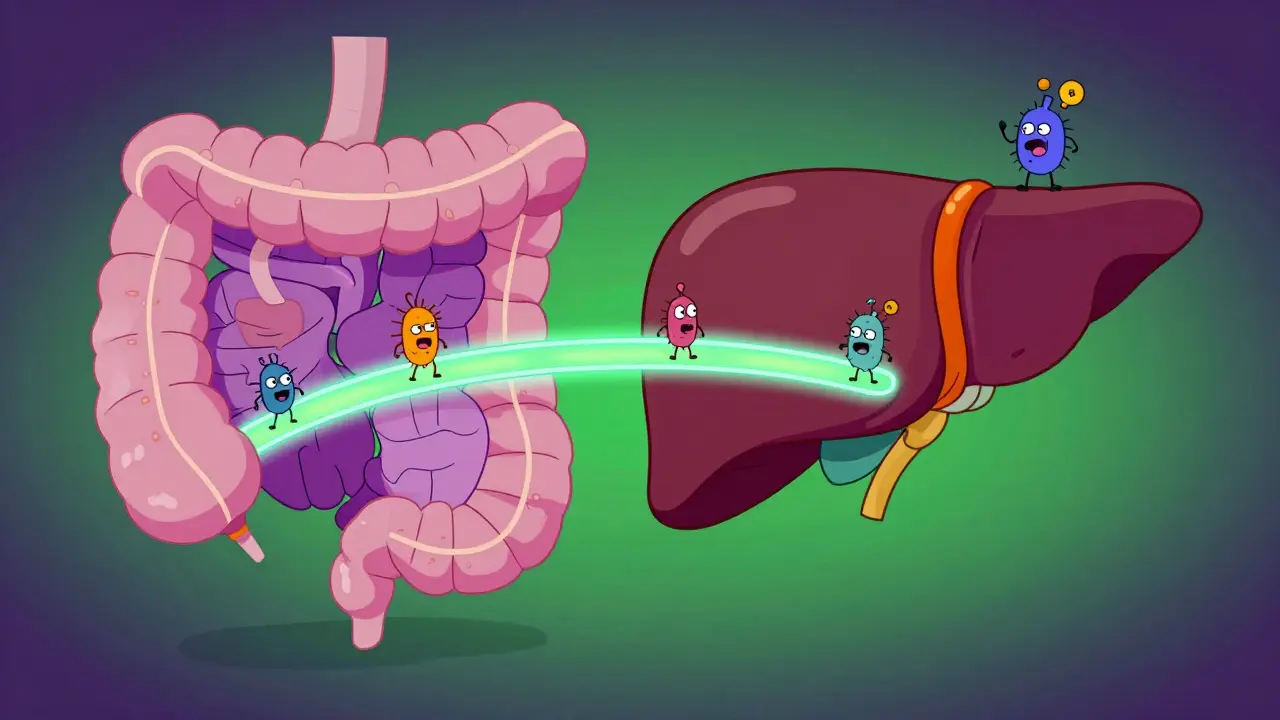
Why does this happen? While we don't have a single "smoking gun" cause, researchers have found a massive link between the gut and the liver. Experts like Dr. Tom Hemming Karlsen suggest that the Gut-Liver Axis is the primary driver. Basically, certain bacteria in the gut produce metabolites that trigger an immune response in people who are already genetically predisposed. If you have the HLA-B*08:01 allele, for instance, you have a significantly higher risk of developing the condition.
One of the most striking aspects of this disease is its relationship with Inflammatory Bowel Disease (IBD). About 60-80% of people with PSC also have Ulcerative Colitis. It is so common that doctors often screen the colon of any patient diagnosed with PSC, even if they don't have stomach issues, because the two conditions are so tightly linked.
| Feature | Primary Sclerosing Cholangitis (PSC) | Primary Biliary Cholangitis (PBC) |
|---|---|---|
| Ducts Affected | Both large and small ducts | Primarily small intrahepatic ducts |
| Key Marker | p-ANCA (20-50% positive) | Anti-mitochondrial antibody (95% positive) |
| Common Association | Ulcerative Colitis (IBD) | Other autoimmune diseases (Sjögren's) |
| Demographics | Higher male predominance (2:1) | Strong female predominance |
Recognizing the Warning Signs
The hardest part of PSC is that it doesn't always announce itself with a loud alarm. Many patients describe a "slow creep" of symptoms. Fatigue is the most common, affecting over 90% of patients, but it's not just being tired-it's a bone-deep exhaustion that doesn't go away with sleep. Then there is the itching, known as Pruritus. Patients often describe this as an internal itch that feels like it's coming from the bones rather than the skin, often peaking at night and making sleep nearly impossible.
Other red flags include abdominal discomfort in the upper right quadrant and jaundice (yellowing of the skin and eyes). It's also critical to watch for signs of acute cholangitis-a sudden, dangerous infection of the bile ducts. If you have a fever over 38.5°C, severe pain, and jaundice all at once, it's an emergency.
How to Manage the Condition
Currently, there is no medical cure for Primary Sclerosing Cholangitis, but managing the symptoms and preventing complications can significantly improve quality of life. The goal is to slow the progression and keep the liver stable for as long as possible.
For the unbearable itching, doctors often try a rotating door of medications. Rifampicin works for about half of the patients, while naltrexone or bile acid binders like colesevelam are used for others. Because the disease prevents the liver from processing fats properly, you'll likely face deficiencies in fat-soluble vitamins (A, D, E, and K). Quarterly blood tests are necessary to ensure these levels stay stable.
Because of the 10-15% lifetime risk of colorectal cancer associated with the IBD link, regular surveillance is non-negotiable. This usually means a colonoscopy every one to two years. On the imaging side, an annual MRCP (Magnetic Resonance Cholangiopancreatography) is the gold standard for monitoring the narrowing of the ducts without needing invasive surgery.

Looking Toward the Future: Treatments and Transplants
For years, Ursodeoxycholic Acid (UDCA) was the go-to treatment. However, recent data has cast doubt on its effectiveness, with some experts arguing it doesn't actually lower mortality rates. This has pushed the medical community toward more targeted therapies. We are seeing the rise of FXR agonists, like obeticholic acid and cilofexor, which aim to reduce liver enzyme levels and potentially slow the scarring process.
When the disease reaches end-stage failure or if a patient develops cholangiocarcinoma (bile duct cancer), Liver Transplantation is the only definitive solution. The good news is that the success rate is high, with 5-year survival rates exceeding 80% after a transplant. The focus of current research is to create "disease-modifying" therapies that could reduce the need for transplants by up to 40% in the next decade.
Can PSC be reversed?
Currently, the scarring (fibrosis) in the bile ducts cannot be reversed. Treatment focuses on managing symptoms, preventing infections like cholangitis, and slowing the progression toward cirrhosis. Liver transplantation is the only way to replace the damaged organ.
Why is the itching so intense in PSC?
The itching is caused by the buildup of bile acids and other substances in the blood and skin because they cannot flow through the narrowed bile ducts. This is known as cholestatic pruritus. Unlike a bug bite, it's a systemic chemical irritation, which is why it often feels "deep" inside the skin.
Is PSC the same as PBC?
No. While both are autoimmune liver diseases, Primary Biliary Cholangitis (PBC) usually affects only the small ducts inside the liver and is more common in women. PSC affects both large and small ducts and is more common in men and closely linked to Ulcerative Colitis.
What diet should I follow with PSC?
While there is no specific "PSC diet," focusing on nutrient density is key. Because bile flow is impaired, fat digestion is difficult. Patients should work with a nutritionist to manage fat-soluble vitamin deficiencies (A, D, E, K) and avoid alcohol to reduce further liver stress.
How often do I need liver scans?
Most guidelines recommend an annual MRCP to monitor the progression of ductal strictures. Additionally, quarterly blood tests for liver enzymes (ALP, ALT, AST) are used to track inflammation and liver function.
Next Steps and Troubleshooting
If you have just been diagnosed, the first few months can feel overwhelming. Start by finding a specialized PSC center of excellence rather than a general clinic; data shows that specialized care leads to much better symptom control.
- For the newly diagnosed: Request a baseline MRCP and a full screen for Inflammatory Bowel Disease (IBD) if you haven't had one.
- For those with severe itching: Discuss a structured trial of rifampicin or colesevelam with your hepatologist, as these often require dose adjustments to find the "sweet spot."
- For long-term patients: Ensure your colorectal cancer screenings are up to date, regardless of whether you have active colitis symptoms.