Report Adverse Drug Events: How to Spot, Document, and Act on Dangerous Side Effects
When a medication causes harm instead of healing, it’s not just bad luck—it’s an adverse drug event, a harmful and unintended reaction to a medicine taken at normal doses. Also known as an adverse drug reaction, this is when your body responds dangerously to something you were told was safe. These events aren’t rare. Every year, hundreds of thousands of people in the U.S. end up in the hospital because of them—and many go unreported.
Reporting these events isn’t just a formality. It’s how the system learns what’s truly dangerous. The FDA, the U.S. agency responsible for overseeing drug safety and approving medications relies on real-world reports from patients and providers to spot patterns that clinical trials miss. A single report might seem small, but when thousands of people report the same symptom—like sudden heart palpitations from an antibiotic or memory loss from an anticholinergic drug—it triggers investigations that lead to black box warnings, dose limits, or even drug withdrawals. And if you’re taking a narrow therapeutic index drug, a medication where the difference between a safe dose and a toxic one is extremely small like warfarin or lithium, even a tiny change in how your body processes it can turn into a life-threatening event.
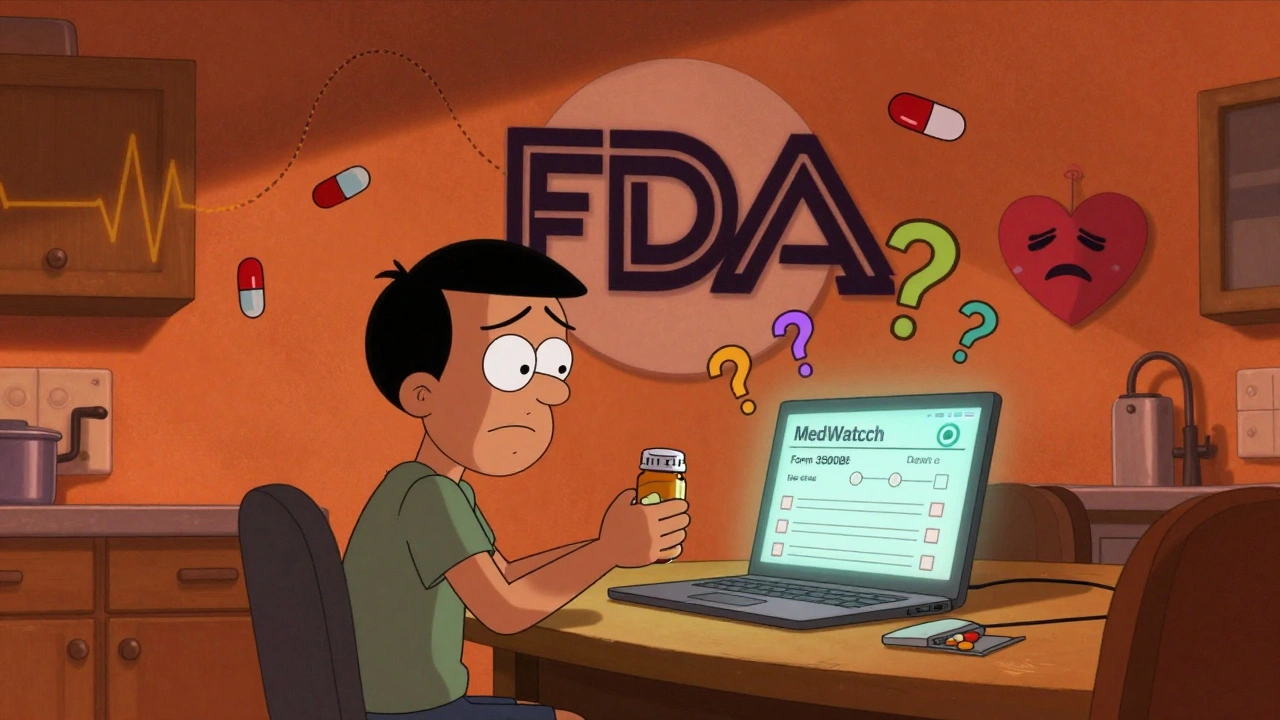
Knowing how to report isn’t about blaming your doctor or the pharmacy. It’s about taking control. You don’t need to be a medical expert. You just need to notice: Did this symptom start after you began a new pill? Did it get worse when you switched generics? Did you get a rash, dizziness, or chest tightness that didn’t go away? Write it down. Note the drug name, dose, when you started, and how you felt. Then report it. You can do it online through the FDA’s MedWatch portal, call their hotline, or even ask your pharmacist to help. Many people think, "It’s probably just me," or "They already know," but that’s how dangerous side effects stay hidden. Your report adds data to a system that saves lives—yours, your neighbor’s, your child’s.
Below, you’ll find real stories and practical guides from people who’ve been there: how to read medication guides to spot red flags, what to say to your pharmacist when something feels off, how to document a mistake, and why even a small change in a generic drug can trigger a reaction. These aren’t theoretical warnings. They’re lessons from patients who noticed something wrong—and acted on it.