
For people living with type 1 diabetes, managing blood sugar isn’t just a daily chore-it’s a 24/7 job. You count carbs, check glucose, adjust insulin, and still wake up in the middle of the night wondering if your numbers are safe. That’s where closed-loop insulin systems come in. These aren’t science fiction anymore. They’re real, FDA-approved devices that do the heavy lifting for you-automatically adjusting insulin based on real-time glucose readings. And the results? People are sleeping better, having fewer lows, and spending more time in their target range than ever before.
How Closed-Loop Systems Actually Work
A closed-loop system is made of three parts: a continuous glucose monitor (CGM), an insulin pump, and an algorithm that connects them. The CGM checks your glucose every 5 minutes. The algorithm looks at where your numbers are now, where they’re headed, and decides how much insulin to give-no input needed. It’s like having a co-pilot for your pancreas.
Most systems today are called hybrid closed-loop (HCL). That means they handle basal insulin automatically-your background dose-but you still need to tell the system when you eat. You press a button, enter carbs, and the pump gives a correction bolus. It’s not fully automatic yet, but it’s a massive leap from manually adjusting every dose.
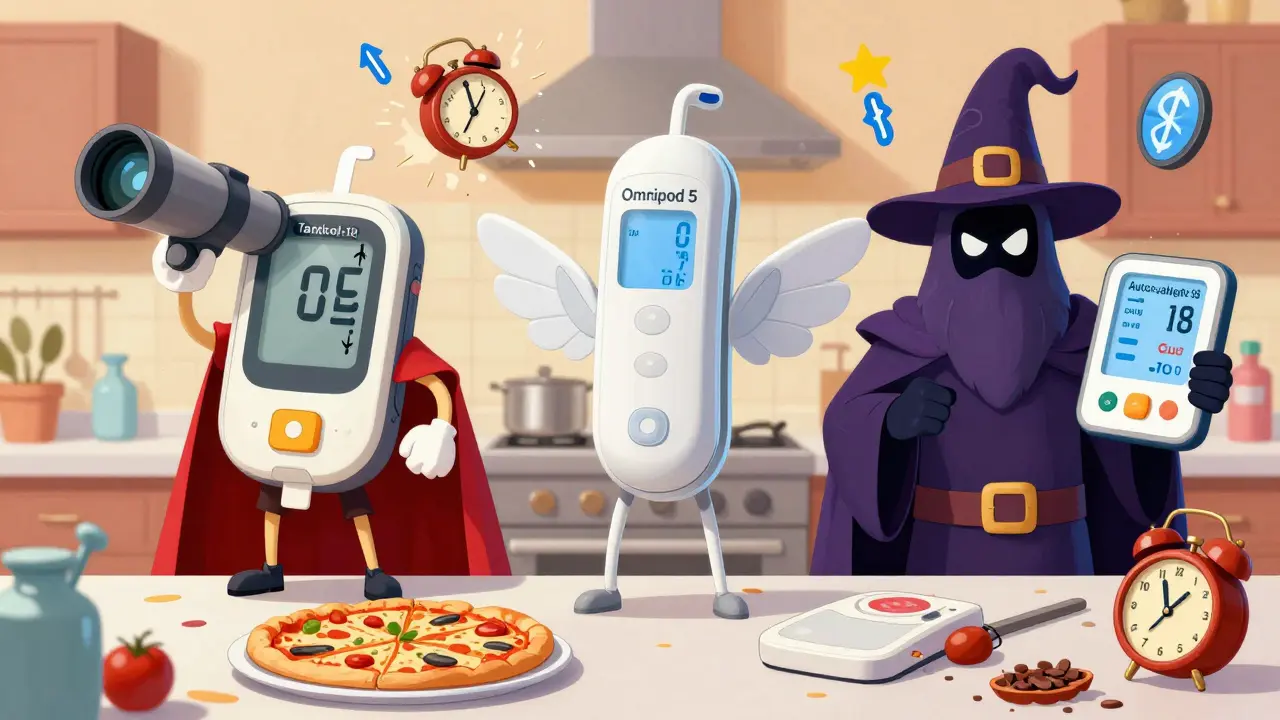
Take Tandem’s t:slim X2 with Control-IQ. It doesn’t just wait for high glucose-it predicts it. If your sugar’s rising fast, it starts delivering insulin before you even hit 180 mg/dL. Insulet’s Omnipod 5 does something similar, but with a tubeless patch pump. Beta Bionics’ iLet goes further: you only need to enter your weight. It figures out your insulin needs on its own. No carb counting, no insulin-to-carb ratios. Just eat, and it responds.
Real Numbers from Real People
Studies don’t just say these systems work-they show how much they improve daily life. In clinical trials, people using HCL systems spent 70-75% of their time in the target glucose range (70-180 mg/dL). Before these systems, most were only at 50-60%. That’s a 10-15 percentage point jump. That’s not just a number. That’s fewer panic checks at 3 a.m. That’s not needing to wake up to a low sugar alarm.
Time spent below 70 mg/dL dropped from 5-7% to 2-4%. That’s a 40-60% reduction in hypoglycemia. One user on the T1D Exchange Forum said, “I haven’t had a severe hypo in 8 months since starting Control-IQ. Before, I averaged one per month.” That’s not luck. That’s data.
HbA1c levels, the long-term blood sugar marker, dropped by 0.3-0.5% on average. For someone with an HbA1c of 8.2%, that’s moving to 7.7%. That’s the difference between “good control” and “excellent control.” And according to the American Diabetes Association’s 2023 Standards of Care, HCL systems are now recommended as preferred therapy for eligible patients.
What’s Different Between Systems?
Not all closed-loop systems are the same. Here’s how the big three compare:
| System | Key Feature | Meal Requirements | Insulin Capacity | Price (Annual Estimate) |
|---|---|---|---|---|
| Tandem t:slim X2 with Control-IQ | Automatic correction boluses | Manual carb entry | 300 units | $3,500-$4,000 |
| Insulet Omnipod 5 | Tubeless, wearable pod | Manual entry (improving with Autonomous mode) | 200 units per pod | $3,800-$4,200 |
| Beta Bionics iLet | Self-titrating algorithm | Optional carb entry | 270 units | $4,500-$5,000 |
Control-IQ stands out because it doesn’t just respond-it anticipates. If your glucose is rising 3 mg/dL per minute, it starts giving insulin. Omnipod 5 is popular because it’s invisible under clothes. iLet is the closest thing to a true artificial pancreas because it doesn’t ask you for insulin settings. You just enter your weight. It figures out the rest.
But here’s the catch: even the best systems can’t handle everything. They don’t know if you’re stressed, sick, or working out. They don’t sense alcohol. They rely on CGM accuracy, which can lag 5-15 minutes. And if your sensor falls off? Automation stops.
The Hidden Costs and Challenges
These systems aren’t plug-and-play. Setting one up takes hours. You need to learn how to calibrate sensors, prime pumps, and understand your insulin sensitivity. Many users report a 2-4 week learning curve. Some say the mental load doesn’t disappear-it just changes. Instead of counting carbs manually, you’re now managing software updates, Bluetooth connections, and algorithm quirks.
One common complaint? Post-meal spikes. Even with automatic boluses, glucose can still climb after high-fat or high-carb meals. Users on Reddit and DiabetesMine say they still have to manually bolus early or use temporary targets. A 2023 survey found 42% of users still needed to override the system after meals.
Then there’s cost. A t:slim X2 pump costs about $6,500 upfront. Omnipod 5 doesn’t need a pump-you pay $320 every 3 days for the pod. Add in CGM sensors, batteries, and software subscriptions, and annual costs can hit $4,000-$5,000. Medicare covers 80% of pump costs, leaving patients with 20% out-of-pocket. For many, that’s a barrier.
And while HCL systems reduce hypoglycemia, they come with a trade-off: a 1.2x higher rate of diabetic ketoacidosis (DKA). Why? Because if the pump stops working-sensor fails, tubing kinks, battery dies-the system can’t deliver insulin. And if you don’t notice, your sugar spikes fast. That’s why training is critical. You need to know the signs of system failure and how to switch to manual mode.
Who Benefits Most-and Who Doesn’t?
These systems shine for people with predictable routines: kids, students, office workers, parents who want to sleep through the night. A 2023 JDRF survey found 78% of users reported better sleep. One mother said, “I used to check my daughter’s glucose every hour. Now I just look at my phone in the morning. Her numbers are stable.”
But not everyone adapts. Shift workers, people with erratic eating habits, or those who travel frequently report higher abandonment rates. One user on the OpenAPS Forum said, “I work nights. My meals are at 2 a.m. and 6 p.m. The system kept overcorrecting. I gave up after 3 months.”
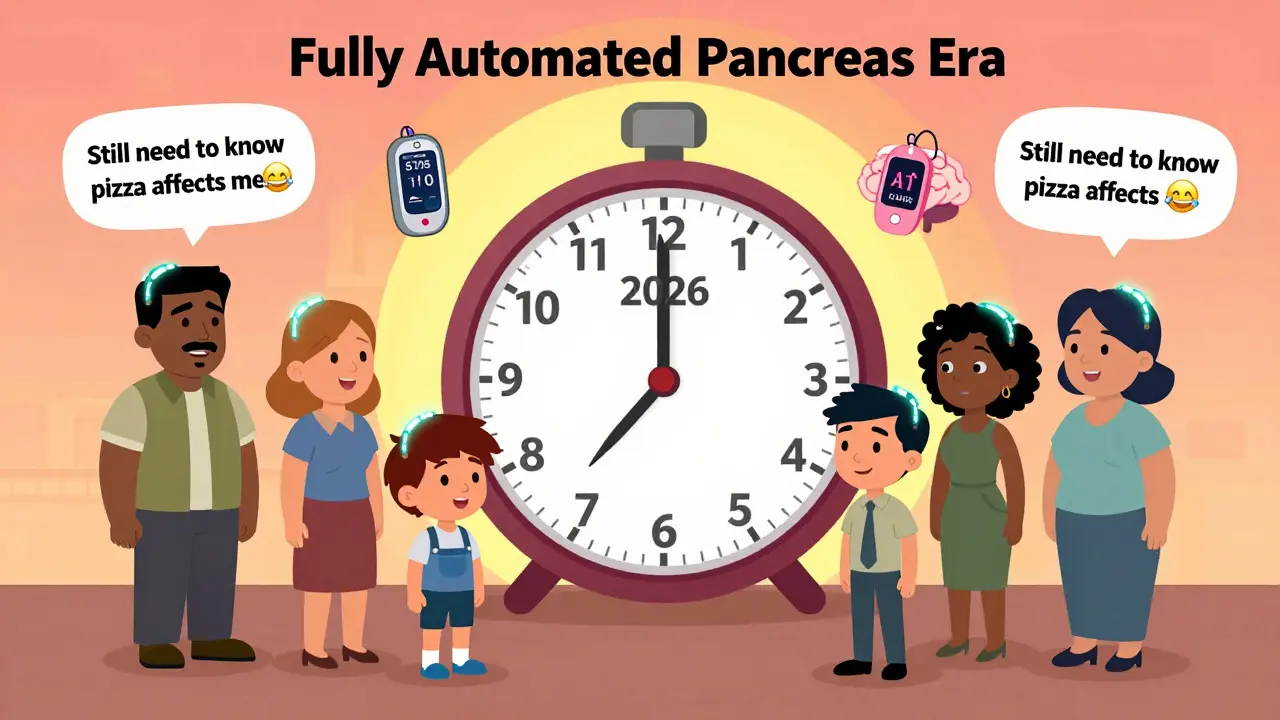
And while automation helps, it’s not magic. You still need to understand your body. If you eat pizza, you still need to know how it affects you. If you’re sick, you still need to monitor ketones. The system reduces your workload-but not your responsibility.
What’s Coming Next?
The next wave is coming fast. Tandem’s Control-IQ Technology 3.0, released in late 2023, already cuts time below range by another 1.8%. Omnipod 5’s “Autonomous” mode, in beta testing in early 2024, will eliminate meal announcements entirely. Beta Bionics’ Project Eiger, targeting 2026, will add activity tracking and stress biomarkers-maybe even heart rate data-to predict insulin needs even better.
By 2025, we’ll likely see interoperable systems. That means you could use a Dexcom CGM with a Tandem pump, or an Abbott sensor with an iLet. No more vendor lock-in. And with FDA pushing for cybersecurity updates, these devices will get safer, too.
Experts predict fully closed-loop systems will become standard in 5 years. That means no more carb counting. No more boluses. Just eat, move, sleep-and let the system handle it.
Final Thoughts
Closed-loop systems aren’t perfect. They’re expensive. They can glitch. They require learning. But for thousands of people, they’ve changed everything. They’ve given back sleep. They’ve reduced fear. They’ve made diabetes feel less like a prison and more like a manageable condition.
If you’re on insulin and tired of constant monitoring-if you’re ready to trade manual calculations for peace of mind-this isn’t a luxury. It’s the next step in care. And the data doesn’t lie: people using these systems are living better, healthier, more predictable lives.


Mike Hammer
February 15, 2026 AT 21:02Daniel Dover
February 16, 2026 AT 20:47Chiruvella Pardha Krishna
February 18, 2026 AT 15:03Joe Grushkin
February 20, 2026 AT 11:47Virginia Kimball
February 20, 2026 AT 22:13Kapil Verma
February 21, 2026 AT 19:15Mandeep Singh
February 22, 2026 AT 19:11Betty Kirby
February 24, 2026 AT 08:37Josiah Demara
February 25, 2026 AT 02:47Kaye Alcaraz
February 26, 2026 AT 09:45Sarah Barrett
February 27, 2026 AT 13:56Charlotte Dacre
February 27, 2026 AT 23:45Esha Pathak
February 28, 2026 AT 11:52Erica Banatao Darilag
March 1, 2026 AT 03:26