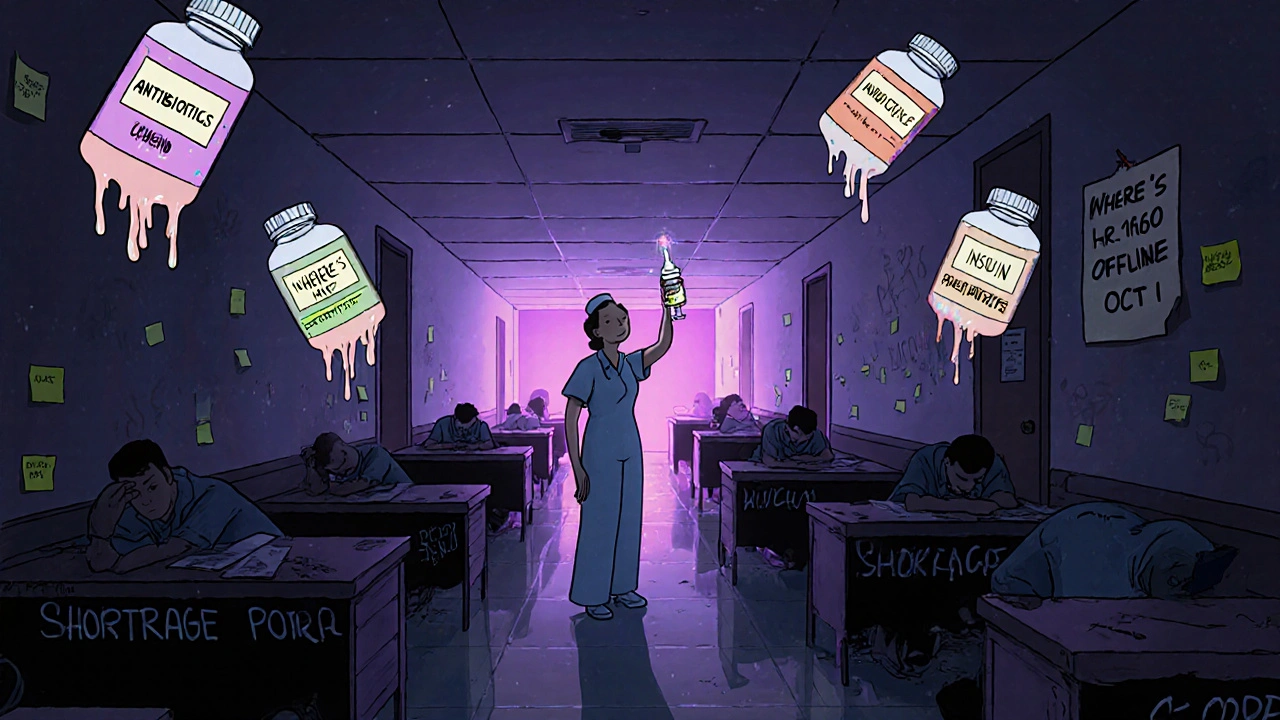
Right now, over 287 drugs are in short supply across the U.S., and nearly half of them are life-saving medications - antibiotics, cancer treatments, heart drugs. Hospitals are rationing doses. Patients are getting delayed care. And Congress? Two bills have been introduced to fix this, but they’re stuck in limbo - not because they’re flawed, but because the government has been shut down for over 40 days.
The Drug Shortage Prevention Act of 2025 (S.2665)
The most concrete attempt to stop drug shortages is Drug Shortage Prevention Act of 2025, introduced by Senator Amy Klobuchar in August. It doesn’t promise new money. It doesn’t force factories to make more pills. Instead, it asks manufacturers to speak up sooner.
Here’s how it works: if a company sees demand for a critical drug suddenly spike - say, because of a flu outbreak or a new clinical guideline - they’d have to notify the FDA within 72 hours. Right now, many companies wait until they’re already running out. By then, it’s too late. The FDA can’t scramble fast enough. This bill wants to give them a heads-up.
The idea isn’t new. The FDA already has a Drug Shortage Portal. But it’s outdated. And since the shutdown began in October, the system hasn’t been updated. Staff who monitor shortages have been furloughed. So even if a company called in today, no one would be there to act.
The bill’s strength? It targets the root cause: 63% of shortages come from manufacturing delays, not lack of demand. If companies report early, the FDA could help them find alternative suppliers, speed up inspections, or even temporarily waive certain rules. But without funding - an estimated $45 million a year - the FDA can’t hire staff to manage the new system. And with the federal budget in chaos, that money isn’t coming anytime soon.
The Health Care Provider Shortage Minimization Act (H.R.1160)
If S.2665 is about pills, H.R.1160 is about people. There are 122 million Americans living in areas where there aren’t enough doctors, nurses, or primary care providers. That’s not a future problem. It’s happening now. In rural towns, patients drive three hours for a blood pressure check. In cities, ERs are overwhelmed because there aren’t enough nurses to staff them.
But here’s the problem: no one knows what H.R.1160 actually says. The bill was introduced in the House in August. Its title is clear. But Congress.gov has no summary. LegiScan has no committee assignment. No sponsors beyond the introducer. No text published. It’s a ghost bill.
Experts believe it’s meant to expand training programs, offer loan forgiveness for providers who work in underserved areas, or loosen licensing rules across state lines. These are proven tools. The National Health Service Corps has placed over 15,000 providers in shortage areas since 2010. The American Association of Medical Colleges predicts a shortfall of 124,000 doctors by 2034. So the need is real. But without a draft, no one can support it. No one can oppose it. It’s just sitting there.
Why Nothing’s Moving
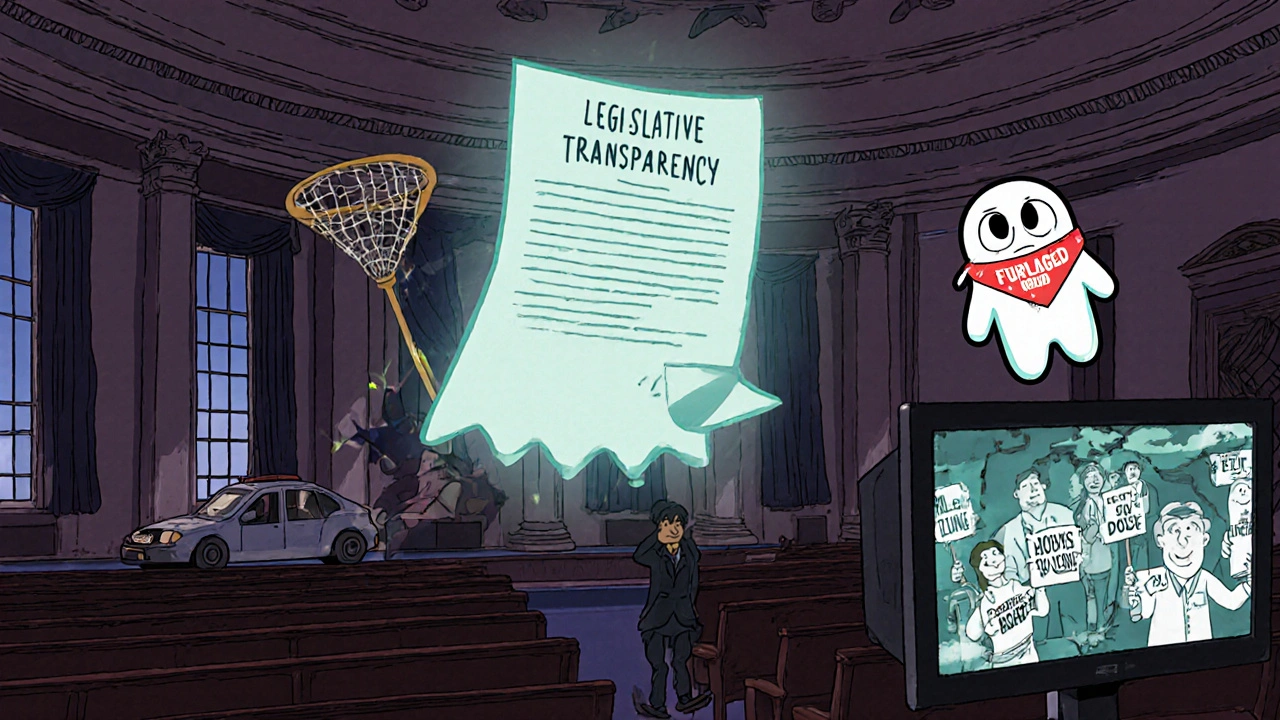
The biggest reason these bills aren’t advancing? The longest government shutdown in U.S. history. It started October 1, 2025. Over 800,000 federal workers are furloughed - including every single person at the FDA who tracks drug shortages, every staffer at HRSA who maps provider gaps, and every budget analyst who could tell Congress whether these bills are affordable.
Meanwhile, Congress is busy with other things. House Republicans pushed a vote to let senators sue over phone records. The Senate proposed a continuing resolution that extends funding - but only through January 30, 2026 - with zero mention of drug or provider shortages. The Stop Secret Spending Act? That’s getting attention. But it’s about Treasury transparency, not medicine.
Healthcare organizations are screaming. The American Hospital Association says 98% of hospitals faced at least one critical drug shortage in Q3 2025. The AMA survey found 87% of physicians are seeing real harm - patients getting weaker antibiotics, delayed cancer treatments, insulin substitutions that don’t work as well. But 88% of those doctors had never heard of H.R.1160. And most don’t know S.2665 even exists.

What’s at Stake
If these bills die - and they likely will if the shutdown lasts past January - we’re looking at a repeat of past crises. In 2019, shortages of generic injectable antibiotics led to higher death rates in hospitals. In 2022, a shortage of pediatric asthma inhalers forced parents to ration doses. Both were predictable. Both were preventable.
Today, the same patterns are repeating. The FDA knows which drugs are most vulnerable. The manufacturers know when their supply chains are strained. The providers know when patients are suffering. But without a legal requirement to act early - and without government staff to respond - nothing changes.
Even if the shutdown ends next week, these bills are still in early stages. They’ll need hearings, amendments, votes. And they’ll need money. The current budget deficit is $1.74 trillion. Lawmakers are cutting foreign aid and public media. They’re not adding $45 million to save lives.
What Comes Next
There’s no magic fix. But here’s what could help:
- Public pressure: Call your rep. Ask if they support S.2665. Ask why H.R.1160 is invisible.
- Transparency: Demand the full text of H.R.1160 be published. No more ghost bills.
- Funding: Push for emergency appropriations to restart the FDA’s shortage monitoring system - even without new laws.
- State action: Some states are already creating their own drug shortage registries. More should follow.
The system isn’t broken because we don’t know how to fix it. We know how. We’ve done it before. We just stopped caring - until someone’s parent couldn’t get their chemo. Until a child couldn’t get their epinephrine. Until a nurse had to choose which patient got the last dose.
These bills aren’t radical. They’re basic. They’re common sense. And right now, they’re sitting in the dark, while the country waits.
What is the Drug Shortage Prevention Act of 2025?
The Drug Shortage Prevention Act of 2025 (S.2665) is a Senate bill that would require pharmaceutical manufacturers to notify the FDA within 72 hours if they anticipate increased demand for critical drugs. The goal is to give regulators time to respond before shortages occur, using existing tools like supplier coordination and inspection prioritization. It does not provide new funding or mandate increased production.
Why hasn’t H.R.1160 moved forward?
H.R.1160, the Health Care Provider Shortage Minimization Act of 2025, has no publicly available text, no committee assignment, and no sponsors listed beyond the introducer. Without a draft, it can’t be debated, amended, or voted on. Experts believe it’s meant to address workforce gaps, but until the full bill is released, it remains a placeholder with no legislative weight.
How many drugs are currently in shortage?
As of September 30, 2025, the FDA listed 287 drugs in shortage, with 47% classified as critical - meaning they’re used to treat life-threatening conditions like cancer, heart failure, or severe infections. Generic injectables and anesthetics are among the most affected.
Are drug shortages getting worse?
Yes. The number of critical drug shortages has increased 32% since 2021. Manufacturing delays - often due to quality control issues, raw material shortages, or single-source production - account for 63% of cases. The pandemic exposed how fragile the global supply chain is, and nothing has been done to fix it.
What role does the FDA play in drug shortages?
The FDA monitors shortages, works with manufacturers to resolve production issues, and can temporarily allow imports of drugs not yet approved in the U.S. But since the October 2025 government shutdown, FDA staff responsible for tracking shortages have been furloughed. The Drug Shortage Portal hasn’t been updated in over 40 days, leaving providers and hospitals in the dark.
Can states do anything about drug shortages?
Yes. Some states, like California and New York, have created their own drug shortage registries and emergency procurement programs. They can also fast-track licensing for out-of-state pharmacists or allow pharmacists to substitute equivalent drugs under certain conditions. These are stopgaps, but they’re helping where federal action has stalled.
What happens if Congress doesn’t act before the shutdown ends?
If the shutdown ends but no funding is allocated, both bills will likely stall until the next Congress. S.2665 and H.R.1160 are introduced in the 119th Congress (2025-2026). If they’re not passed by January 2027, they expire. A new Congress would have to reintroduce them - meaning another year of delays, and potentially more lives lost.
Frances Melendez
November 28, 2025 AT 01:51This is why I can't trust the government anymore. They let people die because they're too busy playing political games. It's not about funding-it's about morality. And right now, our leaders have none.
My uncle died waiting for a heart drug last year. They knew he needed it. They just didn't care enough to fix it.
Stop pretending this is about budgets. It's about who you decide is worth saving.
Jonah Thunderbolt
November 28, 2025 AT 13:15OMG 😭 this is literally the most tragic thing I've read all year. Like, how is this even legal?? We have AI that can predict stock trends in nanoseconds but can't track if someone's gonna run out of insulin??
Also H.R.1160 is just… a ghost?? Like a haunted bill?? 👻💀
Someone call the CDC. And maybe a priest. This is a spiritual crisis.
Rebecca Price
November 30, 2025 AT 07:03It’s fascinating how the same institutions that claim to protect public health are simultaneously dismantling their own capacity to do so.
The Drug Shortage Prevention Act isn’t radical-it’s administrative hygiene. It’s like asking a fire station to report when their hoses are low before the building catches fire.
And yet, we treat this like a philosophical debate instead of a logistical failure. We have the tools. We have the data. We just lack the will to use them.
Meanwhile, the ghost bill H.R.1160 is a metaphor for American governance: all promise, no substance. A performance of concern with zero accountability.
It’s not incompetence. It’s neglect dressed up as procedure.
shawn monroe
December 2, 2025 AT 03:00Let’s cut through the noise: 63% of shortages are manufacturing delays. That’s a supply chain failure, not a demand problem.
The FDA’s portal is a 2010-era Excel sheet with a fancy UI. No real-time alerts. No predictive analytics. No API integration with pharma ERP systems.
S.2665 is a Band-Aid on a severed artery. They need mandatory real-time inventory feeds from manufacturers-think IoT sensors on drug vials, blockchain traceability, AI-driven risk scoring.
And H.R.1160? If it’s not published, it doesn’t exist. Period. No legislative shadowboxing. Release the text or kill it.
Stop treating healthcare like a political prop and start treating it like infrastructure.
marie HUREL
December 3, 2025 AT 20:12I’ve been a nurse for 18 years. I’ve seen this happen. Not just once. Not just in one hospital. Everywhere.
When we ran out of epinephrine, we had to use half-doses. Parents cried. Kids shook. We felt helpless.
I don’t know if these bills will pass. But I know that if we don’t talk about it, nothing changes.
Maybe we start by asking our reps one question: 'Would you be okay if this happened to your child?'
And then we keep asking until someone answers.
Lauren Zableckis
December 5, 2025 AT 20:05It’s not that we don’t know how to fix this. It’s that we’ve chosen not to.
Every time I hear someone say 'it's too expensive,' I think about the families paying with their lives instead.
There’s no moral math that balances profit against a child’s breath.
We are failing. Quietly. Systematically. And we’re pretending it’s normal.
Asha Jijen
December 7, 2025 AT 02:06Edward Batchelder
December 8, 2025 AT 00:37I want to believe in this country. I really do.
But when I see nurses rationing insulin like it’s gold, and lawmakers arguing about phone records instead of patient lives… I feel ashamed.
We’ve solved harder problems. We landed on the moon. We cured polio. We built the internet.
Why can’t we make sure a diabetic gets their medicine?
It’s not a technical problem. It’s a moral one.
And I refuse to accept that we’ve lost the will to do what’s right.
reshmi mahi
December 9, 2025 AT 00:42laura lauraa
December 9, 2025 AT 09:38It’s not merely a policy failure-it’s an ontological collapse of the social contract.
When the state abdicates its duty to preserve life, it ceases to be a state. It becomes a bureaucratic theater, a simulacrum of governance.
The FDA portal isn’t outdated-it’s abandoned. The ghost bill isn’t forgotten-it’s deliberately erased.
We are living in the aftermath of a moral vacuum, where the only currency that matters is political capital, and human life is the collateral damage.
And yet, we still vote. We still believe. We still whisper prayers to machines that no longer hear us.
Is this what democracy looks like when it dies? Not with a bang-but with a silence.
Gayle Jenkins
December 11, 2025 AT 06:46Okay, real talk: if you’re reading this and you’re not calling your rep right now-you’re part of the problem.
Not because you’re evil. But because you’re silent.
These bills aren’t going to pass because someone else will do it. They’ll pass because YOU showed up.
Find S.2665. Find H.R.1160. Type their names into the search bar. Call your rep. Say: 'I need to know where you stand.'
Don’t wait for someone else to care. You are the someone else.
And if you’re too tired? That’s okay. But don’t pretend you didn’t know.
Because someone’s parent is waiting. And they can’t wait forever.
Kaleigh Scroger
December 11, 2025 AT 15:22Let’s be honest-the FDA’s system has been broken for a decade. They’ve been running on fumes since 2015. The shutdown didn’t cause the problem-it exposed it.
Manufacturers don’t report shortages because there’s no penalty for not reporting. No incentive. No accountability. It’s a free pass.
S.2665 is the bare minimum. It’s not even a solution. It’s a first step. And even that’s too much for Congress to handle.
Meanwhile, H.R.1160 is a joke. No text? No sponsors? No committee? That’s not a bill. That’s a press release dressed in legislative clothing.
Real change requires three things: transparency, enforcement, and funding.
We have the first two in theory. We’re missing the third. And without funding, every other reform is just noise.
Stop treating healthcare like a charity. Treat it like a public good. Because it is.
Elizabeth Choi
December 11, 2025 AT 18:54Let’s not romanticize this. The 287 drugs in shortage? 92% are generics. They’re cheap. They’re low-margin. No one wants to make them.
The real issue isn’t the FDA. It’s the market. Pharma doesn’t make money on antibiotics. They make money on $500,000 cancer drugs.
So they don’t invest in the infrastructure for the drugs that actually save lives.
S.2665 won’t fix that. It just makes them report the problem faster.
And H.R.1160? A distraction. We need to restructure reimbursement. We need to subsidize generic production. We need to break up monopolies.
But none of that sounds good on a campaign ad.
So we get silence. And ghost bills. And a nation pretending it didn’t see this coming.