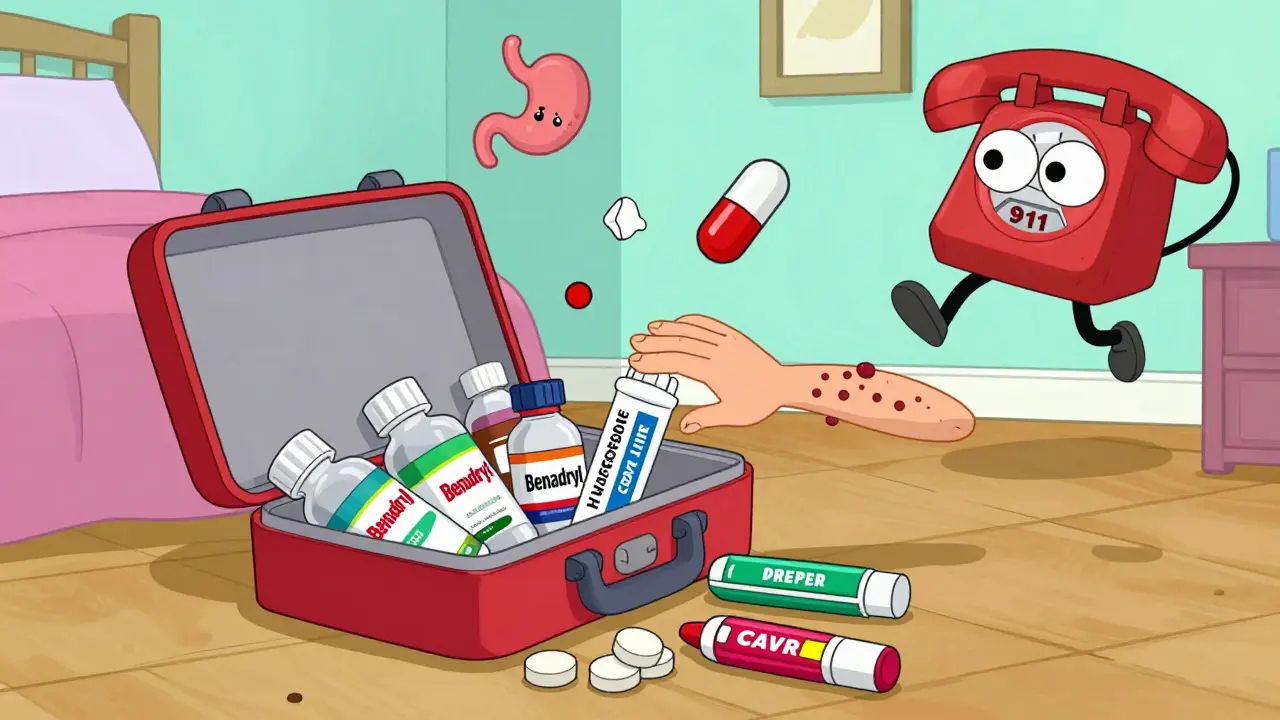
Why You Need a Home Emergency Kit for Medication Side Effects
Most people keep a first-aid kit for cuts, burns, and sprains. But what about the unexpected reactions from the pills you take every day? About 70% of American adults are on at least one prescription drug. That means someone in your household is likely at risk for a medication side effect-something that can go from mild nausea to life-threatening swelling in minutes.
It’s not about fearing medicine. It’s about being ready. The Mayo Clinic reports that over 1.5 million people in the U.S. are harmed by medication errors each year. Many of those cases could’ve been handled faster with a simple, well-stocked emergency kit. This isn’t a replacement for calling 911. It’s your first line of defense when seconds count.
Essential Medications to Keep on Hand
Your kit should include drugs that target the most common reactions. Don’t guess-use what experts recommend.
- Diphenhydramine (Benadryl): For allergic reactions like hives, itching, or mild swelling. About 5-10% of people have some form of reaction to medications, and antihistamines are the go-to for quick relief.
- Hydrocortisone cream (1%): Apply to red, itchy rashes caused by drug reactions. Skin issues make up 2-3% of all adverse drug events.
- Antacids (like Tums or Maalox): For heartburn, nausea, or upset stomach from antibiotics, painkillers, or iron supplements. Gastrointestinal side effects are the most common-20-30% of all medication reactions.
- Loperamide (Imodium): For sudden, severe diarrhea, especially after starting antibiotics. Up to 25% of people on antibiotics get this.
- Epinephrine auto-injector (EpiPen): Only if prescribed. If you or someone in your home has a known severe allergy to a medication, this is non-negotiable. Anaphylaxis can kill in under 10 minutes.
- Glucose tablets: For people on insulin or diabetes medications. Low blood sugar from drug interactions can cause confusion, shaking, or fainting.
Never stock aspirin for children. Reye’s syndrome-a rare but deadly condition-can develop if kids take aspirin during viral illnesses. Use acetaminophen or ibuprofen instead, dosed by weight.
Emergency Contacts You Can’t Afford to Miss
When something goes wrong, you won’t have time to search for numbers. Write them down and keep them in your kit.
- 1-800-222-1222: The national Poison Help hotline. Free, 24/7, and staffed by toxicology experts. In 2022, U.S. poison centers handled over 2 million calls-11% were drug-related.
- www.poison.org: The online version of the same service. Great for quick reference if you can’t talk.
- Your doctor and pharmacist: Include names, numbers, and preferred times to call. Pharmacists can tell you if a new symptom is likely from a drug interaction.
- Local emergency services: 911. Always call 911 for chest pain, trouble breathing, loss of consciousness, or sudden weakness. Your kit helps you wait safely-not avoid the hospital.
Keep a printed copy of your family’s emergency contacts taped to the inside of the kit lid. No one remembers numbers when they’re panicking.
Medical Records That Save Lives
A paramedic won’t know your son’s allergy to penicillin unless you tell them. And if you’re unconscious, they won’t know you’re on blood thinners.
Include a simple form for each person in your home with:
- Full name and date of birth
- All current medications (name, dose, frequency)
- Known allergies (including food and drugs)
- Previous serious side effects (like rashes, swelling, or fainting)
- Chronic conditions (diabetes, heart disease, epilepsy)
Use the 5 Rights of Medication Safety as your checklist: right patient, right drug, right dose, right route, right time. This isn’t just for nurses-it’s for you.
For older adults taking 4-5 meds daily, add a simplified weekly chart with large print. Many don’t remember if they took their pill at 8 a.m. or 2 p.m.
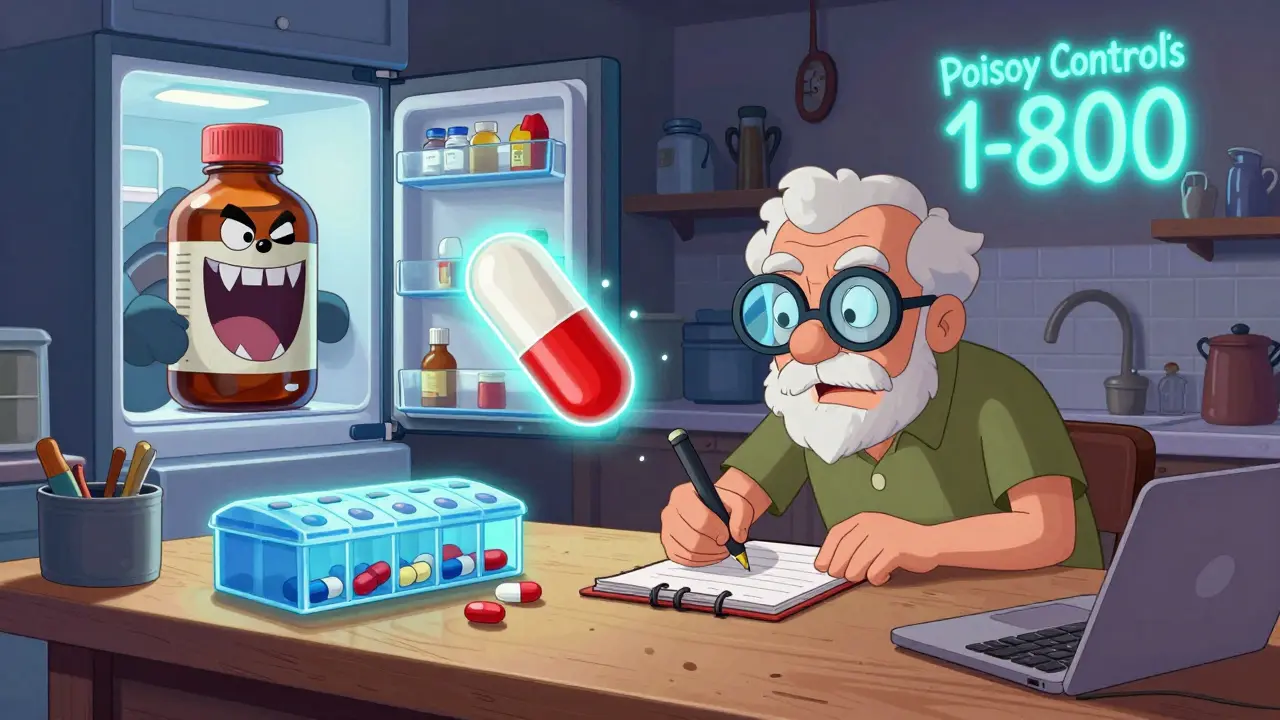
Storage and Maintenance: Don’t Let Your Kit Go Bad
Expired medicine isn’t just useless-it can be dangerous. The FDA says most drugs lose potency over time, especially if stored in heat or humidity.
Store your kit:
- In a cool, dry place-like a bedroom drawer or closet. Not the bathroom.
- Out of reach of children. Over 60,000 kids end up in ERs each year from accidental poisoning.
- In its original container. Labels have dosage info, expiration dates, and warnings.
Check it every three months. Ask yourself:
- Are any pills discolored or crumbly?
- Are any creams separated or smelly?
- Do the batteries in any devices still work?
- Has anyone started a new medication? Update the forms.
Replace anything expired-even if it looks fine. A 2022 study from the American Pharmacists Association found that improperly stored meds can lose up to 50% of their strength before the printed date.
What NOT to Include
Some things sound helpful but aren’t safe.
- Activated charcoal: Old guides said it “absorbs poison.” Modern toxicology says it doesn’t work for most drugs and can cause more harm if misused. Only use if a poison control expert tells you to.
- Aspirin for kids: Never. Even one tablet can trigger Reye’s syndrome.
- Multiple painkillers: Don’t stock both Tylenol and Advil unless you know exactly how to use them. Acetaminophen overdose causes 56,000 ER visits a year-often because people double up without realizing.
- Herbal supplements: They interact with prescriptions in unpredictable ways. Save them for your medicine cabinet, not your emergency kit.
Special Cases: Kids, Seniors, and Chronic Illness
Your kit isn’t one-size-fits-all.
For children: Use weight-based dosing. Acetaminophen is 10-15 mg per kg of body weight. Ibuprofen is 5-10 mg per kg. Keep a small dosing syringe in the kit-not a teaspoon.
For seniors: Add a pill organizer with clear labels. Include a small magnifying glass. Many don’t read tiny print. Also, include a list of all prescribers. Seniors often see multiple doctors and forget what each one prescribed.
For diabetes: Glucose tablets are essential. Low blood sugar from insulin or metformin can come on fast. Don’t rely on candy-it melts, sticks, or has too much sugar.
For mental health meds: If someone takes antidepressants or anti-anxiety drugs, abrupt stopping can cause seizures or severe withdrawal. Include a note: “Do not stop these without doctor’s approval.”
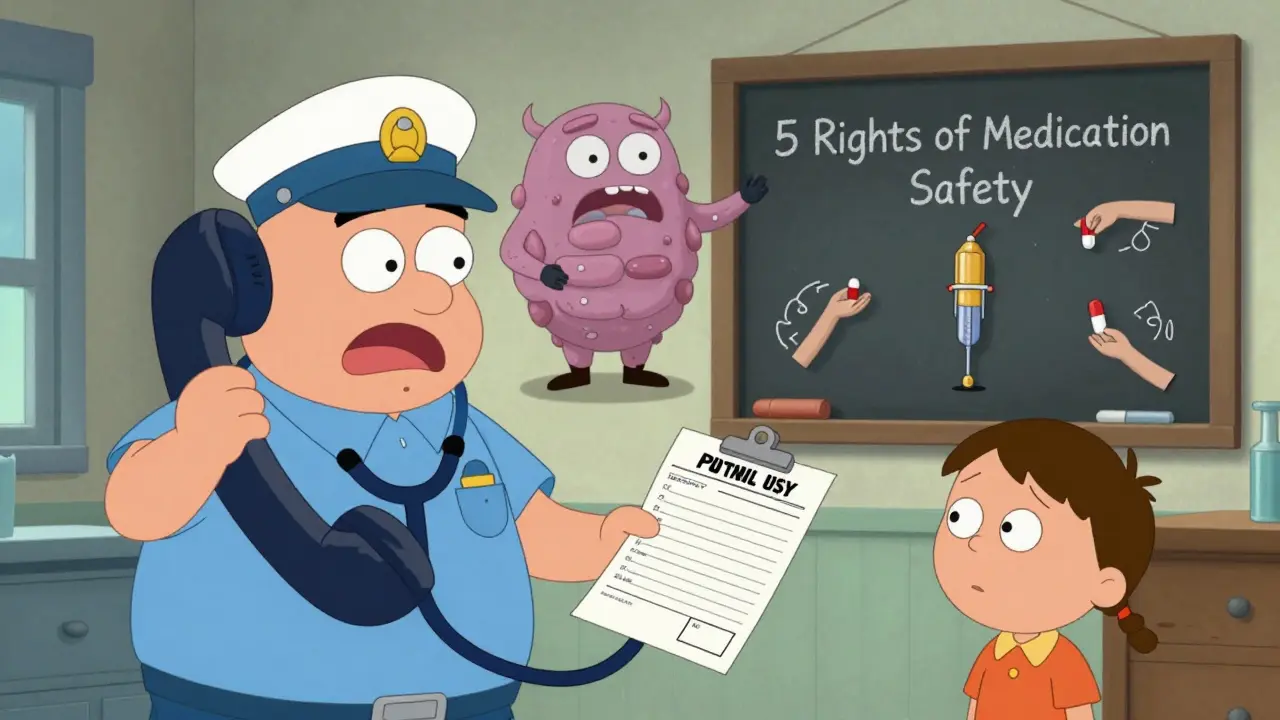
Documenting Reactions: Your Secret Weapon
When a side effect happens, write it down. Not later-right then.
Use a small notepad and waterproof pen (keep them in the kit). Record:
- Time the reaction started
- What medication was taken and when
- What symptoms appeared (itching? dizziness? vomiting?)
- What you did (took antihistamine? called poison control?)
- How the person responded
The American Medical Association says this kind of documentation improves diagnosis accuracy by 40%. It turns a confusing, scary moment into clear data for your doctor.
When to Call 911 vs. When to Use the Kit
Know the difference.
Call 911 immediately if:
- Chest pain or pressure
- Difficulty breathing
- Swelling of the face, tongue, or throat
- Sudden confusion, slurred speech, or weakness on one side
- Loss of consciousness
Use your kit for:
- Mild rash or itching
- Upset stomach or diarrhea
- Mild headache after a new medication
- Low blood sugar if you’re diabetic and alert
Then call poison control or your doctor. The kit buys you time. It doesn’t replace professional care.
Final Tip: Talk to Your Pharmacist
Before you build your kit, sit down with your pharmacist. They know your meds better than anyone. Ask:
- “Which side effects should I watch for with these drugs?”
- “Which OTC meds are safe to use with them?”
- “Do any of these have dangerous interactions?”
Pharmacist consultation reduces medication errors by 35%. That’s not a small number. That’s the difference between a scary night and a hospital stay.
Build this kit once. Check it every three months. Update it every time a medication changes. It’s not about fear. It’s about control. When your body reacts to something you took to help you, you should be ready-not helpless.


brooke wright
January 16, 2026 AT 16:39Nick Cole
January 16, 2026 AT 22:05Nicholas Gabriel
January 17, 2026 AT 07:49Isabella Reid
January 18, 2026 AT 17:15Jody Fahrenkrug
January 19, 2026 AT 11:23Kasey Summerer
January 20, 2026 AT 14:42Allen Davidson
January 21, 2026 AT 10:58john Mccoskey
January 22, 2026 AT 17:41Rob Deneke
January 23, 2026 AT 09:54evelyn wellding
January 25, 2026 AT 03:32vivek kumar
January 26, 2026 AT 17:26Corey Sawchuk
January 26, 2026 AT 23:21Corey Chrisinger
January 27, 2026 AT 08:52Bianca Leonhardt
January 27, 2026 AT 21:13Travis Craw
January 29, 2026 AT 13:50