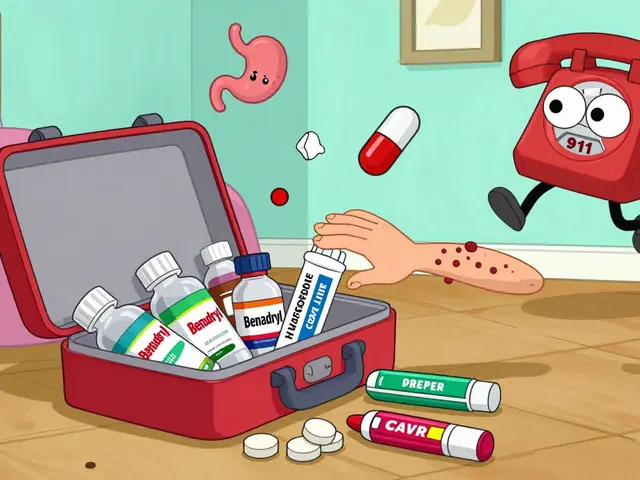
Mistakes in medication administration happen, but some are far more forgiving than others. When a nurse gives the wrong vitamin dose, the result might be negligible. But when a mistake happens with a high-potency anticoagulant or a concentrated electrolyte, the results can be catastrophic. That is why identifying high-alert medications is a non-negotiable skill in any clinical setting. These aren't necessarily drugs that are errored more often than others; they are simply the ones where an error is most likely to lead to severe patient harm or death.
The gold standard for identifying these risks comes from the Institute for Safe Medication Practices (ISMP), a non-profit organization that maintains the definitive list of high-alert meds. Their guidance, most recently updated in January 2024, helps hospitals move away from guessing and toward a standardized safety framework. The goal isn't just to label a drug as "dangerous," but to trigger specific safeguards-most notably the independent double check-to catch a mistake before it reaches the patient.
What Exactly Are High-Alert Medications?
High-alert medications are pharmaceutical agents that pose a significant risk of causing severe patient harm when used in error. These drugs often have a narrow therapeutic index, meaning the window between a dose that heals and a dose that harms is incredibly small. They might also have complex dosing requirements that make manual calculation a risky venture.
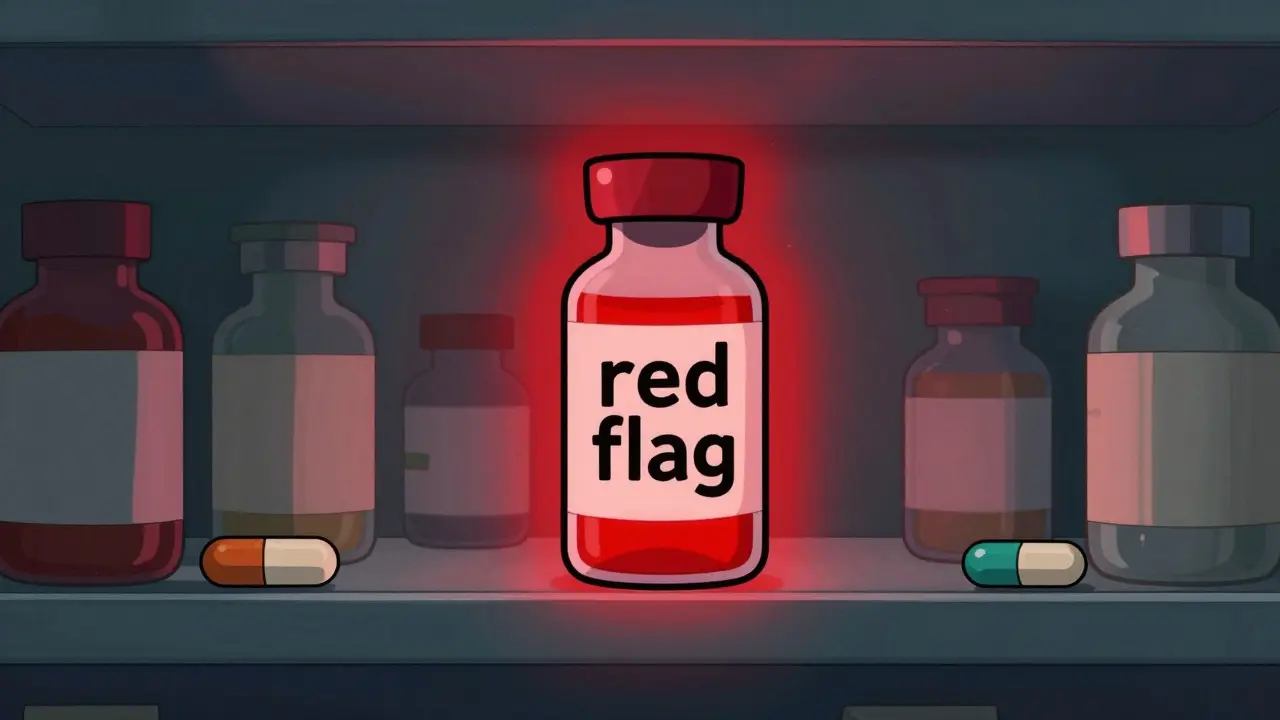
Think of these as the "red flags" of the pharmacy. While a standard antibiotic might be high-volume, a concentrated dose of potassium chloride is high-risk. The danger isn't always the drug itself, but the concentration and the route. For instance, giving a medication intended for intravenous (IV) use via the intra-arterial route can cause immediate tissue necrosis and limb loss.
Common Categories That Require a Second Pair of Eyes
While every hospital has its own specific policy, most follow the ISMP's categories. If you are unsure if a medication needs a double check, look for these high-risk groups:
- Insulin and Antidiabetics: IV insulin infusions and boluses are notorious for causing sudden, severe hypoglycemia.
- Anticoagulants: Intravenous Heparin and direct thrombin inhibitors like Argatroban can lead to uncontrolled bleeding if the dose is skewed.
- Concentrated Electrolytes: Potassium chloride (1mEq/ml and above) and potassium phosphate. If pushed too quickly or given in too high a concentration, these can stop a heart instantly.
- Neuromuscular Blocking Agents: Paralytics used in anesthesia or intubation. An error here can leave a patient unable to breathe without mechanical support.
- Chemotherapeutic Agents: Due to their extreme toxicity, all dosage forms of chemotherapy almost always require a witness.
- Opioids and Sedatives: Especially when delivered via Patient-Controlled Analgesia (PCA) pumps, where a programming error can lead to respiratory depression.
| Medication Type | Primary Risk | Standard Safeguard | Double Check Required? |
|---|---|---|---|
| IV Insulin | Hypoglycemia | Glucose monitoring | Yes (Independent) |
| Potassium Chloride (Conc.) | Cardiac Arrest | Dilution protocols | Yes (Independent) |
| Heparin IV | Hemorrhage | aPTT/Anti-Xa monitoring | Yes (Independent) |
| Chemotherapy | Systemic Toxicity | Specialized Pharmacy Prep | Yes (Independent) |
The Art of the Independent Double Check (IDC)
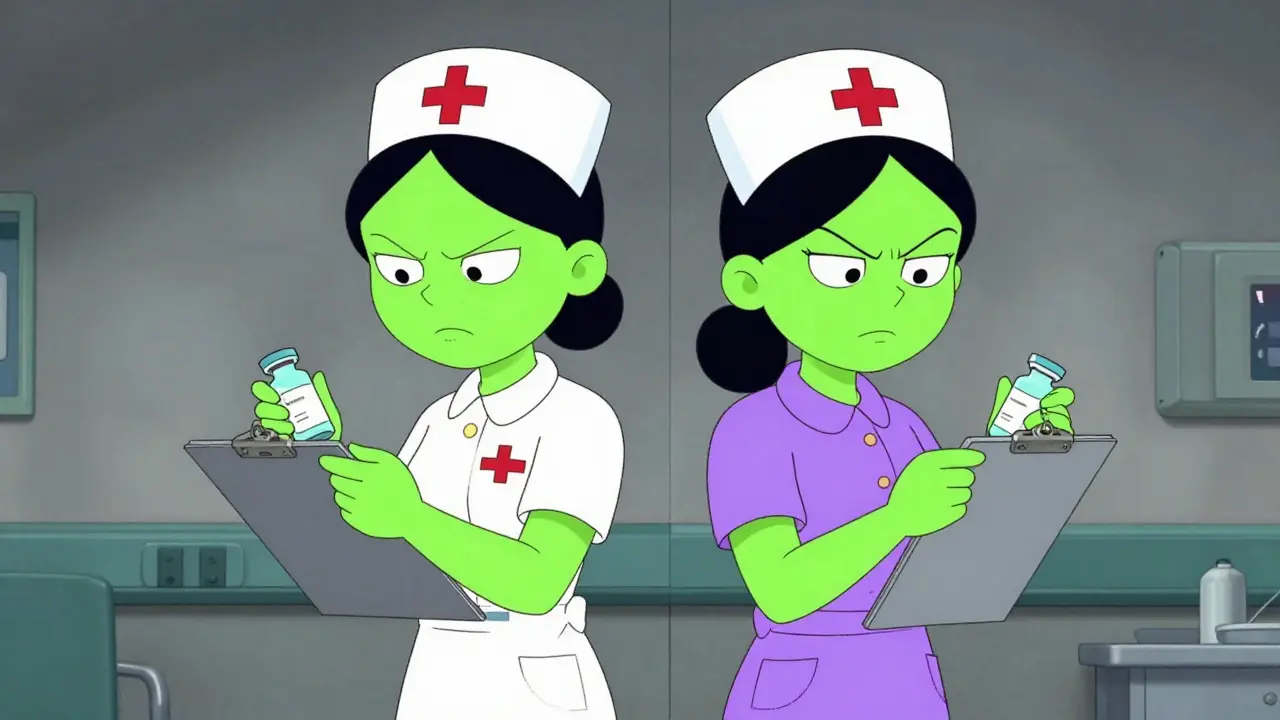
A common mistake in busy wards is the "simultaneous check." This happens when one nurse says, "I've got 5 units of insulin here, right?" and the second nurse just nods and signs. That isn't a safety check; it's a confirmation bias. Research shows that simultaneous checks can drop the effectiveness of error detection from 87% down to a meager 32%.
A true Independent Double Check is a process where two licensed clinicians, alone and apart from each other, verify the order. To do this right, the second person must not be told what the first person found. They should look at the original order and the medication independently, reach their own conclusion, and only then compare results.
When performing an IDC, you must verify these five critical elements:
- Right Patient: Use two distinct identifiers (e.g., name and date of birth) and check the wristband.
- Right Medication: Match the drug name on the vial/bag exactly to the prescription. Watch for look-alike, sound-alike (LASA) drugs.
- Right Dose: Independently calculate the dose. If the order is in mcg/kg/min, both nurses should do the math separately.
- Right Route: Confirm the medication is going into the correct line (IV, IM, subcutaneous, etc.).
- Right Time: Ensure the frequency and timing align with the patient's current plan of care.
Avoiding the "Checklist Fatigue" Trap
If every single drug required a double check, nurses would stop paying attention. This is called alert fatigue. The ISMP actually cautions against using manual IDCs for everything. Instead, they advocate for a risk-based approach. For some drugs, technology is a better safeguard than a human second guess.
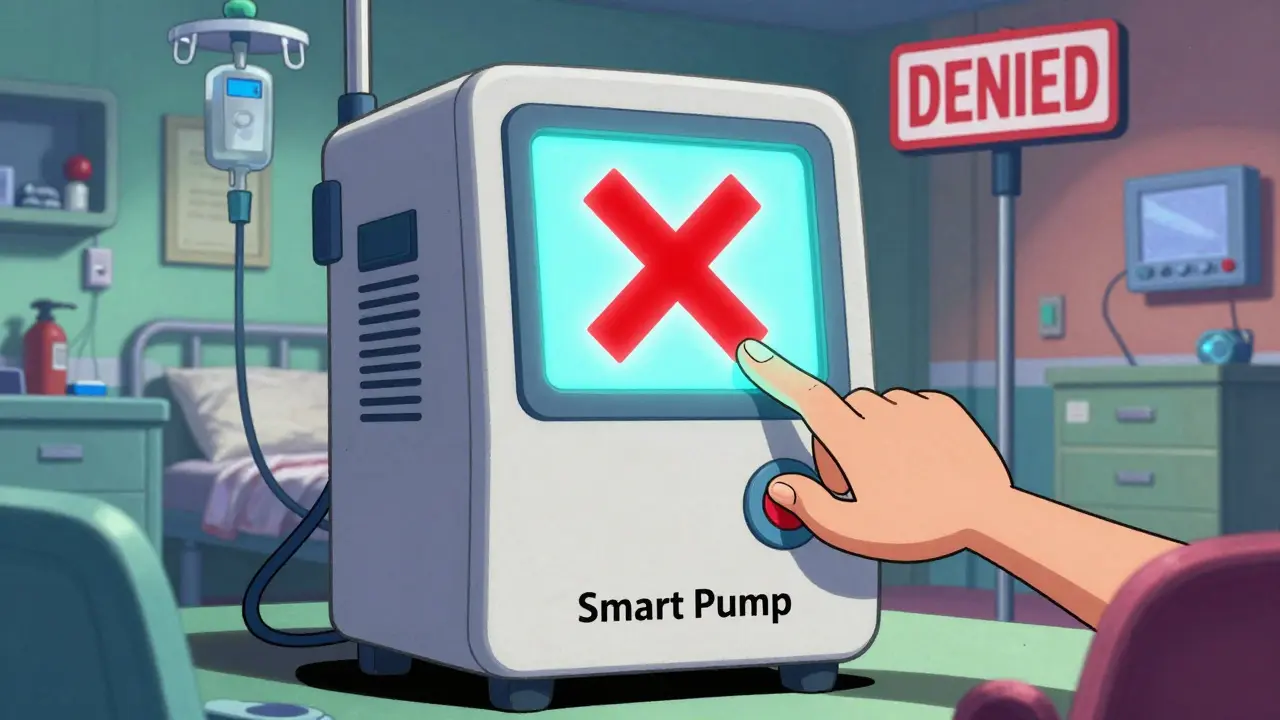
For example, Smart Pumps with Dose Error Reduction Systems (DERS) act as a "forcing function." These pumps have hard limits programmed in; if a nurse tries to enter a dose of insulin that is ten times the normal limit, the pump simply will not allow the infusion to start. Data from the ECRI Institute suggests that combining smart pumps with targeted IDCs reduces errors by 63%, compared to only 42% for those relying solely on manual checks.
The most effective systems focus the human effort on the highest-risk tasks, such as pediatric chemotherapy or critical drips in an ICU, while letting software handle the routine limits of other high-alert meds.
Practical Workflow: How to Implement IDCs Without Slowing Down
The biggest complaint from frontline staff is that IDCs take too long-often adding 2 to 3 minutes per administration. In a crisis, like a cardiac arrest, these seconds feel like hours. However, the cost of a 3-minute check is far lower than the cost of a fatal dosing error.
To make this sustainable, successful hospitals like the Mayo Clinic incorporate "IDC time" into their actual staffing calculations. They don't just tell nurses to "find time"; they build it into the workflow. Other strategies include:
- Dual Electronic Signatures: Using an eMAR (Electronic Medication Administration Record) that requires two separate logins before the medication can be charted.
- Standardized Kits: Using pre-mixed, pharmacy-validated bags for high-alert meds to reduce the need for bedside compounding.
- Competency Modules: Regular training (such as 2-hour competency sessions) to ensure staff know the difference between a "sign-off" and a true "independent check."
What is the difference between a double check and an independent double check?
A standard double check often involves one person watching another or simply agreeing with their finding. An independent double check requires the second clinician to verify the medication, dose, and patient entirely on their own, without any input from the first person, before they compare their results. This eliminates confirmation bias.
Do all high-alert medications require a double check?
Not necessarily. While many do, the ISMP recommends using IDCs judiciously. For some medications, technology-based safeguards (like smart pumps with hard limits) are more effective than manual human checks. Your specific institutional policy will dictate which drugs on the high-alert list require a mandatory IDC.
How can I prevent confirmation bias during a witness verification?
The best way is to avoid stating the dose or drug name aloud until the second person has already looked at the order and the medication. If the first nurse says, "I have 10mg of Morphine," the second nurse is subconsciously primed to see 10mg, even if the vial actually says 100mg.
What happens if a second nurse isn't available during an emergency?
This is a common challenge in ED and ICU settings. Many organizations have "emergency overrides" or specific protocols for resuscitations, but the goal is always to have a second licensed professional verify high-risk doses as soon as safely possible. Some systems use pre-filled syringes prepared by pharmacy to mitigate this risk.
Who determines the list of high-alert medications?
The Institute for Safe Medication Practices (ISMP) provides the industry-standard list for acute care settings. However, individual healthcare systems (like the VHA or private hospital networks) may add to or modify this list based on their specific patient population and internal error data.
Next Steps for Clinical Staff
If you are a nurse or pharmacist looking to improve safety, start by reviewing your facility's current High-Alert Medication list. Compare it to the 2024 ISMP guidelines to see if there are gaps. If you notice that double checks in your unit have become "automatic sign-offs," bring it up during a huddle. Shifting the culture from "getting it done" to "getting it right" is the only way to truly prevent these errors.
For those in leadership, focus on the environment. You cannot expect a perfect independent double check in a chaotic, understaffed hallway. Prioritize the implementation of smart pumps and eMAR dual-signatures to take the pressure off the human element while keeping the most critical safeguards in place.