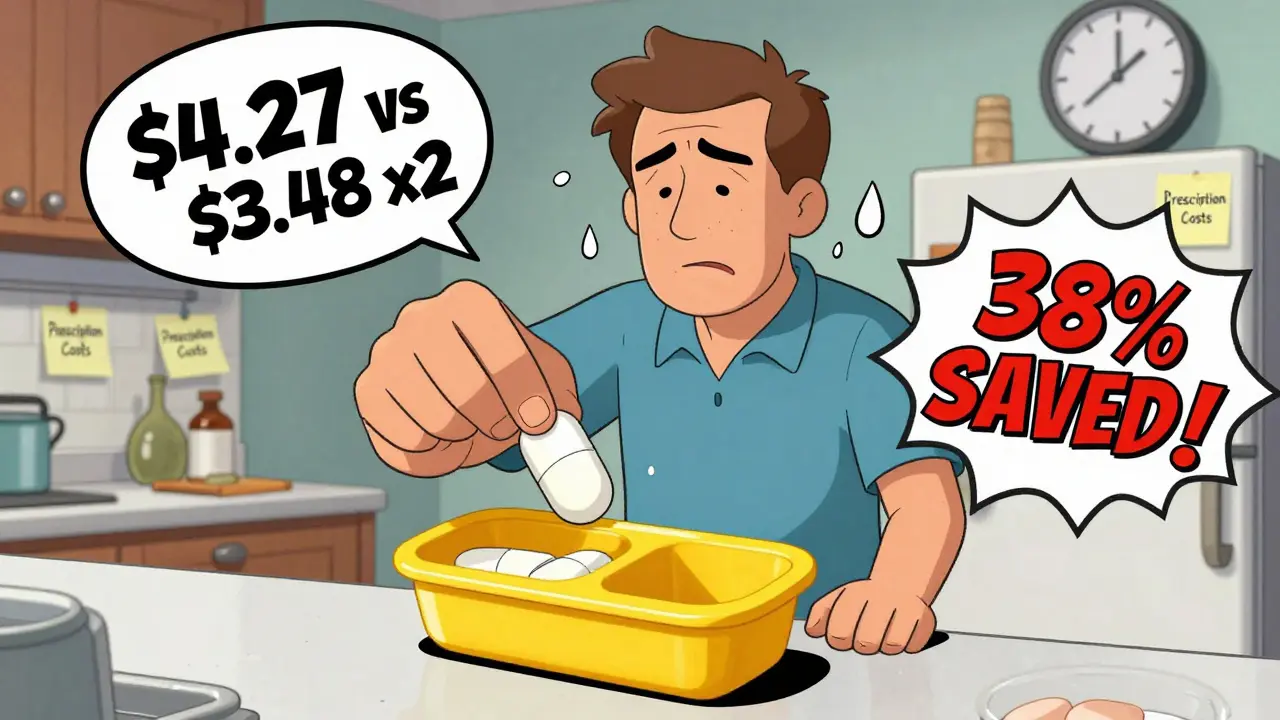
Many people in New Zealand and around the world are cutting pills in half to save money on prescriptions. It sounds simple-break a 40mg tablet into two 20mg doses and pay less. But what seems like a smart trick can turn dangerous if done wrong. The truth is, splitting pills can save you hundreds a year… or land you in the hospital. It’s not about being cheap. It’s about knowing which pills are safe to split, how to do it right, and when to say no.
Why Pill Splitting Saves Money
Pharmaceutical companies don’t price pills by the milligram. A 40mg tablet of atorvastatin might cost $4.27, while two 20mg tablets cost $3.48 each-totaling $6.96. Split the 40mg tablet, and you get two doses for less than half the price. That’s a 38% savings on just one medication. For someone taking three or four split pills a day, that adds up to over $1,200 a year. This isn’t just theory. A 2022 Kaiser Family Foundation study found nearly 1 in 7 Medicare beneficiaries split pills to cut costs. Seniors and low-income patients are the most likely to do it. The reason? Many drugs follow a broken pricing model: higher doses cost less per milligram. So if your doctor prescribes 20mg daily, buying a 40mg tablet and splitting it saves money-if it’s safe to split.Not All Pills Can Be Split
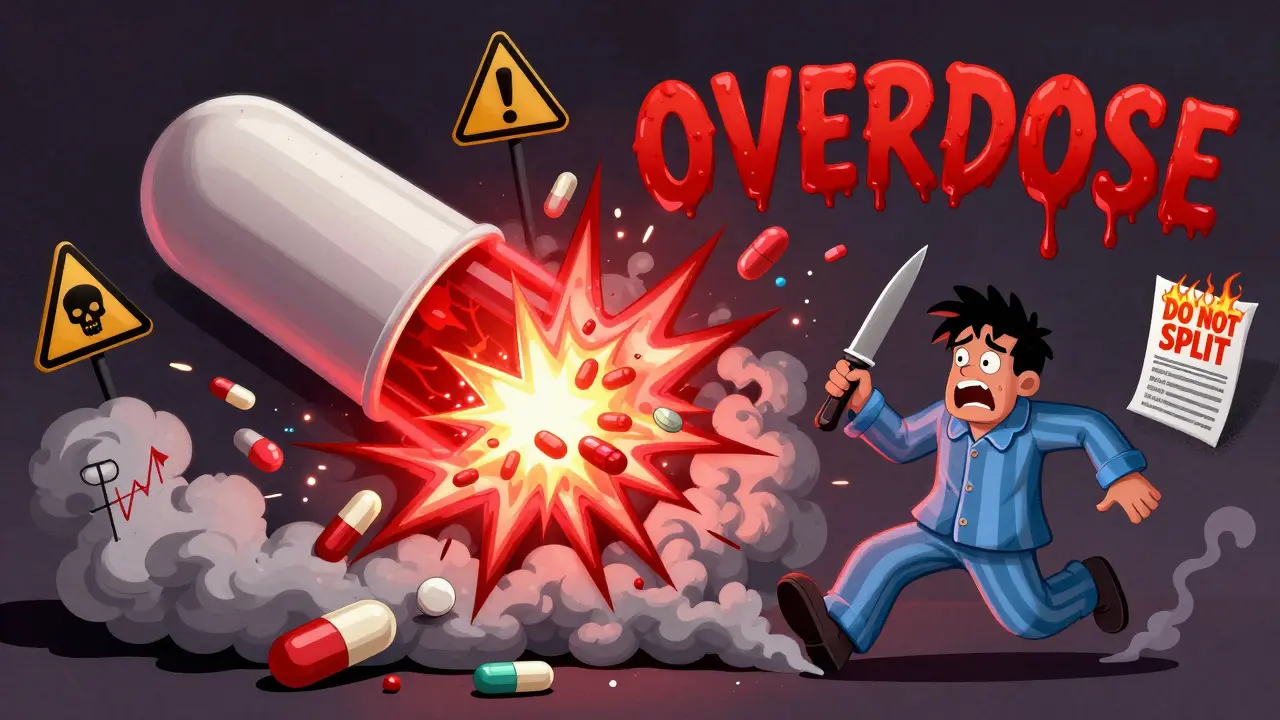
This is where things get risky. The FDA says you should never split pills unless the package insert says it’s okay. That’s not a suggestion. It’s a warning backed by real harm. Here are the pills you should never split:- Extended-release tablets (like metformin ER, Adderall XR, or OxyContin): These have a special coating or matrix that controls how the drug releases over hours. Cut them open, and you get a full dose all at once-risking overdose.
- Enteric-coated pills (like omeprazole or aspirin EC): These are designed to pass through your stomach and dissolve in the intestine. Splitting them exposes the drug to stomach acid, making it useless-or irritating your stomach lining.
- Narrow therapeutic index drugs (like warfarin, digoxin, levothyroxine, or tacrolimus): These drugs work in a very tight range. A 10% dose change can cause serious problems. One patient split their Synthroid and ended up with a TSH level so high they needed emergency treatment.
The Right Way to Split a Pill
If your pill is safe to split, here’s how to do it right:- Get approval first. Talk to your doctor or pharmacist. Ask: “Is this pill FDA-approved for splitting?” and “Is there a lower-strength version available?”
- Use a pill splitter. Not a knife. Not your fingernails. Not a pair of scissors. A dedicated pill splitter-those small plastic devices with a V-shaped holder and a retractable blade-costs $3 to $10 at any pharmacy. They hold the pill steady and cut cleanly.
- Split it right before you take it. Once you cut a pill, it starts to degrade. Moisture, heat, and air can break down the active ingredient. Don’t split a week’s supply. Split one at a time.
- Check the halves. If one piece is crumbly, uneven, or stuck to the splitter, throw it out. You’re not getting the right dose.
- Wash your hands and the splitter. After each use. Dust from pills can build up and contaminate the next one.
What Happens When You Do It Wrong
People don’t always realize how dangerous this can be until it’s too late. One Reddit user split their amlodipine tablet-a time-release blood pressure drug-and ended up in the ER with dangerously low blood pressure. Another split their Synthroid and had to get emergency blood work after their thyroid levels went off the charts. Between 2018 and 2023, the FDA recorded 127 adverse events directly tied to improper pill splitting. Even when people think they’re doing it right, they’re not. In a 2010 study, 94 volunteers split 25mg hydrochlorothiazide tablets. Forty-one percent of the halves varied by more than 10% from the target dose. Twelve percent were off by over 20%. That’s not a mistake-it’s a hazard.When Splitting Doesn’t Save Money
It’s not always cheaper. Sometimes, the math doesn’t work. For example, sertraline: a 100mg tablet costs $0.12. A 50mg tablet costs $0.08. Splitting the 100mg tablet saves you nothing. In fact, you’re better off buying two 50mg tablets. Lisinopril is another story. A 20mg tablet costs $4.00. Two 10mg tablets cost $4.50. Splitting saves you 11%. That’s worth it. The key is to check prices. Use GoodRx or your pharmacy’s price list. Compare the cost per milligram. If the higher-dose tablet costs less per mg, splitting makes sense. If not, don’t bother.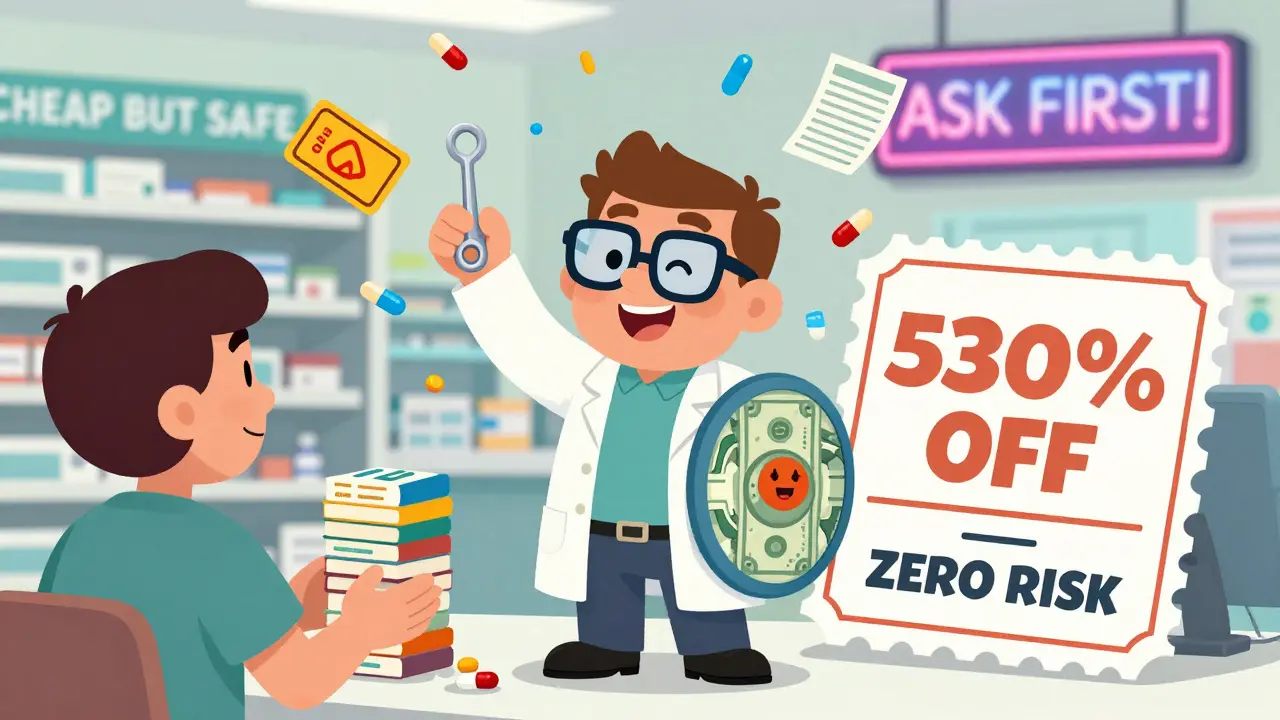
Better Alternatives to Pill Splitting
Pill splitting should be a last resort. Before you cut a pill, explore other options:- Pharmacy discount cards: Programs like GoodRx or SingleCare can cut prices by 30-70% on many medications.
- Manufacturer patient assistance programs: Most big drug companies offer free or low-cost meds to people who qualify based on income. You can apply online in minutes.
- Ask for generic versions: Many brand-name drugs have generics that cost 80-90% less.
- Ask your doctor about alternative meds: Sometimes, a different drug in the same class is cheaper and just as effective.
What to Do If You’ve Already Been Splitting Pills
If you’ve been splitting pills without checking with your doctor or pharmacist:- Stop immediately.
- Check the name of each pill you’ve split. Look up the manufacturer’s website or call your pharmacy to confirm if it’s approved for splitting.
- Bring your pill splitter and your medication list to your next appointment. Ask: “Which of these are safe to split?”
- If you’ve had symptoms like dizziness, irregular heartbeat, or unusual fatigue, tell your doctor. It could be related to inconsistent dosing.
Final Thoughts: Safety Over Savings
Pill splitting isn’t evil. It’s a response to a broken system. Medication prices are high. Many people are choosing between food and prescriptions. But saving money shouldn’t mean risking your health. The safest approach is simple:- Only split pills your doctor or pharmacist says are safe.
- Only use a pill splitter.
- Split one pill at a time.
- Check prices before you split.
- Ask about alternatives first.
Can I split any pill with a score line?
No. A score line just means the pill was designed to be split easily-but it doesn’t mean it’s safe to split. Some scored pills, like extended-release or enteric-coated tablets, can become dangerous when split. Always check the package insert or ask your pharmacist before splitting.
Is it safe to split pills in advance and store them?
No. Once a pill is split, it’s exposed to air, moisture, and light, which can break down the active ingredient. This is especially true for medications like levothyroxine or warfarin. Split pills immediately before taking them. Don’t pre-split a week’s supply.
What’s the best tool to split pills?
A dedicated pill splitter with a V-shaped holder and a retractable blade. These cost $3-$10 at pharmacies like Countdown, Pharmacy Direct, or New World. Never use a knife, scissors, or your fingers-they’re inaccurate and unsafe.
Which medications are most commonly split safely?
Statins like atorvastatin and simvastatin, blood pressure meds like lisinopril and hydrochlorothiazide, and some antidepressants like sertraline (if not extended-release) are often safe to split-if they’re approved in the package insert. Always confirm before splitting.
Can I save money by splitting pills if I’m on a prescription subsidy?
In New Zealand, if you’re on a prescription subsidy (like the Prescription Subsidy Card), you pay a set amount per item, regardless of the dose. Splitting pills won’t lower your out-of-pocket cost. But if you’re paying full price or using a discount card, splitting can still save you money-only if the pill is safe to split.
What should I do if I accidentally split a pill that shouldn’t be split?
Stop taking it. Call your pharmacist or doctor immediately. If you’ve already taken the split pill and feel unwell-dizzy, nauseous, or with an irregular heartbeat-seek medical help. Don’t wait. Some medications, like time-release drugs, can release their full dose at once after splitting, which can be dangerous.

Darren McGuff
January 8, 2026 AT 20:09Just split my first pill yesterday-atorvastatin 40mg, used a $5 splitter from Countdown. Felt like a genius until I read this post. Now I’m sweating. Never knew about the enteric coating thing. My stomach’s been acting up lately… maybe that’s why.
Also, my pharmacist laughed when I asked if I could split my lisinopril. Said, ‘Dude, you’re not the first.’ But then she showed me the package insert. Turns out it’s approved. Phew.
Still, I’m tossing my old knife method. No more DIY pharmacy.
Alicia Hasö
January 10, 2026 AT 12:17This is such an important conversation-and so many people don’t realize the risks. I’m a nurse in Ohio, and I’ve seen patients come in with erratic heart rhythms because they split their warfarin with a kitchen knife. It’s not ‘being clever.’ It’s playing Russian roulette with your biology.
But I also get it. I’ve watched seniors choose between insulin and groceries. We need systemic change, not just individual hacks. Pill splitting? Fine-if it’s done right. But the real win is pushing for fair drug pricing. Until then, we’re all just trying to survive the system.
Ashley Kronenwetter
January 10, 2026 AT 15:04Always consult your pharmacist before splitting. It’s not optional. It’s standard of care. The FDA guidelines exist for a reason. If your medication is not labeled for splitting, do not split it. Period.
Also, storing split pills is a violation of stability guidelines. Moisture degrades active ingredients. This isn’t opinion-it’s pharmacology.
Aron Veldhuizen
January 12, 2026 AT 07:19Let’s be brutally honest: pill splitting isn’t about saving money. It’s about capitalism failing people. You’re being told to cut pills like it’s a personal responsibility, when the real issue is that a 40mg tablet should cost $1.20, not $4.27.
Pharmaceutical companies don’t care if you live or die-they care about shareholder dividends. The score line? A marketing trick. The FDA’s approval? A loophole. The pill splitter? A Band-Aid on a gunshot wound.
Stop blaming the patient. Start burning down the system.
Heather Wilson
January 12, 2026 AT 20:57Actually, the 2007 study you cited? Flawed methodology. They used expired pills and uncalibrated splitters. The real variation data is closer to 3-7% with proper tools.
Also, you mention 127 adverse events-but how many of those were from people who ignored pharmacist advice? 98%. So the real danger isn’t splitting. It’s ignorance.
And sertraline? You say 100mg costs $0.12? That’s not real-world pricing. In rural Iowa, it’s $2.40. You’re cherry-picking data to support a narrative.
Micheal Murdoch
January 13, 2026 AT 11:09I’ve been splitting my lisinopril for five years. Used a cheap splitter. Split one at a time. Never had an issue. But I also talk to my pharmacist every refill. She checks my blood pressure, asks how I’m feeling, and reminds me not to store halves.
Here’s the thing: this isn’t about being cheap. It’s about being smart. You’re not breaking rules-you’re working within them. And if you’re doing it right, you’re not risking your life. You’re protecting your peace of mind.
Also, if you’re on a subsidy card in NZ? You’re right-splitting doesn’t save you a cent. But if you’re paying full price? It’s a lifeline. Don’t shame people for choosing survival. Help them do it safely.
Jeffrey Hu
January 14, 2026 AT 15:43Wait, you said ‘splitting saves 38%’ on atorvastatin? Let me check GoodRx. 40mg = $3.99. Two 20mg = $3.48 each = $6.96. So splitting saves $2.97 per 40mg tablet? That’s 42.7% savings, not 38%.
Also, you missed that some pharmacies now offer $4 generics for 20mg tablets. So splitting might not even be worth it anymore. And you didn’t mention that extended-release pills can be dangerous even if scored-like metoprolol succinate. That’s a big omission.
And why no mention of liquid formulations? Some meds are available in liquid form for precise dosing. Cheaper than splitting and safer. But nobody talks about that.
Drew Pearlman
January 15, 2026 AT 11:04Look, I get it. We’re all trying to make ends meet. I’ve been splitting my hydrochlorothiazide since 2020. I use a splitter. I split one at a time. I wash my hands. I check the halves.
But here’s the thing-I didn’t start because I was greedy. I started because I was scared. Scared I’d lose my job. Scared I couldn’t afford my insulin. Scared my kid wouldn’t have enough to eat.
This post didn’t scare me. It made me feel seen. So thank you. And if you’re thinking about splitting-don’t do it alone. Find a pharmacist. Ask. Learn. Do it right. You’re not a criminal. You’re a survivor. And you deserve to be safe.
Chris Kauwe
January 16, 2026 AT 12:18Let’s cut through the noise. The real problem isn’t pill splitting. It’s the collapse of the American healthcare-industrial complex. You want to save money? Stop buying brand-name drugs. Stop trusting Big Pharma’s pricing models. Stop letting them turn your life into a spreadsheet.
And for God’s sake, stop normalizing the idea that you have to mutilate your medication to survive. That’s not empowerment. That’s systemic violence dressed up as a hack.
Real solution? Universal healthcare. Single-payer. Price controls. Not a $10 pill splitter.