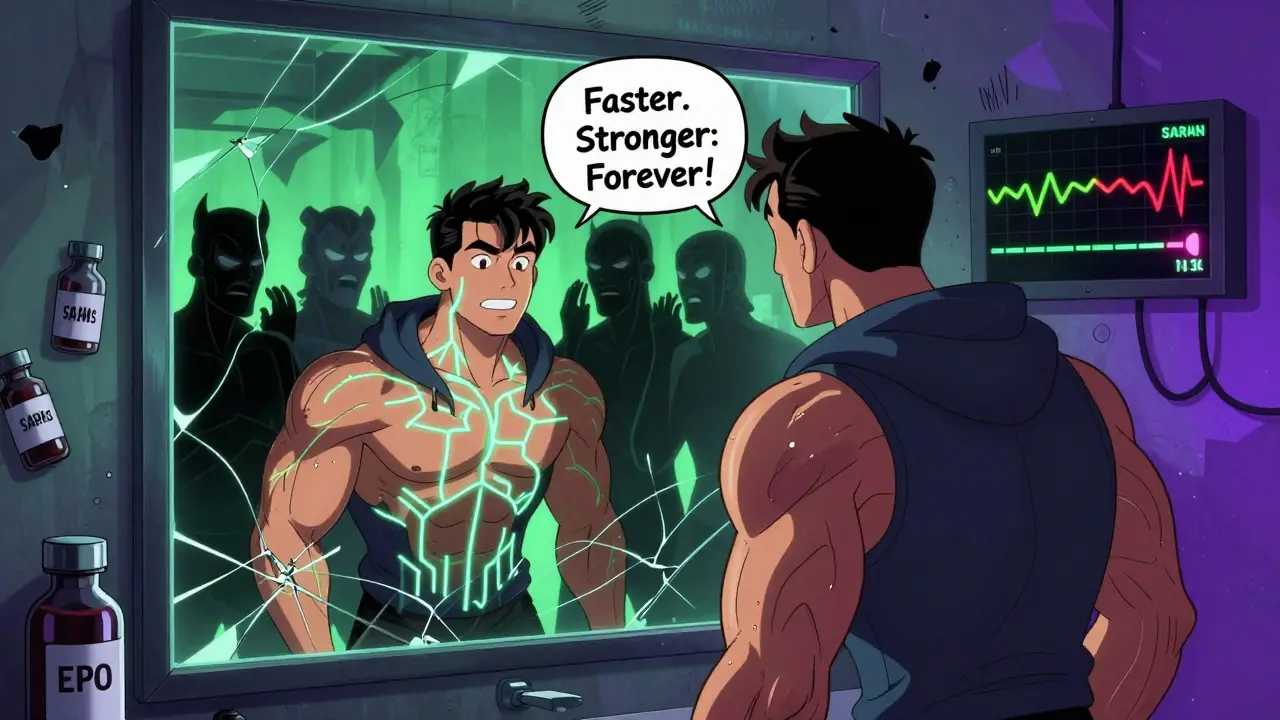
Performance-Enhancing Drug Risk Assessment
This tool helps you understand the potential health risks of performance-enhancing drugs based on your usage patterns. Remember: there is no safe way to use anabolic steroids for muscle gain outside of medically supervised therapy. Results are for educational purposes only and should not replace professional medical advice.
Your Risk Assessment
Health Impact Summary
Cardiovascular: Moderate risk of heart damage
Hormonal: Significant hormonal disruption
Liver: Elevated liver enzyme risk
Recovery Timeline
- Muscle mass may decrease by 30-50% in 8-12 weeks
- Natural testosterone production may take 6-12 months to recover
- Cardiac changes may improve slightly but often leave permanent damage
- Mental health symptoms may persist for months
Every year, thousands of athletes-some professional, most not-take medications not to heal, but to push past their natural limits. They’re not just chasing podiums. Many are chasing a faster recovery, a bigger pump, or the feeling that they can train harder than anyone else. What they don’t always realize is that these drugs don’t just change performance-they change their bodies in ways that can last a lifetime.
What Are Performance-Enhancing Drugs Really Doing?
Performance-enhancing drugs (PEDs) aren’t magic pills. They’re powerful chemicals that hijack your body’s natural systems. Anabolic steroids, for example, mimic testosterone to force muscle growth. Stimulants like amphetamines or high-dose caffeine crank up your nervous system to delay fatigue. Blood doping increases red blood cells to carry more oxygen to your muscles. And peptides like HGH trick your body into thinking it’s younger, faster, and stronger.
Here’s what these drugs can do in the short term:
- Gain 4.5 to 11 pounds of muscle in just 10 weeks
- Reduce recovery time between workouts by 30-50%
- Improve reaction time by 8-12% within 30 minutes
- Boost VO2 max (oxygen use) by 5-15%
That sounds tempting, especially when you see someone on Instagram with a physique that looks like it came from a movie. But these gains don’t come without a cost. The body doesn’t just adapt-it fights back. And the damage often shows up years later.
The Hidden Health Costs
The most dangerous side effects aren’t always obvious. You won’t feel your heart thickening. You won’t notice your liver struggling until it’s too late. And by the time your testosterone crashes, you’re already hooked.
Cardiovascular damage is the most common and deadly outcome. Studies show that long-term steroid users have 27-45% more heart muscle mass than non-users-even after adjusting for size and age. That extra muscle doesn’t make the heart stronger. It makes it stiffer. Ejection fractions drop by 8-12%, meaning the heart can’t pump blood as efficiently. This isn’t just a risk for elite athletes. It’s happening to 20-year-old gym-goers who think they’re safe because they’re not competing.
Then there’s the liver. Oral steroids like oxymetholone or methandrostenolone are especially toxic. Up to 68% of users show elevated liver enzymes-clear signs of stress or damage. Some develop liver tumors or peliosis hepatis, a condition where blood-filled cysts form in the liver. These aren’t rare cases. They’re documented in hospital records across the U.S. and Europe.
Hormonal chaos is another major issue. Men who use steroids for more than 8 weeks often shut down their natural testosterone production. Testosterone levels can plunge below 300 ng/dL-well below the normal range. Recovery can take 6 to 12 months, and in 38% of chronic users, it never fully returns. That means years of fatigue, low libido, depression, and muscle loss. Some end up on lifelong testosterone replacement therapy.
Women face irreversible changes. Voice deepening happens in 35% of female users-even after stopping. Clitoral enlargement is common. Menstrual cycles stop. Fertility drops. These aren’t temporary side effects. They’re permanent.
It’s Not Just Steroids Anymore
When people think of doping, they think of steroids. But the market has changed. Today, the fastest-growing segment isn’t anabolic steroids-it’s SARMs (selective androgen receptor modulators) and peptide hormones. These are marketed as "safer," "legal," or "not for human consumption." But that’s a lie.
The FDA tested over 200 SARMs products sold online. 89% contained something different than what was on the label. Some had undisclosed steroids. Others had cancer-causing chemicals. One product labeled as "Ostarine" actually contained a banned anabolic agent used in veterinary medicine. And because these aren’t regulated like pharmaceuticals, there’s no quality control. One batch could be pure. The next could be poison.
Peptide hormones like HGH and EPO are also surging. They’re harder to detect, so they’re popular among those who want to avoid testing. But they come with their own risks: joint pain, fluid retention, insulin resistance, and increased cancer risk. And because they’re injected, users risk infections, abscesses, and nerve damage if they’re not trained in proper technique.
Even over-the-counter supplements are dangerous. Energy drinks with high-dose caffeine, pre-workouts with DMAA or DMHA, and "fat burners" with banned stimulants are flooding the market. In the U.S. alone, over 2,000 emergency room visits each year are linked to these products. One 19-year-old woman collapsed during a spin class after taking a pre-workout. She had a heart attack. She survived. But her heart will never be the same.
Who’s Really Using These Drugs?
Most people assume PEDs are only used by Olympic athletes or professional bodybuilders. That’s outdated. Today, 60-80% of steroid users are recreational gym-goers. They’re not trying to win a competition. They’re trying to look better, feel more confident, or keep up with someone on social media.
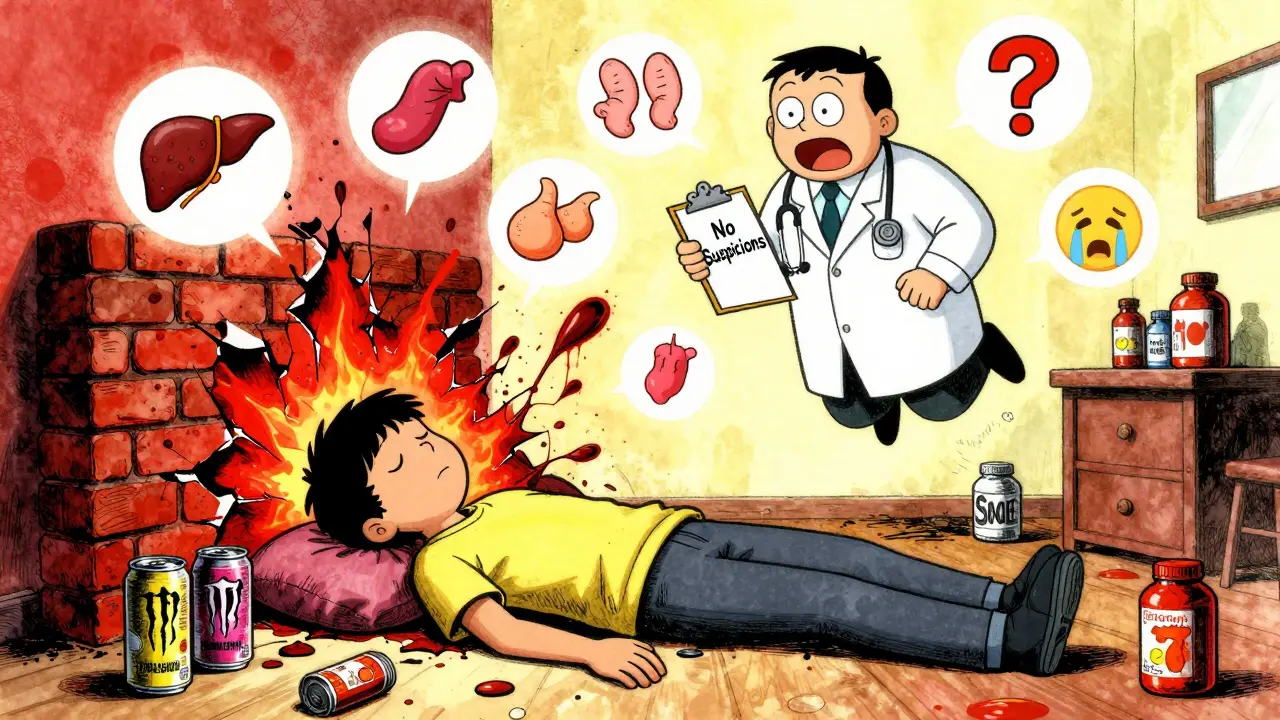
And it’s getting younger. Between 2018 and 2022, pediatric cases of steroid-induced heart damage increased by 200%. Teens as young as 14 are showing up in ERs with enlarged hearts and low testosterone. Their parents don’t know. Their coaches don’t ask. Their doctors don’t suspect.
Even wellness clinics are contributing. Many offer "bio-identical hormone therapy" for aging, energy, or weight loss. But many of these clinics are prescribing banned substances under the guise of "hormone optimization." AAFP reports that 65% of these clinics are doing it. One patient thought he was getting "natural testosterone boosters." He was actually getting injectable testosterone without a prescription. He didn’t know it was illegal. He didn’t know it could kill him.
The Psychological Toll
It’s not just the body that gets damaged. The mind does too.
83% of recreational users report severe mood swings-rage, paranoia, aggression. One man punched a hole in his wall after a bad workout. He didn’t even remember doing it. Another woman cried for days after her cycle ended, unable to get out of bed. These aren’t just "bad days." They’re clinical symptoms.
Depression hits hard during off-cycles. When the drugs leave the system, natural hormone production hasn’t recovered yet. Serotonin and dopamine levels crash. Studies show 67% of users experience clinically significant depression after stopping. Some attempt suicide. Others turn to more drugs to feel normal again.
And the cycle continues. Users describe it as a rollercoaster: gain muscle, feel powerful, then lose it all, feel empty, then do it again. One Reddit user wrote: "I gained 25 pounds in 10 weeks. Lost it all in 8 weeks off. And I was so depressed I couldn’t even lift a water bottle. I had to get therapy just to get back to baseline."
Why Doctors Often Miss It
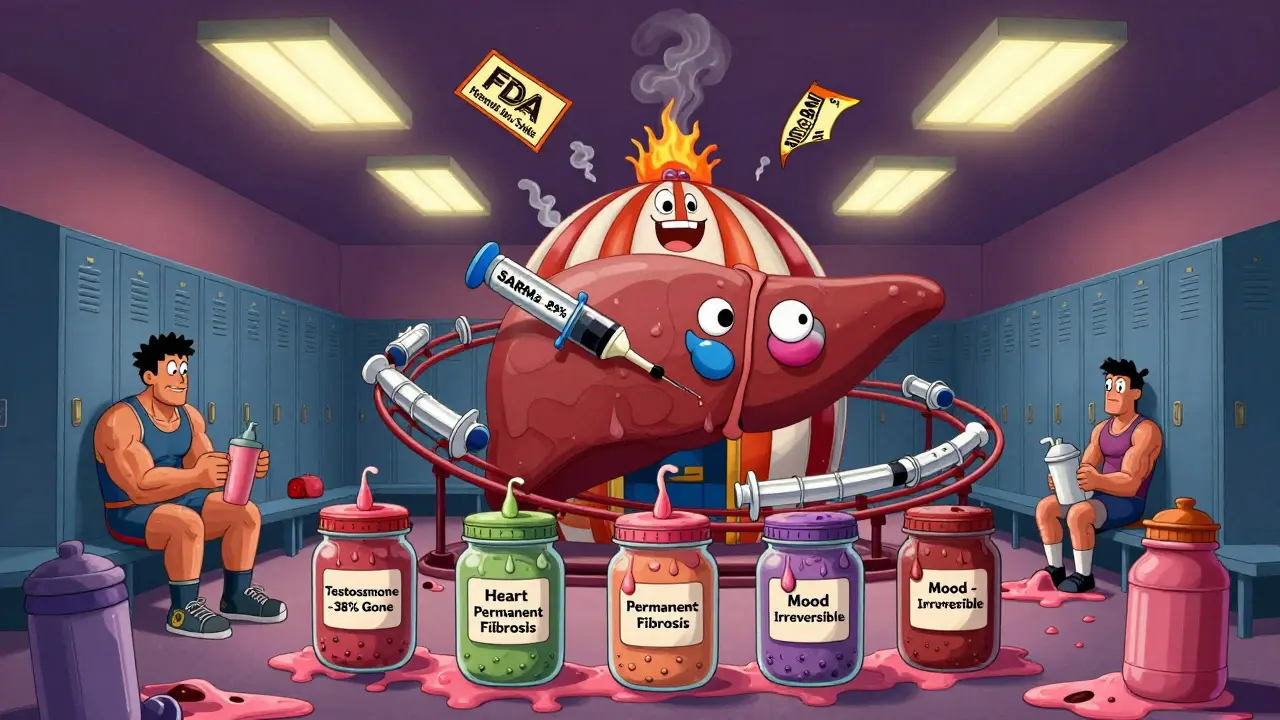
Here’s the scary part: your doctor probably doesn’t know you’re using these drugs.
A survey of family physicians found that 7 out of 10 failed to recognize PED use in their patients. Why? Because users don’t tell them. And the symptoms don’t always show up in standard blood tests.
Most doctors check cholesterol, liver enzymes, and testosterone. But they don’t know to look for the subtle signs: low sperm count, shrinking testicles, elevated hematocrit, or abnormal heart rhythms. And even when they do, they don’t always know how to respond. Should they report it? Should they refer them to a specialist? Should they just say nothing?
Only 12% of recreational users admit to their doctor they’re using PEDs. The rest hide it-out of shame, fear of judgment, or because they think it’s none of their doctor’s business.
But here’s the truth: if you’re using these drugs, your doctor needs to know. They can help you monitor your heart, your liver, your hormones. They can help you taper off safely. They can connect you with mental health support. But they can’t help if they don’t know.
What About Therapeutic Use Exemptions?
Some athletes legitimately need medications-like asthma inhalers or insulin for diabetes. That’s why WADA allows Therapeutic Use Exemptions (TUEs). But these aren’t easy to get.
To qualify, you need documented medical proof that you have a condition requiring the drug. You need blood tests showing hormone levels below normal. You need a specialist’s letter. And you need to prove that there’s no alternative treatment.
WADA doesn’t approve TUEs for anti-aging, energy boosts, or "feeling better." If you’re taking testosterone because you’re tired, that’s not a medical condition-it’s a lifestyle choice. And using it without approval is doping.
Many people think if they get a prescription, it’s legal. That’s not true. A doctor prescribing testosterone for "low energy" without a diagnosed hormonal disorder is breaking the law. And if you’re an athlete, you’re still violating anti-doping rules.
The Bottom Line: Is It Worth It?
Let’s be clear. These drugs work. They deliver results faster than natural training ever could. But the cost is steep-and often permanent.
You might gain muscle. But your heart may never recover. You might feel stronger. But your mood could be shattered for months. You might look better in the mirror. But your fertility could be gone.
And here’s the reality no one talks about: when you stop, you lose almost everything you gained. Muscle mass drops. Strength fades. Energy plummets. And your body doesn’t bounce back the way it used to.
There’s no shortcut to a healthy, strong body. No pill, injection, or powder can replace years of consistent training, proper nutrition, and smart recovery. The people who stay strong for life aren’t the ones who took the fastest route. They’re the ones who stayed patient.
If you’re considering using performance-enhancing drugs, ask yourself this: Is a few extra pounds of muscle worth risking your heart, your hormones, your mental health, and your future? Because once the damage is done, there’s no comeback.
Can you safely use steroids for muscle gain?
No. There is no safe way to use anabolic steroids for muscle gain outside of medically supervised hormone replacement therapy for diagnosed conditions like hypogonadism. Even then, the risks remain high. Recreational use-no matter the dose or cycle length-carries irreversible risks to the heart, liver, hormones, and mental health. Studies show that 38% of long-term users develop permanent low testosterone, and cardiac changes like ventricular hypertrophy persist even after stopping use.
Are SARMs safer than steroids?
No. SARMs are marketed as safer, but they’re not. The FDA found that 89% of SARMs products sold online contain undisclosed, often dangerous ingredients-including banned steroids. They can cause liver damage, hormonal suppression, and cardiovascular issues just like traditional steroids. Plus, they’re unregulated, so you never know what you’re actually taking. There is no long-term safety data for SARMs in humans.
Do performance-enhancing drugs help endurance athletes?
Yes, but at extreme risk. Blood doping and EPO can increase VO2 max by 5-15%, improving endurance performance. But when hematocrit rises above 50%, the blood thickens, increasing stroke and heart attack risk by sevenfold. EPO use has been linked to fatal clots in cyclists and runners. Even with monitoring, the body can’t safely handle these artificial boosts over time. The risks far outweigh the benefits, even for elite athletes.
How long does it take to recover from steroid use?
Recovery varies. Natural testosterone production can take 6-12 months to return after stopping, and in 38% of chronic users, it never fully recovers. Muscle mass typically drops 30-50% within 8-12 weeks off-cycle. Heart changes may improve slightly but often leave permanent fibrosis. Liver enzymes can normalize in weeks, but structural damage like tumors or cysts may remain. Mental health symptoms like depression can last months. Full recovery often requires medical supervision and can take over a year.
Can you test positive for steroids even if you didn’t take them?
It’s possible, but rare. Contaminated supplements are the most common cause. Up to 15% of over-the-counter pre-workouts and protein powders contain undeclared steroids. If you test positive, you’ll need to prove the contamination source-usually through lab testing of the product. But even then, WADA holds athletes responsible for anything in their system. If you’re competing, avoid all supplements unless they’re certified by Informed-Sport or NSF Certified for Sport.

Chris Urdilas
January 28, 2026 AT 05:50So let me get this straight - you’re telling me the guy who just posted his 12-week transformation on Instagram is actually running on borrowed time and a faulty heart? 😅 I mean, I get it. We all want to look like a Marvel villain. But if your biceps come with a side of cardiac fibrosis, maybe skip the next cycle and just do push-ups until you cry. No judgment. Just facts.
Jeffrey Carroll
January 29, 2026 AT 00:52The scientific rigor presented in this post is both alarming and necessary. The data on long-term cardiovascular remodeling among recreational users is particularly compelling, and the prevalence of undiagnosed hepatic pathology underscores a critical gap in primary care screening protocols. It is imperative that healthcare providers receive targeted education on the subtle clinical indicators of performance-enhancing drug use, as these often masquerade as benign physiological adaptations.
Linda O'neil
January 30, 2026 AT 09:20I’ve seen too many young guys in the gym popping pills like candy. One kid I trained with was 19, on SARMs, and thought he was being ‘smart’ because he didn’t take ‘steroids.’ He didn’t even know SARMs were unregulated junk. He’s now on testosterone replacement and has zero libido. I told him to stop. He said he couldn’t. That’s the real tragedy - it’s not about the gains anymore. It’s about surviving the crash. Please, if you’re reading this - talk to someone. A coach, a therapist, a doctor. Don’t wait until your body betrays you.
Jess Bevis
January 31, 2026 AT 05:29Just stop.
Rose Palmer
February 1, 2026 AT 04:09This is an exceptionally well-researched and clinically grounded exposition on the systemic risks associated with non-therapeutic use of pharmacological performance enhancers. The longitudinal data regarding cardiac hypertrophy, endocrine suppression, and hepatic toxicity is unequivocal. I urge all fitness professionals, trainers, and wellness practitioners to disseminate this information to their clients. The normalization of these substances in recreational fitness culture represents a public health crisis that demands immediate intervention.
Howard Esakov
February 1, 2026 AT 05:45Lmao at the ‘recreational gym-goers’ - like you’re not a beta male trying to compensate for your 5’6” frame and emotional void. You think you’re ‘building muscle’? Nah. You’re just building a ticking time bomb with a selfie stick. And SARMs? Please. That’s just steroid lite for people who can’t afford real drugs or the courage to admit they’re cheating. You want real gains? Train. Eat. Sleep. Or shut up and get a prescription like an adult. 😎
Lexi Karuzis
February 2, 2026 AT 12:38Did you know the FDA, WHO, and Big Pharma are all in on this? They WANT you to take these drugs - because then you need lifelong meds to fix the damage they created! That’s why they let SARMs be sold as ‘research chemicals’ - it’s a profit scheme! And your doctor? He’s paid by the pharma reps to ignore the signs! I’ve seen it - my cousin’s endocrinologist prescribed him testosterone after one blood test - no diagnosis, no follow-up - pure corruption! They’re turning healthy men into chemical zombies - and you’re all too blind to see it!!
Amber Daugs
February 3, 2026 AT 06:36I’m sorry, but if you’re using anything that’s not food or water to ‘enhance’ your body, you’re not a warrior - you’re a coward. You’re too lazy to train hard, too insecure to accept your natural form, and too selfish to consider the damage you’re doing to your future self. You think you’re ‘getting fit’? No. You’re just buying a one-way ticket to depression, infertility, and regret. And you wonder why relationships fall apart? Because you’re not real. You’re a chemical illusion. Wake up.
Robert Cardoso
February 3, 2026 AT 12:06It’s fascinating how the narrative around PEDs has shifted from ‘doping’ to ‘biohacking’ - a semantic sleight of hand designed to sanitize risk. The neurochemical dependence observed in chronic users mirrors substance use disorders, yet the fitness industry commodifies this as ‘self-optimization.’ The cognitive dissonance is staggering. One can’t simultaneously celebrate ‘natural fitness’ while glorifying HGH cycles and post-cycle therapy as ‘discipline.’ The entire ecosystem is built on pseudoscientific mythmaking - and the victims are the young men who believe they’re being empowered when they’re being exploited.
James Dwyer
February 3, 2026 AT 20:15I used to take everything. Steroids, SARMs, pre-workouts with DMAA - I thought I was invincible. Then I had a panic attack so bad I thought I was dying. Turns out, my heart was beating like a jackhammer. I quit cold turkey. Took 14 months to feel like myself again. I’m not jacked anymore. But I sleep. I laugh. I hold my daughter without feeling like I’m going to collapse. No amount of muscle is worth losing your peace. You’re worth more than a photo.
Kevin Kennett
February 5, 2026 AT 15:40Look, I get it. You see someone with a six-pack and think, ‘I want that.’ But here’s the truth: that guy probably had a coach, a nutritionist, a therapist, and 5 years of grinding before the photo was taken. You don’t need a pill to get strong. You need consistency. You need patience. You need to stop comparing yourself to someone who’s been on a 10-year journey while you’re on your first week. Your body isn’t broken. It just needs time. And respect. Stop trying to hack it. Start honoring it.
Sue Latham
February 7, 2026 AT 01:00OMG I had this exact friend who took SARMs and now she’s on HRT and her voice is like a dude’s?? Like?? Bro. I told her not to. She was like ‘it’s legal!’ No, sweetie, it’s not. And now she can’t have kids and she’s in therapy for depression. I just don’t understand why people think they can outsmart biology. We’re not robots. We’re not NPCs in a video game. You can’t cheat your way to health. It’s not a cheat code. It’s a lifestyle. And it’s hard. But it’s real.
John Rose
February 8, 2026 AT 06:55What’s the most overlooked statistic here? It’s not the 38% who never recover testosterone. It’s the 90% of users who never disclose their use to a physician. That’s the real public health failure. We’re not failing because people use these substances - we’re failing because the medical system is unprepared to meet them where they are. The solution isn’t shaming. It’s harm reduction. Education. Accessible, non-judgmental care. If we want to save lives, we need to stop treating users as criminals and start treating them as patients.