What You’re Really Dealing With
If you’ve been told you have a skin growth that’s not melanoma, you’re not alone. About 95% of all nonmelanoma skin cancers are either basal cell carcinoma (BCC) or squamous cell carcinoma (SCC). These aren’t rare - they’re the most common cancers in humans. More than 5 million cases are diagnosed in the U.S. every year. Most people think, “It’s just a skin spot,” and that’s exactly why it’s dangerous. Both types start in the top layer of your skin, but they behave very differently. One grows slowly and rarely spreads. The other can turn serious, fast.
Where They Come From - The Skin Layer Difference
Your skin has layers. The bottom layer, called the stratum basale, is where new skin cells are made. These are the basal cells. As they grow, they move upward, flatten out, and become squamous cells - the outermost cells you see. BCC starts in those bottom basal cells. SCC starts in the top squamous cells. That small difference in origin changes everything: how they look, how fast they grow, and how they act.
What They Look Like - Spotting the Signs
Most people don’t know what to look for. Here’s what each one typically shows up as:
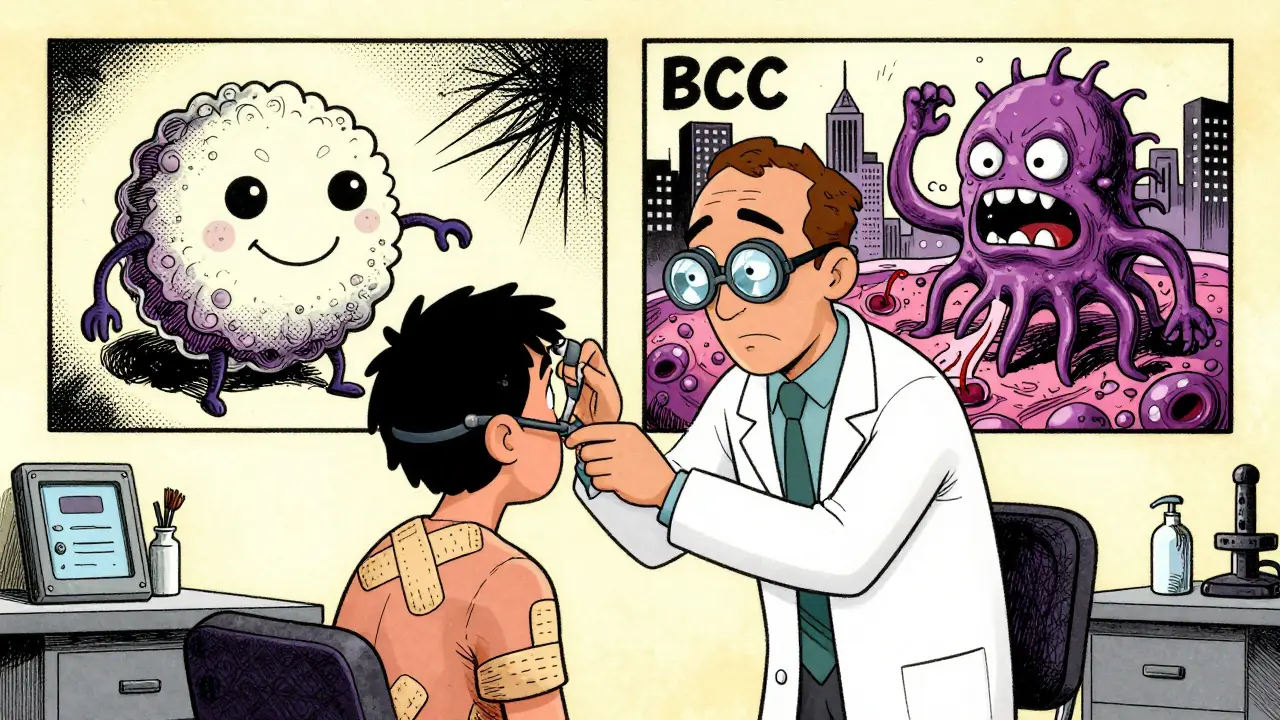
- Basal cell carcinoma: A shiny, pearly bump (about 70% of cases), often with tiny blood vessels on the surface. It might look like a small sore that won’t heal, or a flat, scar-like patch that’s white or yellow. These are common on the face, ears, and neck.
- Squamous cell carcinoma: A firm, red bump that feels rough, like a wart. Or a scaly, reddish patch that bleeds easily or crusts over. Sometimes it looks like a persistent sore that keeps coming back. These show up on sun-exposed areas too - hands, arms, scalp, lips.
Neither one usually hurts at first. That’s why people ignore them. But if you’ve got a spot that won’t go away after 4-6 weeks, get it checked. Don’t wait for it to bleed or hurt.
How Fast They Grow - Speed Matters
BCC creeps along. On average, it grows about half a centimeter to one centimeter per year. You might not even notice it changing. SCC moves faster - often 1.5 to 2 centimeters per year. Some aggressive forms can double in size in just 4 to 6 weeks. That’s why SCC patients on forums like Reddit report sudden changes. One person described their “tiny bump” turning into a raised lump in under a month. That’s not normal aging. That’s SCC.
The Big Difference - Risk of Spreading
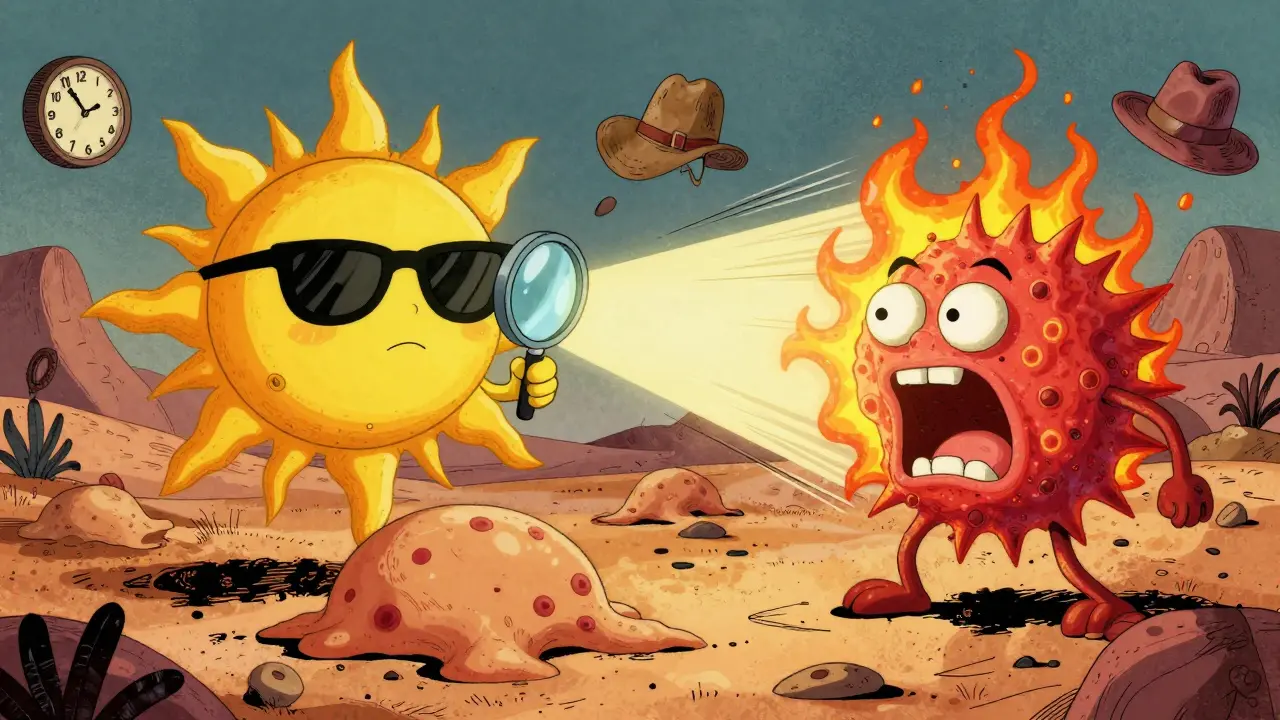
This is where people get confused. Both are called “nonmelanoma,” so many assume they’re equally harmless. They’re not.
BCC spreads to other parts of the body in fewer than 0.1% of cases. It’s more likely to chew through your nose, eyelid, or ear cartilage if left alone for years. It destroys tissue locally - but it rarely travels.
SCC? It metastasizes in 2% to 5% of cases. That’s 10 to 50 times more likely than BCC. And when it does? Survival rates drop sharply - from 95% for early cases to just 25-45% if it reaches lymph nodes or organs. High-risk spots like the lips (14% metastasis rate) and ears (9%) are especially dangerous. SCC on the lip can spread to the jawbone or neck lymph nodes. That’s why doctors treat SCC more aggressively from day one.
Who’s Most at Risk
Age is a major factor. Eighty-five percent of cases happen in people over 50. The average age at diagnosis is 67 for BCC and 69 for SCC. But it’s not just age.
People with fair skin, light eyes, and a history of sunburns are at higher risk. But here’s the twist: BCC is more linked to intense, occasional sunburns - like a weekend at the beach without sunscreen. SCC is tied to lifelong, cumulative exposure - think decades of working outdoors, driving with the window down, or not wearing a hat.
Men are more likely to get SCC - about 65% of cases. That’s likely because of jobs with more sun exposure: construction, farming, fishing. BCC affects men and women more evenly.
If you’ve had an organ transplant, your risk skyrockets. Transplant patients are 250 times more likely to develop SCC than the general population. That’s why they get skin checks every 3-6 months.
Treatment - What to Expect
Both cancers are treatable - especially when caught early. Surgery is the most common fix. For BCC, a simple excision or topical creams like imiquimod often work. Topical treatments clear about 60-70% of superficial BCCs. For SCC? Those same creams only work about 40-50% of the time. SCC usually needs more aggressive treatment.
Mohs surgery - where the surgeon removes the tumor layer by layer and checks each one under a microscope - works best for both. It cures 99% of primary BCCs and 97% of primary SCCs. But because SCC is more likely to grow deeper, surgeons often take wider margins - 4 to 10 millimeters instead of 3 to 5 for BCC. That means bigger cuts and sometimes more reconstructive surgery.
SCC patients need more follow-ups. On average, they return for 2.3 times more appointments than BCC patients. Why? Because SCC comes back more often - especially in people with weak immune systems. Recurrence for SCC is usually detected within 12 months. For BCC, it’s often 18 months or longer.
What Happens If You Don’t Treat It
BCC might not kill you, but it can ruin your face. Left untreated for two years or more, 70% of BCCs invade deeper tissue - bone, cartilage, nerves. Imagine losing part of your nose or eyelid. That’s preventable.
SCC doesn’t just eat tissue - it can spread. A small lesion on the ear can become a tumor in the neck. A lesion on the lip can reach the jaw. When that happens, treatment becomes far more complex: radiation, chemotherapy, immunotherapy. The FDA approved cemiplimab (Libtayo) for advanced SCC in 2018. It’s not a cure, but it can shrink tumors in nearly half of patients who’ve run out of other options.
Prevention - It’s Not Just Sunscreen
Daily sunscreen cuts BCC risk by 40% and SCC risk by 50%. That’s because SCC is more tied to long-term sun damage. But sunscreen alone isn’t enough.
- Wear a wide-brimmed hat every day, even if it’s cloudy.
- Seek shade between 10 a.m. and 4 p.m.
- Check your skin monthly - use a mirror for your back, scalp, and soles of feet.
- If you’ve had one skin cancer, you’re at higher risk for another. Get checked every 6-12 months.
People who’ve had BCC have a 40% chance of getting another within 5 years. For SCC, that number is even higher.
What the Experts Say
Dr. John Zitelli, past president of the American College of Mohs Surgery, says: “Basal cell carcinoma is more common, but squamous cell carcinoma requires more urgent attention.”
Dr. Martin Weinstock from Brown University calls SCC the second leading cause of skin cancer deaths - after melanoma. That’s not hype. It’s data. In 2023, Medicare spent $2.2 billion on nonmelanoma skin cancer treatment. Two-thirds of that went to SCC because of the complexity, repeat surgeries, and advanced treatments needed.
What’s New in 2026
AI tools are now helping dermatologists spot the difference between BCC and SCC with 94% accuracy using dermoscopy images. That’s faster than most human eyes. New genetic tests can identify 12 markers linked to SCC metastasis risk - helping doctors decide who needs extra scans or closer monitoring.
Photodynamic therapy - using light-activated drugs - is improving for SCC. It now clears 92% of superficial cases, compared to 85% for BCC. That’s good news for patients who can’t have surgery.
Bottom Line
BCC is common. SCC is dangerous. Both are preventable. Both are curable - if you catch them early. Don’t wait for it to bleed. Don’t assume it’s just a pimple or a scar. If a spot on your skin changes, grows, or won’t heal - see a dermatologist. Your skin is your largest organ. Treat it like it matters - because it does.
Is basal cell carcinoma worse than squamous cell carcinoma?
No, basal cell carcinoma (BCC) is not worse than squamous cell carcinoma (SCC). While BCC is far more common, SCC is more dangerous because it has a higher chance of spreading to other parts of the body. BCC rarely metastasizes (less than 0.1% of cases), but SCC does in 2-5% of cases. When SCC spreads, survival rates drop sharply. So even though BCC is more frequent, SCC requires more urgent treatment.
Can you have both basal and squamous cell carcinoma at the same time?
Yes, it’s possible - and not uncommon. People with a history of sun damage often develop multiple skin cancers over time. One person might have a BCC on their nose and an SCC on their ear. That’s why dermatologists recommend full-body skin checks after any diagnosis. If you’ve had one, you’re at higher risk for another, regardless of type.
Does sunscreen prevent both types of skin cancer?
Yes, but not equally. Daily sunscreen use reduces the risk of basal cell carcinoma by about 40% and squamous cell carcinoma by 50%. That’s because SCC is more strongly linked to long-term, cumulative sun exposure, while BCC is more tied to intense, occasional burns. Still, sunscreen is your best defense - along with hats, shade, and avoiding midday sun.
How often should I get checked if I’ve had skin cancer before?
If you’ve had basal cell carcinoma, get checked every 6 to 12 months. If you’ve had squamous cell carcinoma, you should be seen every 3 to 6 months. SCC has a higher recurrence rate, especially in high-risk areas like the lips or ears. About 73% of recurrent SCC cases are found within the first year after treatment. Don’t wait until you see a change - stay on schedule.
Are there non-surgical treatments for squamous cell carcinoma?
For very early, superficial SCC, topical creams like 5-fluorouracil or imiquimod can work - but only about 40-50% of the time. For most cases, surgery (like Mohs) is the gold standard. For advanced or metastatic SCC, immunotherapy drugs like cemiplimab (Libtayo) are now available and can shrink tumors in nearly half of patients. But these are last-resort options. Early removal is still the most effective treatment.
Why is SCC more common in men?
Men are more likely to have jobs with long-term sun exposure - construction, farming, fishing, landscaping. They’re also less likely to wear hats or apply sunscreen regularly. That cumulative UV exposure over decades increases SCC risk. Hormonal differences might play a small role, but sun exposure patterns are the main driver.
Can skin cancer appear in areas not exposed to the sun?
Yes, though it’s rare. Both BCC and SCC can develop on areas like the palms, soles, genitals, or under nails - especially in people with darker skin tones or weakened immune systems. But 80% of cases still occur on sun-exposed skin. Don’t ignore spots in hidden areas, especially if they’re changing or bleeding.
Is basal cell carcinoma really the most common cancer in humans?
Yes. More than 8 out of 10 nonmelanoma skin cancers are basal cell carcinoma. When you combine all the cases worldwide - millions diagnosed every year - BCC is the single most common cancer in humans. It’s more common than breast, prostate, lung, and colon cancers combined. But because it rarely spreads, it’s often underreported in cancer statistics.


Chris & Kara Cutler
February 1, 2026 AT 17:00Rachel Liew
February 2, 2026 AT 09:26Melissa Melville
February 3, 2026 AT 05:08Bryan Coleman
February 3, 2026 AT 09:35franklin hillary
February 3, 2026 AT 12:54Ishmael brown
February 5, 2026 AT 08:50June Richards
February 7, 2026 AT 06:08Lu Gao
February 8, 2026 AT 02:14Naresh L
February 8, 2026 AT 17:21Jaden Green
February 9, 2026 AT 18:48Angel Fitzpatrick
February 11, 2026 AT 18:25Nicki Aries
February 12, 2026 AT 18:05Ed Di Cristofaro
February 13, 2026 AT 09:12Lilliana Lowe
February 13, 2026 AT 10:16vivian papadatu
February 13, 2026 AT 15:37