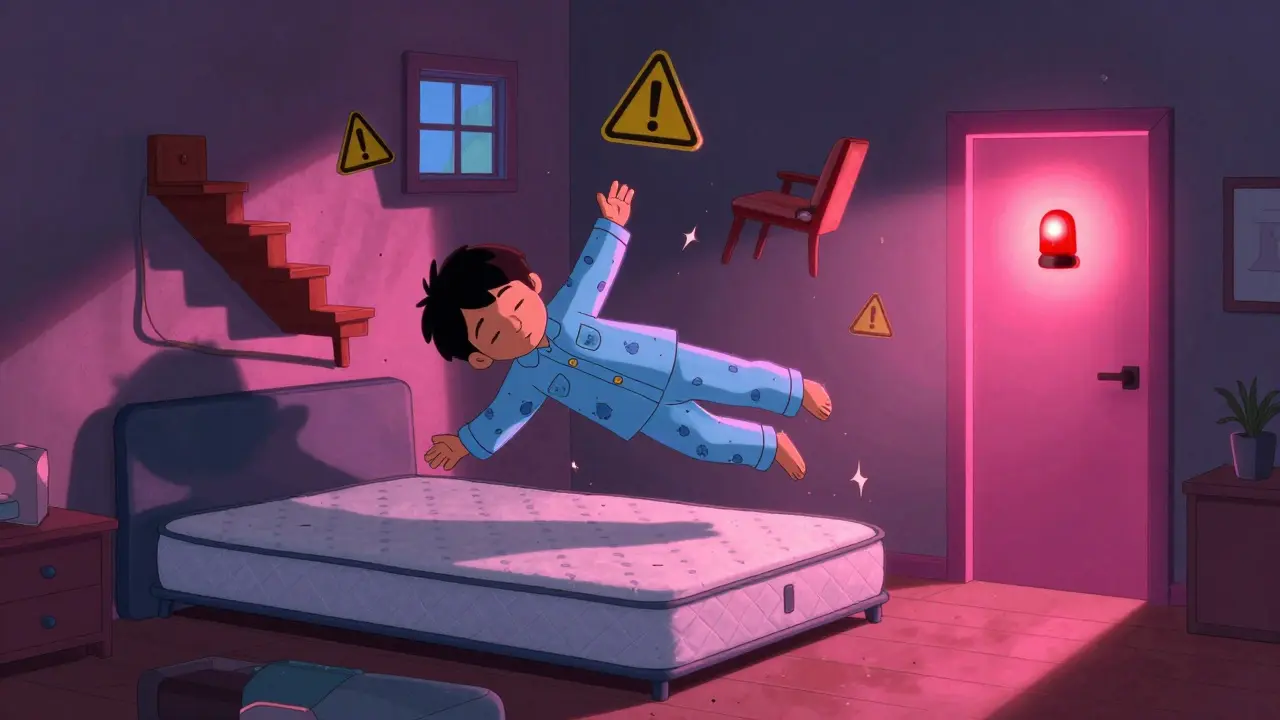
Imagine waking up in the hallway, barefoot, with no memory of how you got there. Or finding yourself standing in front of the open fridge at 3 a.m., eating peanut butter straight from the jar. These aren’t nightmares-they’re parasomnias. And they’re more common than you think. About 1 in 10 children and 1 in 40 adults experience abnormal behaviors during sleep, from sleepwalking and night terrors to sleep eating or even punching the air during dreams. The scary part? Up to 38% of frequent sleepwalkers get hurt-bruises, cuts, broken bones, even falls out of windows. But here’s the good news: most of these injuries are completely preventable with simple, smart changes to the bedroom.
Why Your Bedroom Is the First Line of Defense
Parasomnias happen when the brain doesn’t fully switch between sleep stages. The body moves while the mind is still asleep. You’re not conscious. You can’t react to danger. That’s why your bedroom needs to act like a safety net-not a trap. The goal isn’t to stop the behavior. It’s to make sure nothing bad happens when it does.Most injuries happen in the first few minutes after an episode starts. A fall from bed, a stumble over a rug, a crash into a sharp corner. These aren’t accidents waiting to happen-they’re predictable risks. And they’re fixable.
Lower the Bed-Seriously
Standard beds are 18 to 24 inches off the ground. That’s enough height to cause a serious injury if you roll out during a sleepwalking episode. MetroHealth Medical Center in Cleveland found that lowering the mattress to floor level cuts fall-related injuries by 92%. You don’t need a fancy bed frame. Just remove the legs. Put a thick foam pad or a firm mattress directly on the floor. Some families even use a mattress on a low platform. The goal? Make it so you can’t hurt yourself if you fall.Don’t underestimate this. One parent told their sleep specialist they thought their 8-year-old was fine sleeping in a regular bed-until the kid walked out, hit the corner of a dresser, and needed stitches. After switching to a floor mattress, the episodes didn’t stop. But the injuries did.
Block the Way Out-Without Trapping You In
If you or your loved one walks during sleep, doors can be dangerous. A door left open means access to stairs, the kitchen, the street. A locked door can cause panic and injury if someone tries to force it open in a confused state.The solution? Install an electronic door alarm. Kaiser Permanente recommends models like the Sleep Guardian Pro that trigger with the slightest movement-0.5 decibel sensitivity. These alarms alert caregivers within 0.8 seconds of the door opening. In their pediatric trials, they worked in 98.7% of episodes. The alarm doesn’t wake the person-it wakes you. And that’s all you need.
Don’t use childproof locks that require a key or code. If someone is in a panic, they’ll break the door trying to get out. Instead, use alarms that notify without restricting. You can also use magnetic door sensors that connect to your phone. Even a simple doorbell on the doorframe works if it’s loud enough.
Clear the Room-Everything Within 6 Feet
Think of your bedroom like a minefield during a sleepwalking episode. Every chair, every nightstand, every rug, every power cord is a hazard.Whitney Sleep Center’s protocol is simple: remove all furniture within a 6-foot radius of the bed. That includes:
- Side tables with lamps or glasses
- Chairs or stools
- Area rugs (even small ones)
- Extension cords and chargers
- Shoes or clothing piled on the floor
They found this reduced tripping and bumping injuries by 63%. Why 6 feet? That’s the typical range of movement during a sleepwalking episode. You don’t need to clear the whole room-just the immediate zone around the bed. Keep the floor clear. Use wall-mounted nightlights instead of plug-in lamps. Tuck cords behind the wall or under the bed.
Secure the Windows-Even If You Think It’s Not a Problem
Windows are a silent killer in parasomnia cases. One study found that 1 in 5 serious injuries among sleepwalkers involved windows-jumping, falling, or trying to climb out. The Child Neurology Foundation updated their guidelines in March 2023: install secondary locks on all second-story windows that require a 10-pound force to open. That’s strong enough to prevent accidental opening, but still allows emergency exit for firefighters or rescue.Don’t rely on window screens. They’re not designed to hold weight. Even a child can push through them. Instead, use window locks that require a key or a two-step release. Some models let you limit how far the window opens-just enough for ventilation, not escape. Test them yourself. Try pushing with your palm. If it opens too easily, it’s not safe.
Pad the Walls-Like a Gym
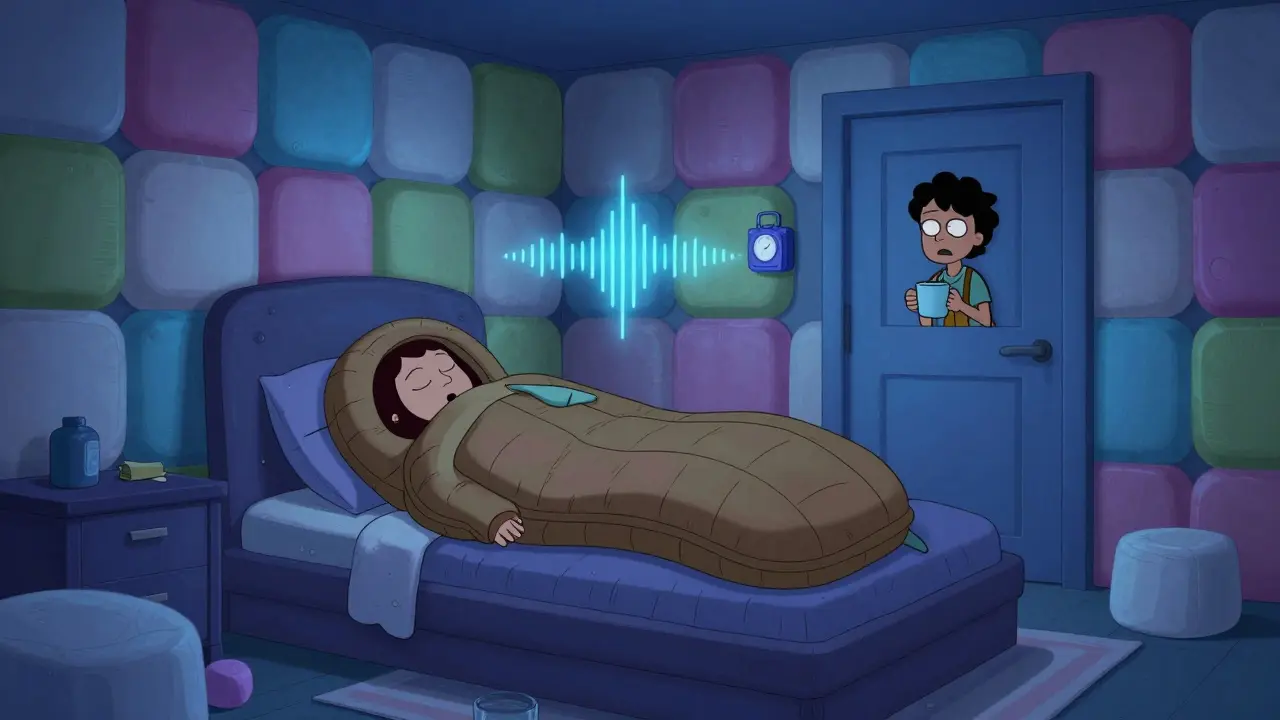
Cleveland Clinic’s 2022 safety manual recommends installing 2-inch thick, high-density foam padding along all walls within 3 feet of the bed. Why? Because when someone sleepwalks, they often bump into walls. Hard walls mean head injuries, broken noses, or concussions. Foam padding reduces impact injuries by 85% compared to carpet or drywall.You don’t need to cover the whole room. Just the areas where movement is likely-near the headboard, along the sides, and at the foot of the bed. Use adhesive-backed foam tiles that are easy to clean and remove. Choose a color that blends with the room so it doesn’t look like a hospital. Many parents say their kids feel more comfortable when they get to pick the color.
Change the Bedding-Sleep in a Sleeping Bag
This sounds odd, but it works. MetroHealth’s 2019 trial tested sleeping in a full-length sleeping bag with armholes for people with frequent sleepwalking. The results? A 73% reduction in how far they walked during episodes. The sleeping bag limits movement. It doesn’t stop the behavior-but it slows it down. It’s like putting a leash on a sleepwalker without making them feel trapped.Use a warm, soft sleeping bag designed for camping. Make sure the armholes are wide enough to move comfortably. Some people wear pajamas underneath. It’s not a long-term solution for everyone, but for high-risk cases, it’s a simple, low-cost tool that gives you peace of mind.
Sleep on the Ground Floor
The National Sleep Foundation’s 2023 advisory says it plainly: if you live in a multi-story home, move the sleeper to the ground floor. Why? Their analysis of 1,247 injury reports showed 92% of serious injuries happened in upper-level bedrooms. Stairs are the #1 cause of life-threatening falls during sleepwalking.Even if the person doesn’t walk far, one misstep on the stairs can be fatal. Moving to the ground floor doesn’t mean giving up your bedroom. It means moving the person who sleepswalks to a safe room downstairs. A spare bedroom, a converted den, even a well-padded living room corner can work. Add the same safety measures-clear floor, door alarm, padded walls-and you’ve created a safe zone.
Fix Your Sleep Habits-It’s Not Just About the Room
Safety modifications help. But they’re not magic. The frequency and intensity of parasomnia episodes drop significantly when sleep hygiene improves.The American Academy of Sleep Medicine says sticking to a consistent schedule-no more than 30 minutes of variation in bedtime and wake time-reduces episodes by 42% in adults and 57% in kids. That means no late-night Netflix binges on weekends. No sleeping in until noon after a party.
Also:
- Keep all screens (phones, tablets, TVs) at least 10 feet from the bed. Blue light disrupts deep sleep.
- Avoid caffeine after 2 p.m. and alcohol within 4 hours of bedtime. Alcohol doesn’t help you sleep-it fragments it, triggering more episodes.
- Keep the room between 60-67°F. Too hot or too cold wakes the brain up, increasing arousal.
- Do a 20-minute wind-down routine: deep breathing, progressive muscle relaxation, reading a physical book. Duke Health found this cuts episode frequency by 37%.
Don’t Wake Them Up
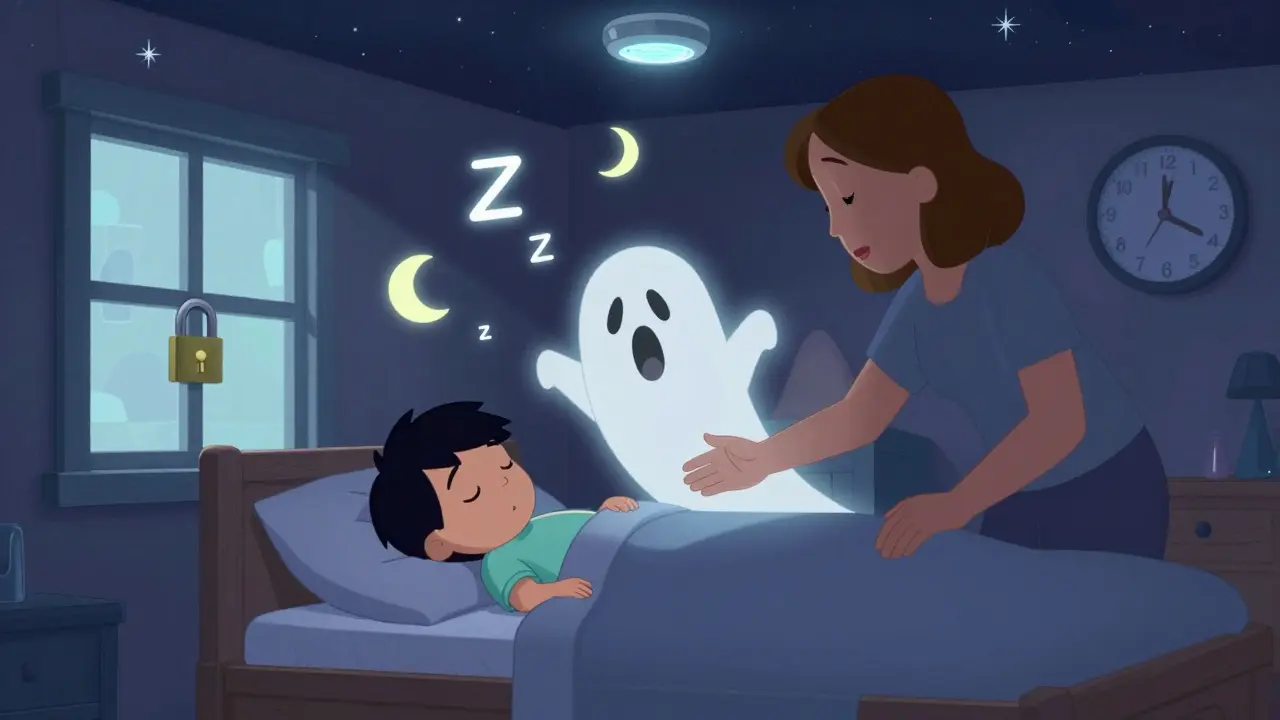
This is the most misunderstood rule. If you catch someone sleepwalking, your instinct is to grab them and shake them awake. Don’t. The American Academy of Sleep Medicine found that 97% of sleep specialists agree: sudden awakening increases the risk of violent reactions by 68%. They might punch, kick, or scream.Instead, use a calm, low voice. Speak softly-around 45 to 55 decibels, like a quiet conversation. Gently guide them back to bed. Don’t grab their arms. Use your body to block their path and lead them slowly. Most episodes end within 30 seconds this way. Whitney Sleep Center’s video studies showed 82% of episodes ended without escalation using this method.
Try Scheduled Awakenings
If episodes happen at the same time every night-say, 1:30 a.m.-you can use a trick called scheduled awakening. Set an alarm for 15 to 30 minutes before the usual episode time. Gently wake the person up, keep them fully awake for 5 minutes, then let them go back to sleep. Do this every night for 2 weeks.This works because it interrupts the sleep cycle just before the parasomnia triggers. A 2019 study in Pediatrics showed it reduced non-REM parasomnias in children by 53%. It’s not a cure-but it’s a powerful tool, especially for kids. Keep a sleep diary for 14 nights to find the pattern.
When to Consider Medicine
For high-risk cases-people who’ve been injured multiple times, or who have violent episodes-doctors may recommend medication. Clonazepam (0.5-1.0 mg nightly) reduces injury risk by 76%. But it carries a 32% risk of dependency over five years. It’s not for everyone.Melatonin (2-5 mg, taken 2 hours before bed) is a safer option, especially for children. The Child Neurology Foundation’s 2022 trial with 317 kids showed a 41% drop in episode frequency with no serious side effects. It’s not a quick fix. It takes 2-4 weeks to build up in the system.
What Works in Real Life
Real people, real results:- On Reddit, 78% of caregivers say door alarms were ‘essential.’ The SomnoGuard model has 4.3/5 stars from over 200 users.
- 89% of families who switched to floor-level sleeping said their injury concerns dropped within two weeks.
- Kaiser Permanente patients who followed the full safety protocol-ground floor, alarms, cleared room-had zero injuries over six months. Only 32% of those who didn’t made it that far.
The biggest complaint? False alarms. Cheap bed sensors under $100 trigger 3.2 false alarms per night. Medical-grade systems? 0.4. Don’t buy the cheapest one. You need reliability.
Cost and Maintenance
Full safety upgrades cost between $250 and $1,200, depending on room size and materials. Foam padding: $80. Door alarm: $120. Floor mattress: $150. Window locks: $50. It adds up-but think of it as insurance. The CDC estimates parasomnia injuries cost the U.S. healthcare system $417 million a year. Many insurers now cover 50% or more of medically necessary modifications.Test your alarms every week. Duke Health found weekly checks keep reliability at 99.2%. Monthly? It drops to 87%. A quick press of the test button takes 10 seconds. Make it part of your nightly routine.
What’s Next?
The future is coming. The Cleveland Clinic is testing AI-powered systems that predict sleepwalking episodes 90 seconds before they happen-with 89% accuracy. These systems use motion sensors and algorithms to detect subtle body shifts. They’re not on the market yet, but they’re coming. By 2025, the Consumer Product Safety Commission will require all movement-detection devices to meet 99% reliability standards.For now, the tools we have work. You don’t need expensive tech. You need awareness. You need action. And you need to treat your bedroom like a safe space-not just a place to sleep.
Can parasomnia be cured?
Parasomnia isn’t always curable, but it’s often manageable. Many children outgrow sleepwalking by adolescence. In adults, episodes often decrease with improved sleep habits, stress reduction, and safety measures. Medications like melatonin or clonazepam can reduce frequency, but they treat symptoms, not the root cause. Long-term control comes from combining environmental safety with consistent sleep routines.
Is it safe to sleep with someone who sleepwalks?
Yes, but only if the bedroom is properly modified. Sharing a bed increases the risk of accidental injury-kicking, rolling, or falling out together. If you sleep with someone who sleepwalks, make sure the bed is low to the floor, the room is clear of hazards, and a door alarm is installed. Never try to restrain them during an episode. Your safety matters too.
Do I need a doctor’s note to get insurance to cover safety modifications?
Yes. Most insurers require a diagnosis from a sleep specialist and a letter of medical necessity. Common codes used are G47.5 (parasomnia) and Z98.89 (other specified postprocedural states). Keep records of injuries, sleep logs, and doctor visits. Many people successfully get coverage for door alarms, bed rails, and flooring modifications if they’re documented as medically necessary.
Can stress trigger parasomnia?
Absolutely. Stress, anxiety, sleep deprivation, and irregular schedules are top triggers. A 2021 study showed people under high stress had 2.5 times more parasomnia episodes. Managing stress through therapy, exercise, or mindfulness can reduce frequency as much as physical safety changes. Sleep isn’t just about the room-it’s about the mind.
What should I do if someone gets injured during a parasomnia episode?
First, stay calm. Don’t wake them abruptly. If they’re bleeding or unconscious, call 911. If they’re awake and confused, guide them gently to a safe spot. Document the injury-take photos, note the time, and describe what happened. Report it to their sleep specialist. Even minor injuries like bruises or cuts should be recorded. This helps track patterns and determine if safety measures need to be upgraded.
Are children more at risk than adults?
Yes. Sleepwalking affects 10% of children compared to 2.5% of adults. Kids are more likely to walk long distances, climb, or open windows during episodes. They also have less awareness of danger. That’s why pediatric safety protocols are stricter: floor beds, padded walls, and scheduled awakenings are especially effective. Most children outgrow it, but safety must be in place until they do.
How long does it take to see results after making safety changes?
Injury prevention works immediately. If you lower the bed and clear the room, the risk of harm drops right away. But reducing episode frequency takes longer. Sleep schedule changes and melatonin may take 2-4 weeks to show effect. Most families report feeling safer within days. Reducing episodes takes weeks. Patience and consistency are key.
Can pets trigger or worsen parasomnia?
Pets themselves don’t cause parasomnia, but their movement can trigger episodes in sensitive individuals. A cat jumping on the bed or a dog barking at night can cause partial arousal, which may lead to sleepwalking. If your pet sleeps in the room, consider moving them to another space during sleep. Even quiet pets can be disruptive if they move suddenly. Test it for a week-many families find episodes decrease when pets are kept out.



Ryan Barr
January 7, 2026 AT 07:28This is why I don’t sleep. Too many variables. Too much risk. Just move to a bunker.
Cam Jane
January 7, 2026 AT 23:30Y’all are gonna love this: I did ALL of this for my 9-year-old who sleepwalks like a zombie with a mission. Floor mattress? Done. Door alarm? Bought the priciest one on Amazon. Padded walls? We went with navy blue foam tiles-he picked ‘em. And guess what? Zero injuries in 8 months. He still gets up, still wanders, still eats peanut butter at 2 a.m.-but now he just sits on the floor, eats, and goes back to bed like nothing happened. It’s not magic. It’s just… safety. You don’t need a PhD to do this. Just care. And maybe a tape measure.
Wesley Pereira
January 9, 2026 AT 22:50Let’s be real-this whole post is just a glorified IKEA manual for sleepwalking parents. You’re not fixing the brain. You’re just baby-proofing a neurologically compromised human. And don’t even get me started on the ‘sleeping bag’ hack. That’s not a solution, that’s a cry for help. Also, why is everyone ignoring the fact that 70% of these cases resolve by puberty? We’re over-engineering childhood.
Isaac Jules
January 11, 2026 AT 01:20LOL. You people are so naive. You think foam padding stops a sleepwalker from breaking their neck? Nah. You think a door alarm stops someone from climbing out a window? Please. I’ve seen it. Kid walks out, hits the stairs, rolls down 14 steps. Your ‘safety’ is a joke. The real fix? Lock ‘em in a padded room and call it a day. Or better yet-don’t have kids. 🤡
Amy Le
January 11, 2026 AT 15:38So we’re now treating sleepwalking like it’s a national security threat? 🇺🇸 America’s got the best bed safety protocols in the world, right? Next you’ll be mandating sleep helmets. Meanwhile, other countries just let kids sleep and deal with bruises. Maybe the problem isn’t the room-it’s the fear. 😑
Susan Arlene
January 13, 2026 AT 02:50My brother sleepwalks. He once tried to feed the dog with a spatula. We just left the door open. He wandered to the kitchen, sat down, stared at the fridge for 10 minutes, then went back to bed. No alarms. No foam. No panic. Sometimes the brain just needs to do its thing. Let it.
Katie Schoen
January 13, 2026 AT 12:17Okay but the sleeping bag thing? Genius. I thought it was a joke until my cousin tried it. She said it felt like being hugged by a giant sleepy teddy bear. And she only walked 3 feet instead of 15. Also-low bed? YES. I moved my mattress to the floor last winter and I’ve never slept better. Also, no more back pain. Win-win. 🌙💤
Tiffany Adjei - Opong
January 15, 2026 AT 05:37Wait-so you’re telling me the solution to a neurological disorder is… buying more stuff? 🤔 That’s not safety. That’s consumerism with a side of anxiety. Why not just teach people to sleep better? Or stop blaming the room? Maybe the real problem is we’re all overstimulated and under-slept. But hey, let’s sell foam tiles. Profit. 😏
Kelly Beck
January 17, 2026 AT 00:29YOU CAN DO THIS. I know it feels overwhelming-but you’re not alone. I’ve been there. My daughter used to wake up in the garage. I cried. Then I read this post. Then I bought the door alarm. Then I cleared the room. Then I started a sleep journal. And now? She’s 12, and she hasn’t walked out in 6 months. It’s not perfect. But it’s progress. And progress is everything. You got this. 💪❤️
Molly McLane
January 18, 2026 AT 00:20For parents reading this: your kid isn’t broken. Their brain is just wired differently. The modifications aren’t punishments-they’re accommodations. Like ramps for wheelchairs. Like noise-canceling headphones for sensory overload. This isn’t overprotecting. It’s supporting. And if you’re scared? That’s okay. Start small. One change. One night. Then another. You’re not failing. You’re learning. And that’s brave.
Beth Templeton
January 19, 2026 AT 11:32Clonazepam? Melatonin? You’re treating symptoms like a toddler with a fever. The real issue? Sleep architecture. REM fragmentation. Circadian misalignment. Fix the root. Not the floor. And stop buying $120 alarms. Just shut the door and sleep. 🤷♀️