Steroid Side Effect Risk Calculator
Personal Information
Risk Assessment Results
When you’re prescribed prednisone or prednisolone, it’s usually because something in your body is going haywire - your immune system is attacking your joints, lungs, skin, or gut. These drugs are powerful. They work fast. And they save lives. But they also come with a long list of side effects that can turn your daily life upside down - sometimes quickly, sometimes slowly. The key isn’t avoiding them entirely - that’s often impossible - but knowing what to watch for, when it’s serious, and how to reduce the damage.
How Prednisone and Prednisolone Work (And Why They’re So Similar)
Prednisone and prednisolone are both synthetic corticosteroids, man-made versions of the hormone your adrenal glands naturally produce. They don’t just calm inflammation - they shut it down. They suppress immune cells, block inflammatory chemicals, and silence overactive signals in your body. That’s why they’re used for everything from severe allergies and asthma flare-ups to lupus, rheumatoid arthritis, and even some types of cancer.
Here’s the technical difference: prednisone is a prodrug. Your liver has to convert it into prednisolone before it can do anything. Prednisolone? It’s already active. So if your liver is healthy, prednisone works just fine. But if you have cirrhosis, hepatitis, or severe liver damage, your body can’t convert it well - and that’s when doctors switch you directly to prednisolone. For most people, though, 5 mg of prednisone equals 5 mg of prednisolone in effect. They’re practically twins in how they make you feel - good or bad.
Short-Term Side Effects: What Happens in the First Few Weeks
If you’re on these drugs for a week or two - say, for a bad asthma attack or a severe allergic reaction - you’ll likely notice some immediate changes. These aren’t rare. They’re common. And they’re usually temporary.
- Insomnia: Over two-thirds of users report trouble sleeping. Steroids mess with your cortisol rhythm, which controls your sleep-wake cycle. Taking your dose after 2 p.m. makes it worse. Taking it before noon cuts sleep problems in half.
- Increased appetite and weight gain: You’ll feel hungrier, especially for carbs and sugar. It’s not laziness - it’s your brain being rewired by the drug. Some people gain 5 to 10 pounds in just a few weeks.
- Mood swings and irritability: You might feel unusually anxious, restless, or even euphoric. Some people get depressed. A small percentage - especially at doses above 40 mg - report full-blown steroid psychosis: paranoia, hallucinations, irrational fear. One Reddit user described calling 911 because he thought spiders were crawling on his walls. They weren’t.
- Fluid retention and swelling: Your body holds onto salt and water. Your ankles swell. Your face puffs up - what doctors call "moon face." Your clothes feel tighter. Blood pressure rises. This is why doctors tell you to cut back on salt.
- Headaches and dizziness: Common, but often dismissed. If it’s severe or persistent, it could be a sign of high blood pressure or electrolyte imbalance.
Here’s the good news: most of these fade within days to weeks after you stop taking the drug. The sleep improves. The swelling goes down. The mood stabilizes. But if you’re on it longer than three weeks, the game changes.
Long-Term Side Effects: The Hidden Costs
When you’re on prednisone or prednisolone for months - or years - the side effects stop being inconvenient and start becoming dangerous. These aren’t "maybe" risks. They’re well-documented, predictable, and often permanent.
- Bone loss and fractures: After just three months of taking more than 5 mg daily, your risk of osteoporosis skyrockets. After two years, over 60% of long-term users develop significant bone thinning. Hips, spine, wrists - they become fragile. A simple fall can break a bone. Doctors now recommend bone density scans for anyone on chronic steroids and often prescribe bisphosphonates to help - but even then, nearly half of fractures still happen.
- Diabetes and high blood sugar: Even if you’ve never had diabetes, steroids can turn you into a pre-diabetic or full diabetic. At doses above 20 mg daily, over half of non-diabetics develop elevated blood sugar. You’ll need to check your levels regularly. Some people need insulin.
- Cataracts and glaucoma: Your eyes aren’t protected. Long-term use increases cataract risk by 30-50%. Glaucoma - increased pressure in the eye - can damage your optic nerve silently. Annual eye exams are non-negotiable.
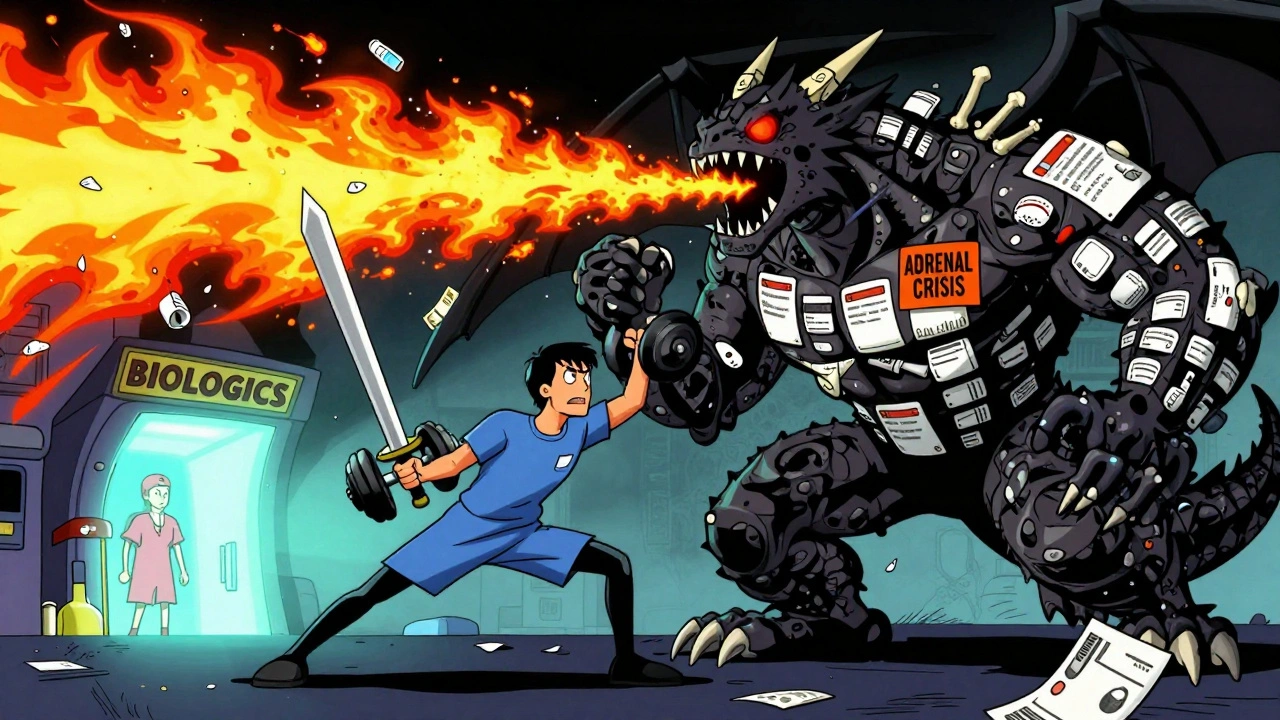
- Adrenal suppression: This is the most dangerous. Your body stops making its own cortisol because the drug is doing the job. If you stop suddenly, your body can’t snap back. You can go into adrenal crisis - low blood pressure, vomiting, confusion, even death. That’s why you never quit cold turkey. Tapering takes weeks, sometimes months.
- Muscle weakness and wasting: Your legs get weak. You struggle to climb stairs. Getting up from a chair takes effort. This isn’t just aging. It’s steroid-induced myopathy. It can be reversed, but only if caught early and you start strength training.
- Skin thinning and easy bruising: Your skin becomes paper-thin. A bump or scratch leaves a bruise. Wounds heal slowly. You might get stretch marks - purple or red - on your belly, thighs, or arms.
- Increased infection risk: Your immune system is turned down. A simple cold can turn into pneumonia. A small cut can get infected. You’re more vulnerable to fungal, bacterial, and even viral infections like shingles.
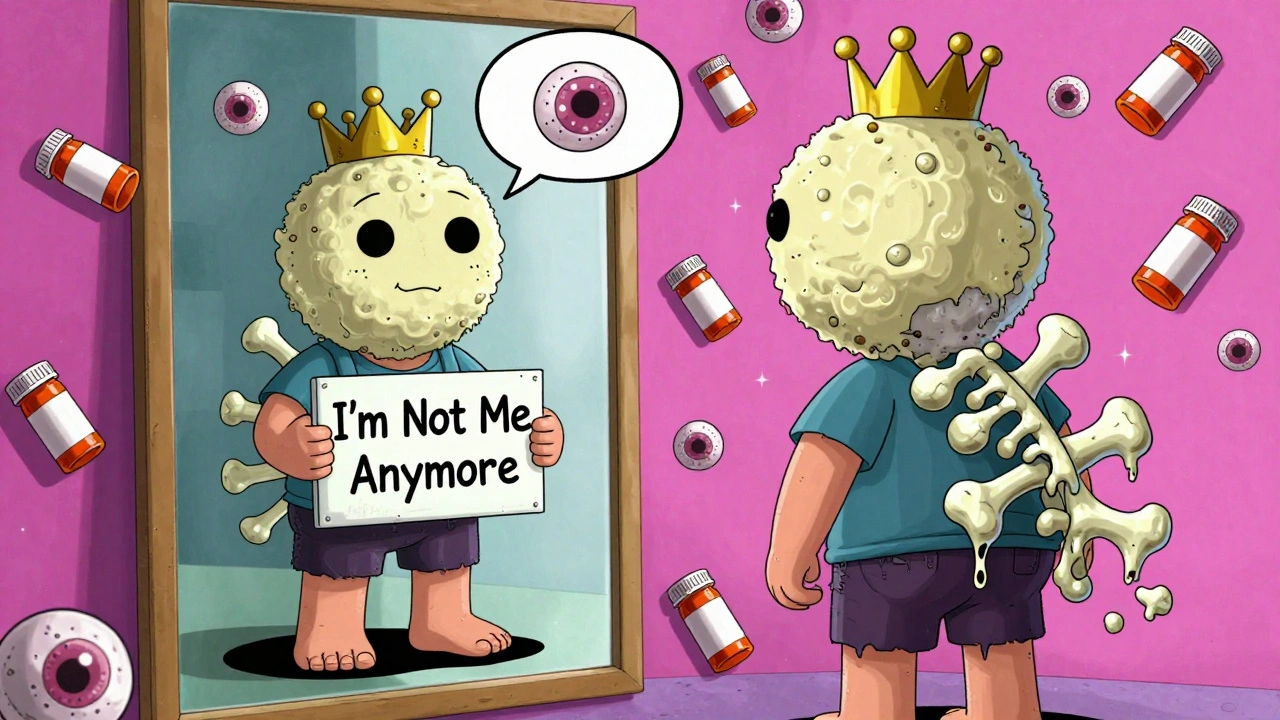
And then there’s the emotional toll. Parents of kids on long-term prednisolone for asthma or IBD talk about "moon face" as the most heartbreaking change. Teens on steroids for autoimmune disease report feeling unrecognizable in the mirror. The weight gain, the acne, the puffiness - it’s not just physical. It’s psychological.
Who Gets Hit Hardest? Risk Factors You Can’t Ignore
Not everyone reacts the same. Some people take 10 mg for a year and barely notice side effects. Others get hit hard on 5 mg. Why?
- Age: Older adults are more likely to get bone loss, high blood pressure, and diabetes.
- Gender: Women have higher rates of osteoporosis and cataracts.
- Existing conditions: If you already have diabetes, high blood pressure, or liver disease, steroids make it worse.
- Dose and duration: The risk doesn’t rise linearly - it explodes. At 7.5 mg daily for more than 3 weeks, side effects start climbing fast. At 20 mg for 8 weeks, 40% of people develop at least one major issue.
- Children: Growth slows. One study showed kids on 0.2 mg/kg/day of prednisolone grow 1.2 cm less per year. That’s not small. That’s life-altering.
There’s no magic formula. But if you’re on steroids long-term, you need a plan - not just a prescription.
How to Protect Yourself: Practical Steps
Knowing the risks isn’t enough. You need to act.
- Take it early: Always take your dose before 2 p.m. to avoid insomnia.
- Watch your sodium: Limit salt to under 2,000 mg a day. Eat more potassium-rich foods - bananas, spinach, sweet potatoes - to balance fluids.
- Move your body: Weight-bearing exercise - walking, lifting, climbing stairs - helps preserve bone and muscle. Even 30 minutes a day makes a difference.
- Protect your stomach: If you’re on more than 5 mg for over 4 weeks, you need a proton pump inhibitor (like omeprazole). It cuts ulcer risk from 8% to under 2%.
- Monitor your eyes: Get a yearly eye exam. Glaucoma doesn’t hurt until it’s too late.
- Check your bones: A DEXA scan after 3 months on chronic steroids is standard. If your bone density is dropping, your doctor should start treatment.
- Track your blood sugar: If you’re on over 20 mg daily, check your glucose at home. Don’t wait for symptoms.
- Never skip or double up: Missing a dose can trigger adrenal crisis. Doubling up can cause toxicity. Use a pill organizer or medication app - studies show it improves adherence by 37%.
When to Call Your Doctor - Red Flags
Some side effects are normal. Others are emergencies.
Call your doctor right away if you have:
- Sudden vision changes
- Severe headache or confusion
- High fever, chills, or signs of infection
- Severe abdominal pain (could be pancreatitis)
- Unexplained bruising or bleeding
- Signs of adrenal crisis - dizziness, fainting, nausea, vomiting, extreme fatigue
- Thoughts of self-harm or severe paranoia
These aren’t "wait and see" situations. They need immediate attention.
The Bigger Picture: Are They Worth It?
Yes - if used right.
For someone with giant cell arteritis, prednisone can mean the difference between blindness and sight. For a child with severe asthma, it can mean avoiding the ER. For a person with lupus, it can mean walking again after months in pain.
Doctors don’t prescribe these drugs lightly. But they’re still the most effective tool we have for acute inflammation. The key is using them as a bridge, not a permanent fix. Newer biologic drugs are reducing long-term steroid use in rheumatoid arthritis by nearly a third. But for now, when you need fast, powerful control - prednisone and prednisolone are still the gold standard.
It’s not about fear. It’s about awareness. Know the risks. Track your body. Work with your doctor. And don’t let the fear of side effects keep you from the relief these drugs can bring - when they’re used wisely.
Can you take prednisone and prednisolone together?
No. They’re not meant to be taken together. Prednisone turns into prednisolone in your liver, so taking both doesn’t give you extra benefit - it just doubles your side effects. Doctors switch between them based on liver function, not to combine them.
How long do side effects last after stopping?
Short-term side effects like insomnia, appetite changes, and mood swings usually fade within 1-2 weeks after stopping. But long-term damage - like bone loss, cataracts, or adrenal suppression - can be permanent. That’s why tapering and monitoring matter.
Is prednisolone safer than prednisone?
Not really. Their side effect profiles are nearly identical. The only real difference is in people with severe liver disease - prednisolone is preferred because it doesn’t need conversion. For most people, they’re interchangeable.
Can you lose weight while on prednisone?
It’s extremely hard. The drug increases appetite, causes fluid retention, and can slow metabolism. Most people gain weight. Focus on high-protein, low-sodium meals and regular movement. Weight loss usually happens after you stop the medication - not during.
Are there natural alternatives to prednisone?
No. There are no natural substances that replicate the power of corticosteroids for acute inflammation. Supplements like turmeric or omega-3s may help mild inflammation, but they won’t stop a flare-up of rheumatoid arthritis or vasculitis. Don’t replace steroids with herbs - talk to your doctor about safer long-term options like biologics.
Do steroids cause permanent damage?
They can. Long-term use can lead to permanent osteoporosis, cataracts, adrenal insufficiency, and muscle wasting. But these aren’t guaranteed. With careful dosing, monitoring, and lifestyle changes, many people avoid serious damage. The goal is to use the lowest dose for the shortest time possible.
What Comes Next? Monitoring and Alternatives
Once you’re off prednisone or prednisolone, your work isn’t done. Adrenal recovery can take months. Bone density needs checking. Eye health stays important. Blood sugar levels should be monitored for at least a year.
And if you need long-term control, ask about alternatives. Biologics like tocilizumab or methotrexate can reduce steroid dependence. New selective glucocorticoid receptor modulators are in trials - they promise anti-inflammatory power without the weight gain or bone loss. They’re not here yet, but they’re coming.
For now, the best strategy is simple: use these drugs like a scalpel, not a hammer. Precise. Brief. With eyes wide open to the risks. Because when you know what you’re facing, you’re not just surviving - you’re managing.

patrick sui
December 3, 2025 AT 03:30Man, this post is a goldmine. I’ve been on 10mg for 14 months for PMR, and honestly? The moon face hit me harder than the insomnia. I looked like a chipmunk who ate a whole bag of chips. But the bone density scan saved me - started on alendronate, now I’m lifting weights like a grumpy grandpa. 💪
Declan O Reilly
December 4, 2025 AT 23:18So… if steroids shut down your immune system like a firewall, are we just playing russian roulette with every cold? I mean, I got a sinus infection last year while on 20mg and it turned into pneumonia in 72 hours. My body felt like it got hacked. 🤯
Conor Forde
December 5, 2025 AT 06:36Oh, so we’re just supposed to ‘manage’ the fact that we’re turning into a puffy, diabetic, osteoporotic mess because some pharma bro decided corticosteroids were the ‘gold standard’? 😂 Please. The real gold standard is a doctor who doesn’t prescribe this shit like it’s Advil. I’ve seen people on this for 8 years. Their faces look like deflated balloons filled with Jell-O. This isn’t medicine - it’s chemical hostage-taking.
Sean McCarthy
December 5, 2025 AT 20:14Insomnia. Weight gain. Mood swings. Bone loss. Diabetes. Cataracts. Adrenal suppression. Infection risk. Muscle wasting. Skin thinning. Bruising. Stretch marks. Growth delay in kids. These are not "side effects." These are catastrophic, life-altering, irreversible consequences. Why is this still first-line? Because it's cheap. And because doctors are overworked. And because pharma pays for research. End of story.
Jaswinder Singh
December 6, 2025 AT 18:46bro you think this is bad? try being 16 and on prednisone for IBD. your face swells, you get acne like a horror movie, your friends stop texting you, your mom cries every night. i lost 2 years of my life to this crap. now i’m 22 and still scared to take off my shirt. nobody talks about this part.
Bee Floyd
December 8, 2025 AT 18:02I’ve been on low-dose prednisone for 3 years now - 5mg daily. I’ve done the DEXA scans, the eye checks, the glucose monitoring. I walk 45 minutes every day. I eat like a monk. I take my pill at 7 a.m. I’m alive. I can walk. I can breathe. This isn’t perfect - but it’s the price of not being in a wheelchair. I’m not grateful for the side effects. But I’m grateful I’m still here.
Jeremy Butler
December 8, 2025 AT 21:43It is incumbent upon the medical practitioner to exercise the utmost prudence when administering corticosteroid regimens, given the profound, systemic, and often irreversible physiological perturbations that ensue. The pharmacological suppression of the hypothalamic-pituitary-adrenal axis constitutes a paradigmatic example of therapeutic trade-offs, wherein the alleviation of inflammatory pathology is procured at the cost of endocrine autonomy. One must, therefore, regard such interventions not as curative, but as palliative contingencies - temporally bounded, rigorously surveilled, and ethically scrutinized.
Courtney Co
December 10, 2025 AT 19:52But what about the emotional toll?? I mean, I cried for three days straight because I saw my reflection and didn’t recognize myself. And my husband said "you look happy" but I felt like a monster. And my therapist said "it’s just the meds" but how do you explain that to your 8-year-old when they ask why you look like a balloon? I just want someone to say, "I see you," not just list side effects like a textbook. 😭
Shashank Vira
December 12, 2025 AT 19:30Let’s be candid - prednisone is the pharmaceutical equivalent of a chainsaw in neurosurgery. It works, yes - but only because we lack the scalpel. The real tragedy isn’t the side effects; it’s the systemic failure to invest in targeted immunomodulators. We’re still using 1950s firehoses to put out 2024 wildfires. Biologics are the future - but they’re priced like luxury yachts. Until then, we’re all just collateral damage in a broken healthcare economy.