Statin Sleep Impact Calculator
This tool helps you understand the potential risk of sleep disturbances based on your statin type. Research shows different statins have varying effects on sleep due to their chemical properties.
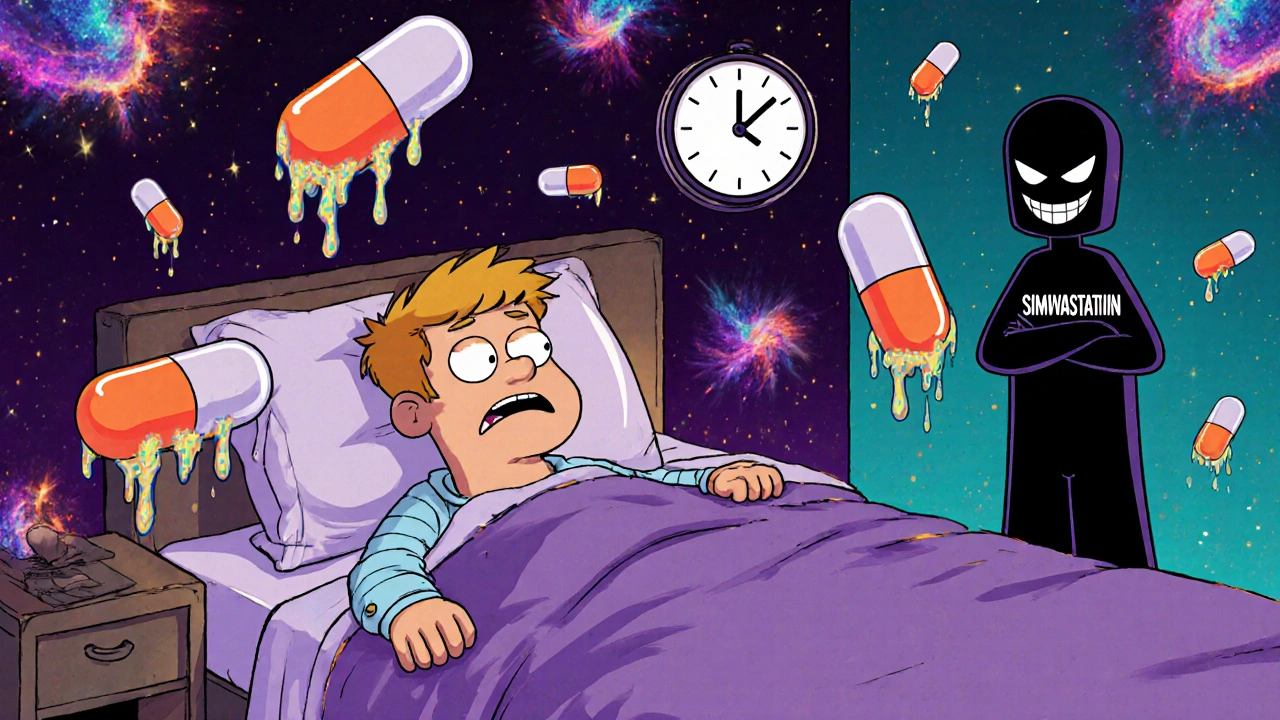
Many people take statins without a single sleep issue. But for others, the pills seem to turn nights into something out of a movie-full of wild dreams, waking up at 3 a.m., or just lying there wide awake even though their body is exhausted. If you’ve noticed your sleep changing after starting a statin, you’re not imagining it. And you’re not alone.
Why Do Some People Think Statins Mess With Sleep?
Statins are among the most common drugs in the world. Over 300 million prescriptions are filled every year just to lower cholesterol and protect the heart. But for some, the trade-off feels too high. Reports of insomnia, night terrors, and vivid, sometimes disturbing dreams started showing up in medical journals in the early 1990s. One letter to the editor in 1992 described 9 out of 51 patients on lovastatin losing 1 to 3 hours of sleep each night-while none of those on pravastatin had the same problem.
Fast forward to today, and the debate is still hot. Some studies say statins don’t affect sleep at all. Others say certain types, like simvastatin and lovastatin, are strongly linked to sleep problems. The key difference? How easily the drug crosses into the brain.
Lipophilic vs. Hydrophilic: The Brain Barrier Factor
Not all statins are made the same. Some are lipophilic-meaning they dissolve in fat-and can slip through the blood-brain barrier. Others are hydrophilic, or water-soluble, and mostly stay in the bloodstream.
Simvastatin and lovastatin are lipophilic. Their chemical structure lets them enter brain tissue more easily. That’s why researchers like Dr. Beatrice Golomb found in her 2007 study that people taking simvastatin reported significantly worse sleep than those on pravastatin-or even placebo. Pravastatin, being hydrophilic, showed no difference from a sugar pill.
It’s not just about the drug itself. Think of it like this: if a medicine can get into your brain, it might interfere with chemicals that regulate sleep-like serotonin or melatonin. That’s the theory. And it lines up with real-world data from the FDA’s adverse event database. Between 2004 and 2014, simvastatin accounted for 42% of all sleep-related complaints tied to statins-even though it was only prescribed about 28% of the time.
What About Atorvastatin and Rosuvastatin?
Here’s where things get confusing. Atorvastatin is moderately lipophilic, yet one massive 2018 study of 10,000 patients found people taking atorvastatin had fewer sleep problems than those on placebo. Rosuvastatin, though hydrophilic, still showed a small but statistically significant link to sleep issues in a 2014 analysis of patient reports.
This isn’t just about chemistry. It’s about people. Some individuals are just more sensitive. Genetics, age, other medications, or even stress levels can change how your body reacts. One person might switch from simvastatin to rosuvastatin and sleep like a baby. Another might see no change at all.

Is It the Statin-or the Muscle Pain?
There’s another layer: statin-associated muscle symptoms, or SAMS. Many people on statins report aches, stiffness, or weakness. And guess what? Pain doesn’t just make you uncomfortable-it keeps you awake. A 2024 study found that when patients with SAMS stopped taking statins, their sleep efficiency jumped by nearly 4%. They woke up less during the night. Their daytime sleepiness dropped.
So when someone says, “I can’t sleep since I started statins,” it might not be the drug directly messing with their dreams. It could be that their muscles are hurting so much they can’t get comfortable. Or worse-they’re waking up from pain, then lying there anxious, wondering if the statin is to blame.
What Do the Experts Really Say?
The science is split. On one side, Professor Colin Baigent from Oxford, who led studies involving over 100,000 patients, says statins don’t cause sleep problems. He believes the reports are a nocebo effect-meaning people expect side effects, so they notice them, even if the drug isn’t the cause.
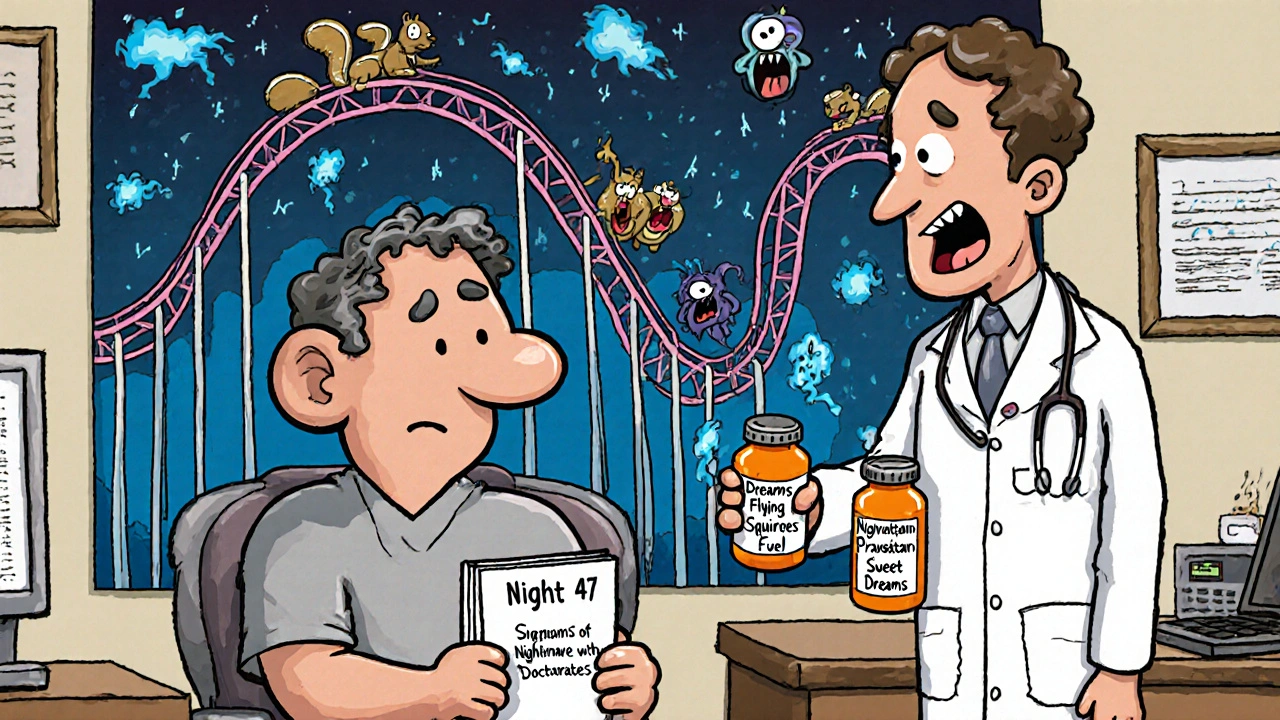
On the other side, Dr. Golomb and others point to controlled trials showing real differences between statins. One patient in her study said they had nightmares so vivid they’d wake up screaming. Another stopped sleeping entirely after switching to simvastatin. Symptoms vanished when they switched to pravastatin.
And then there’s the real-world evidence: Reddit threads, patient forums, and letters to doctors. Thousands of people report the same thing: “My dreams went from normal to surreal.” “I started waking up at 2 a.m. every night.” “I switched to pravastatin-and my dreams disappeared in three days.”
These aren’t just anecdotes. They’re signals. And they’re too consistent to ignore.
What Should You Do If You’re Having Sleep Problems?
Don’t stop your statin on your own. Heart attacks and strokes are far more common than sleep issues caused by statins. But you don’t have to suffer in silence.
- Track your sleep. For a week, write down when you go to bed, when you wake up, how many times you wake up, and whether you remember dreams. Use a simple notebook or a free app.
- Check the timing. Some people find taking statins in the morning instead of at night helps. It’s not proven, but it’s low-risk.
- Ask about switching. If you’re on simvastatin or lovastatin, ask your doctor about switching to pravastatin or fluvastatin. These are less likely to cross into your brain.
- Rule out muscle pain. If you’re also feeling stiff or sore, mention it. SAMS might be the real culprit behind your sleep issues.
- Consider CBT-I. Cognitive Behavioral Therapy for Insomnia is proven to work-even if the cause isn’t clear. It doesn’t involve pills. It teaches your brain how to sleep again.
One patient, who’d been on simvastatin for five years, finally switched to pravastatin after years of vivid dreams and insomnia. She said, “It wasn’t just better sleep. It was like I got my mind back.”
Will This Go Away?
If your sleep issues are linked to statins, they usually improve within a few weeks of stopping or switching. In one study, patients who stopped statins and had their sleep problems resolve saw their sleep quality scores jump from 7.7 down to 6.3 on a standard scale-within six weeks.
And if you’re worried about your heart? The benefits of statins are clear. For every 1 mmol/L drop in LDL cholesterol, your risk of a major heart event drops by 22%. That’s huge. But your sleep matters too. You deserve both.
What’s Next?
Researchers are still digging. A major trial called NCT04567891 is currently comparing statin continuation with cognitive behavioral therapy for insomnia versus stopping the statin entirely. Results are expected in early 2025. Until then, the best advice is this: listen to your body. If your sleep changes after starting a statin, don’t brush it off. Talk to your doctor. Try a switch. Track your nights. You might find that the right statin for your heart isn’t the one that’s wrecking your dreams.
Can statins cause vivid dreams?
Yes, some people report vivid, intense, or even disturbing dreams after starting statins-especially lipophilic ones like simvastatin and lovastatin. These dreams often feel more real than normal dreams and can disrupt sleep. Reports in medical journals and patient forums suggest this side effect is more common with statins that can cross into the brain. Switching to a hydrophilic statin like pravastatin often resolves the issue.
Do statins cause insomnia?
Some people do experience insomnia while taking statins, but the evidence is mixed. Large studies show no overall link between statins and reduced sleep time. However, smaller trials and patient reports suggest certain statins-particularly simvastatin-can make it harder to fall or stay asleep. This may be due to brain penetration or muscle discomfort. If insomnia starts shortly after beginning a statin, it’s worth discussing with your doctor.
Which statin is least likely to affect sleep?
Pravastatin and fluvastatin are the least likely to affect sleep because they’re hydrophilic and don’t cross the blood-brain barrier easily. Atorvastatin has mixed data, with some studies showing no effect and others showing slight issues. Simvastatin and lovastatin have the strongest links to sleep disturbances. If sleep problems arise, switching to pravastatin is often the first step doctors recommend.
How long do statin-related sleep problems last?
If statins are causing sleep issues, symptoms often begin within the first few weeks of starting the medication. If you stop or switch statins, sleep usually improves within 2 to 4 weeks. In one study, patients saw measurable improvements in sleep efficiency and reduced nighttime awakenings within six weeks of discontinuation. The longer you stay on a problematic statin, the more your brain may associate bedtime with wakefulness-making recovery slower.
Should I stop taking statins if I have sleep problems?
No, don’t stop statins without talking to your doctor. The cardiovascular benefits are well proven and often life-saving. Instead, document your symptoms, try switching to a different statin (like pravastatin), or consider whether muscle pain might be disrupting your sleep. Many people find relief without giving up statins entirely. Your doctor can help you balance heart protection with restful sleep.


Sohini Majumder
November 30, 2025 AT 19:15Joy Aniekwe
December 1, 2025 AT 03:04Bernie Terrien
December 2, 2025 AT 15:36linda wood
December 2, 2025 AT 16:19LINDA PUSPITASARI
December 2, 2025 AT 19:38Sullivan Lauer
December 2, 2025 AT 22:32tushar makwana
December 3, 2025 AT 15:29Geoff Heredia
December 4, 2025 AT 07:10gerardo beaudoin
December 5, 2025 AT 00:35