
Imagine being terrified to step outside in summer. Not because of the heat, but because a single sting from a wasp, bee, or yellow jacket could send you to the emergency room-or worse. For people with severe stinging insect allergies, this isn’t fear. It’s reality. But there’s a treatment that doesn’t just manage symptoms-it changes the disease itself. That’s venom immunotherapy.
What Venom Immunotherapy Actually Does
Venom immunotherapy (VIT) isn’t another shot to calm down a reaction after it happens. It’s not an epinephrine auto-injector you carry in your pocket. It’s a long-term fix. VIT trains your immune system to stop overreacting to insect venom. Think of it like a vaccine-but instead of preventing a virus, it teaches your body to ignore harmless proteins in bee or wasp venom.
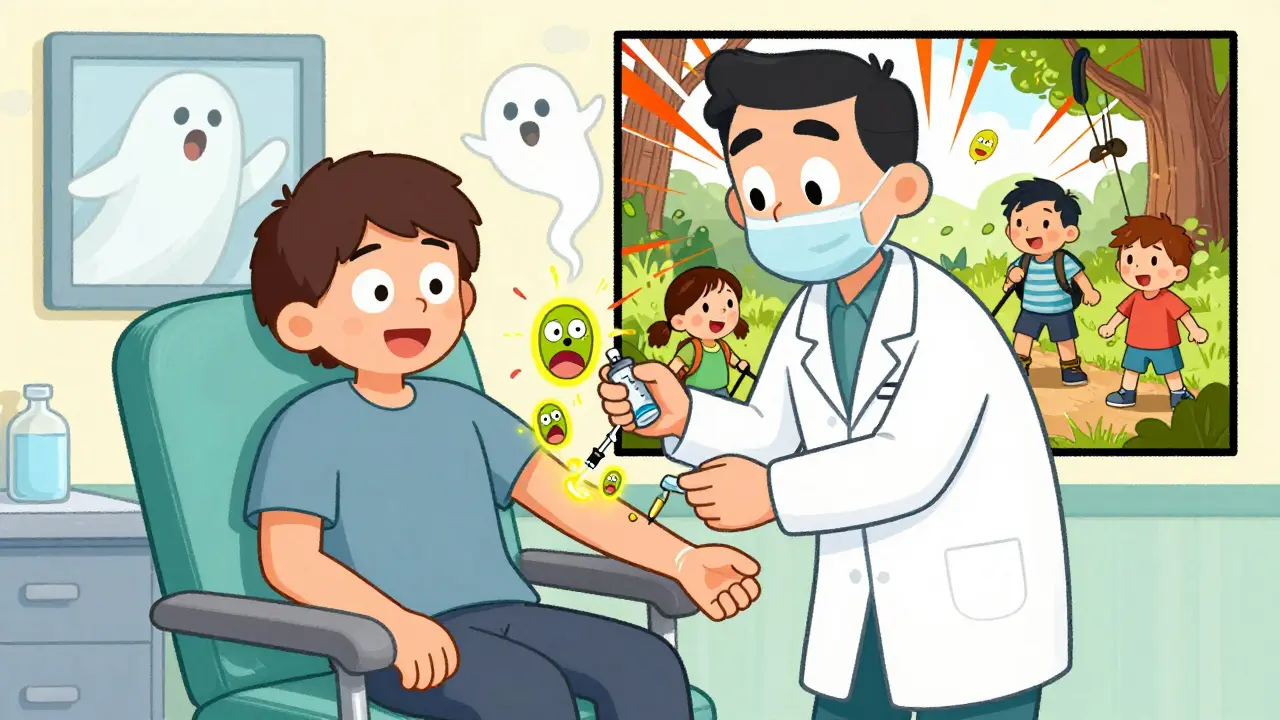
Here’s how it works: tiny, controlled doses of purified venom are injected under the skin, starting at levels so low they cause no reaction. Over weeks, the dose slowly increases until you reach a maintenance level-usually 100 to 200 micrograms. Once you’re there, you get shots every 4 to 8 weeks for at least three to five years. After that, most people stay protected for years-even after stopping treatment.
The science behind it is solid. Studies show VIT cuts the risk of a life-threatening reaction from 40% to 70% down to just 3% to 15%. That’s a 90% drop in risk. For wasp and hornet allergies, protection rates hit 91% to 96%. For honeybees, it’s still strong at 77% to 84%. No other treatment comes close.
Why It’s Better Than Just Carrying an EpiPen
Epinephrine saves lives during anaphylaxis. But it doesn’t prevent the reaction. You’re still living on edge. Every picnic, every backyard barbecue, every walk through tall grass becomes a potential trigger. And if you’ve had one severe reaction, you’re far more likely to have another.
VIT changes that. People who complete the full course don’t just survive stings-they live without fear. One 2022 survey of over 1,200 VIT patients found 87% felt less anxious about outdoor activities. Three out of four stopped carrying multiple EpiPens. That’s not just medical progress. That’s freedom.
Compare that to sublingual immunotherapy (drops under the tongue), which some clinics offer. It sounds easier, but studies show it only works about 40% to 55% of the time. Oral pills? Still experimental. VIT remains the gold standard.
Who Should Get It
Not everyone with a sting reaction needs VIT. If you only got hives or swelling at the sting site, you’re probably fine with avoidance and an EpiPen. But if you had symptoms like dizziness, trouble breathing, nausea, vomiting, or loss of consciousness within minutes of being stung-that’s a systemic reaction. That’s when VIT is strongly recommended.
Also, if you’re a gardener, landscaper, beekeeper, or work outdoors regularly, your risk is higher. Even if your reaction was mild once, repeated exposure increases the chance of something worse next time.
There are exceptions. People with mast cell disorders like mastocytosis have higher failure rates-up to 20%-so VIT needs extra caution. Children under 18 rarely get it unless they’ve had a severe reaction, because their risk of future stings is lower and their immune systems may outgrow the allergy.
What to Expect During Treatment
The first few months are the hardest. You’ll visit the clinic 1 to 3 times a week for 8 to 20 weeks. Each visit takes about an hour, including a mandatory 45- to 60-minute observation period after the shot. That’s because most reactions happen during the buildup phase. About 2% to 5% of patients get a systemic reaction during treatment-but most are mild: itching, hives, or mild swelling. Severe reactions are rare.
The venom used is standardized. For honeybees, it’s Api m 1. For yellow jackets, Ves v 5. Fire ants? Sol i 3. These aren’t random extracts. They’re made under strict FDA and European Medicines Agency rules to ensure every batch has the same potency. That consistency is why VIT works so reliably.
As treatment continues, your body starts producing protective IgG4 antibodies. Levels above 10 mg/L mean you’re building tolerance. Skin tests, which used to show strong reactions to venom, gradually become less sensitive-often dropping by half or more in the first year.
The Downsides and Real Challenges
VIT isn’t perfect. It’s time-consuming. Monthly clinic visits for years? That’s hard if you work multiple jobs, live far from an allergist, or have kids to care for. Thirty-two percent of patients in one survey said missing work or school for appointments was a major burden.
Cost is another issue. In the U.S., annual treatment runs $2,800 to $4,500. Medicare covers 80% after your deductible. Private insurers approve 75% to 85% of requests-but only if you jump through hoops. Prior authorization, medical records, and proof of prior reaction are often required. Insurance denials are common, and appeals take weeks.
And yes, there’s a small chance it won’t work. About 5% to 10% of people still react to stings after finishing VIT. That’s why experts still recommend carrying an EpiPen-even after treatment. It’s not a sign of failure. It’s smart backup.

What’s New in 2025
The field hasn’t stood still. In January 2023, the FDA approved a new standardized fire ant venom extract, helping an estimated 600,000 Americans with allergies to these aggressive insects. Rush protocols now let some patients reach maintenance doses in just one to three days instead of months. But they come with a trade-off: systemic reactions during the rush phase are 35% more common.
Researchers are also testing recombinant venom proteins made in labs. These could eliminate batch variability and reduce side effects. And scientists are working on blood tests that predict who will respond best to VIT-using IgG4 levels as a guide. That could mean shorter treatment for some, longer for others.
Still, access remains a problem. One in three rural Americans live more than 50 miles from an allergist. Telehealth helps with consultations, but you still need to be there for the shots. That’s why VIT isn’t used by more than 15% of eligible people in the U.S.-even though 3 million are candidates.
Is It Worth It?
Let’s do the math. The average cost of an emergency room visit for anaphylaxis? Around $1,500. Hospitalization? $10,000 or more. Multiply that by the number of preventable reactions VIT stops-over 1.5 million per year in the U.S. alone-and the return on investment is clear. One study found VIT saves $7.30 for every $1 spent.
But beyond money, it’s about quality of life. People who complete VIT say they can finally go camping with their kids. They can garden without checking every bush. They stop checking weather apps for bee activity. They sleep better. They stop feeling like their body is a ticking time bomb.
If you’ve had a serious reaction to a sting, talk to an allergist. Don’t wait. Don’t assume you’ll be fine next time. VIT isn’t a miracle cure, but it’s the closest thing we have to one for venom allergies. And for thousands, it’s turned fear into freedom.
Is venom immunotherapy safe?
Yes, for most people. About 2% to 5% of patients experience a systemic reaction during treatment, but nearly all are mild-itching, swelling, or hives. Severe reactions are rare. The risk is highest during the buildup phase, which is why you’re monitored for 45 to 60 minutes after each shot. The long-term benefits far outweigh the short-term risks for those with a history of systemic reactions.
How long does venom immunotherapy last?
The full course usually takes 3 to 5 years. After stopping, 85% to 90% of patients remain protected for at least 5 to 10 years. Some, especially those with wasp or hornet allergies, may stay protected for life. A small percentage (5% to 10%) may lose protection over time, which is why carrying an epinephrine auto-injector is still recommended even after treatment ends.
Can children get venom immunotherapy?
Yes, but it’s less common. Children under 18 make up only about 12% of VIT recipients because their risk of future stings is lower, and many outgrow the allergy naturally. VIT is typically reserved for kids who’ve had severe systemic reactions, especially if they’re active outdoors or have other risk factors. Doctors weigh the benefits carefully against the treatment burden.
Does insurance cover venom immunotherapy?
Most do, but it’s not automatic. Medicare covers 80% after your deductible. Private insurers usually require prior authorization, proof of a prior systemic reaction, and documentation from an allergist. Approval rates are 75% to 85%, but denials are common-especially if your history is unclear. Always check with your insurer before starting treatment.
What happens if I miss a shot?
Missing one maintenance dose usually isn’t a problem. If you’re more than 4 weeks late, your allergist may reduce your dose slightly and re-escalate. If you miss multiple doses or stop for months, you may need to restart the buildup phase. Consistency matters-especially in the first 3 years. Don’t skip appointments unless absolutely necessary.
Can I stop VIT if I feel better?
Don’t stop on your own. Even if you feel fine, your immune system still needs the full course to build lasting tolerance. Stopping early increases the chance of losing protection. Most doctors recommend staying on maintenance for at least 3 to 5 years. After that, they’ll help you decide whether to stop based on your history, allergy test results, and risk of future stings.



Vu L
December 27, 2025 AT 23:07Yeah right, like we’re all just gonna trust some lab-made bug juice injected into our arms. Next they’ll be spiking our tap water with ‘immune training serum.’ I got stung by a wasp in ‘19 and lived. I don’t need a five-year commitment just to feel less scared of nature.
Mimi Bos
December 29, 2025 AT 19:36i just got my first shot last week!! 🤯 its kinda scary but also kinda cool? like my body is learning not to panic?? the nurse said i’m doing great and i cried a little (happy tears, i swear). also i finally ate a watermelon outside without checking every inch of the picnic blanket. small wins, y’all.
Payton Daily
December 30, 2025 AT 01:28Let me tell you something about immunity, folks. This isn’t science-it’s control. The pharmaceutical-industrial complex doesn’t want you to be free. They want you dependent. Think about it: if you just avoided bees, you’d be fine. But VIT? That’s a subscription model. You’re not getting cured-you’re being monetized. And don’t get me started on the FDA. They’re not regulators, they’re gatekeepers. We’re being groomed to accept lifelong medical servitude disguised as ‘progress.’
Meanwhile, your body has been healing itself for 3 billion years. Why trust a vial of wasp juice over evolution?
Debra Cagwin
December 31, 2025 AT 22:27To anyone thinking about VIT: you’re not weak for considering it. You’re brave. Living with this kind of fear is exhausting, and choosing to fight it with science-not just luck-is one of the most courageous things you can do.
I’m a nurse who’s seen people go from hiding indoors to hiking the Appalachian Trail after VIT. It’s not magic, but it’s real. And yes, it’s a hassle. But so is calling 911 every time a bee buzzes near you.
If you’ve had a systemic reaction, please talk to an allergist. You deserve to breathe easy again. You’re not overreacting-you’re underprotected.
Ryan Touhill
January 1, 2026 AT 01:47It’s fascinating how the modern medical establishment has weaponized fear to drive compliance. VIT is not a treatment-it’s a social contract. You pay, you submit, you become a compliant patient. And the narrative? ‘Freedom.’ What a clever euphemism for perpetual dependence.
Meanwhile, in Germany, they’ve been using sublingual immunotherapy for decades with comparable efficacy. Why are we in the U.S. clinging to needles like they’re relics of some ancient rite? Is it really about safety-or is it about profit margins and clinic revenue streams?
And let’s not pretend the 90% efficacy rate isn’t cherry-picked. What about the 10% who still react? Are they just collateral damage in the marketing campaign?
Teresa Marzo Lostalé
January 2, 2026 AT 12:40Been on VIT for 4 years now. Used to carry 3 EpiPens like a backpack. Now I just carry one… for peace of mind. Last summer I went to a BBQ, sat right next to a wasp nest (don’t ask how), and it landed on my arm. I didn’t flinch. I just blew it off. Felt like a superhero. 🦸♀️
Also, my dog now thinks I’m immune to everything. He sits on my lap during thunderstorms. Not sure if that’s a win.
Gran Badshah
January 2, 2026 AT 19:17in india we dont have this thing. we just slap the bee and scream. then drink ginger tea. works 90% time. why usa so complicated? why need machine? why need money? why need doctor? i just want to eat mango without fear. why so hard?
Ellen-Cathryn Nash
January 3, 2026 AT 09:41It’s not just about the venom-it’s about the surrender. You’re giving up your autonomy to a system that profits from your fear. And let’s be honest: if you’re rich enough to afford this, you’re probably already safe. But for the rest of us? It’s a luxury. A privilege. A trap dressed in white coats and FDA stamps.
Why not teach people to live with caution instead of buying their way out of nature? The earth doesn’t owe us safety. We owe it respect. And VIT? It’s just another way to pretend we can control what we can’t.
Samantha Hobbs
January 4, 2026 AT 09:24OMG I JUST GOT MY FIRST SHOT AND MY ARM HURTS BUT I’M SO PROUD OF MYSELF I’M CRYING AND MY KID JUST ASKED IF I’M A SUPERHERO NOW. I TOLD HIM YES. 🫶