Vancomycin Toxicity Risk Assessment Tool
Disclaimer: This tool is for educational purposes based on article data and does not replace professional clinical judgment or institutional protocols.
Patient & Treatment Profile
Enter patient data and click "Analyze Risks" to generate a toxicity profile.
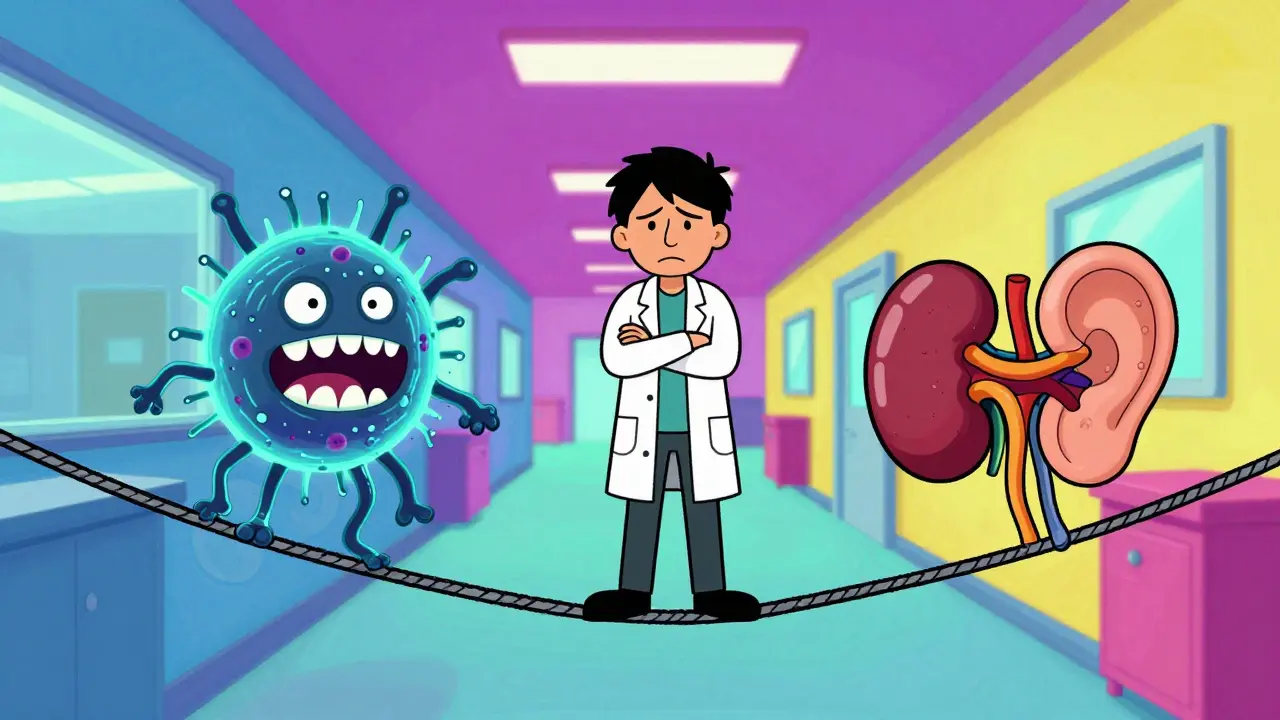
Using Vancomycin is a high-stakes balancing act for any clinician. On one hand, it is an indispensable tool for fighting severe Gram-positive infections, especially MRSA. On the other, it can damage the kidneys or the ears if not handled with extreme precision. While most people focus on the kidneys because the damage is more common, the risk to hearing is often more permanent. The real challenge isn't just avoiding toxicity, but doing so without letting a life-threatening infection get out of control.
The Kidney Struggle: Understanding Nephrotoxicity
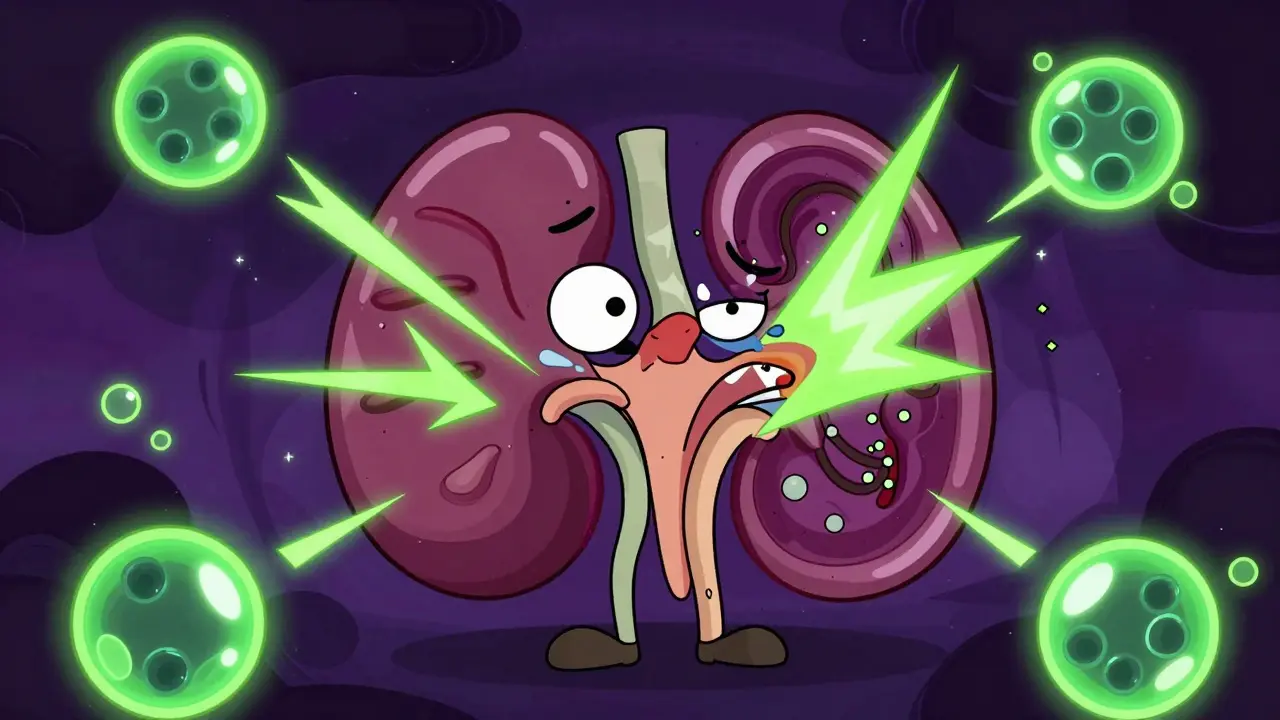
Nephrotoxicity is the most frequent complication when using this antibiotic. In modern practice, between 5% and 30% of patients experience some level of kidney stress. The damage happens in the proximal tubules, where the drug creates reactive oxygen species that mess with mitochondrial function. Essentially, the drug becomes toxic to the very cells meant to filter it out of the body.
It is rarely just about the vancomycin itself. The risk spikes when it is paired with other harsh drugs. For example, combining vancomycin with Piperacillin-tazobactam is a known danger zone. A 2022 meta-analysis showed that this specific combination carries a 1.31-fold higher risk of Acute Kidney Injury (AKI) compared to pairing vancomycin with meropenem. If a patient is getting more than 4 grams a day or has pre-existing renal issues, the odds of kidney failure climb significantly.
The silver lining? Kidney damage is often reversible. If doctors catch the rise in serum creatinine early-usually between day 3 and 14 of treatment-they can adjust the dose or swap the drug to save the organ. This is why checking kidney function every 48 to 72 hours is the gold standard in hospital wards.
The Silent Risk: Vancomycin Ototoxicity
While kidney issues are common, Ototoxicity is the one that keeps specialists awake at night. It occurs far less often-roughly 1% to 3% of cases-but unlike a bruised kidney, a dead auditory nerve doesn't grow back. This typically manifests as bilateral high-frequency sensorineural hearing loss, often accompanied by a persistent ringing in the ears (tinnitus).
For a long time, the medical community assumed ototoxicity only happened if the kidneys were already failing. We now know that's not true. Case reports have shown patients with perfectly healthy kidneys losing their hearing after just a few doses. It seems some people are just genetically wired to be more susceptible. In fact, research into the MT-RNR1 gene suggests some patients have a 3.2-fold higher risk of hearing loss regardless of their renal function.
The danger zone for hearing usually starts when serum concentrations cross 40 mcg/mL, and once they hit 80 mcg/mL, the damage is likely permanent. The tragedy here is that there is no simple blood test to tell if the ears are being damaged. By the time a patient complains of ringing or muffled sound, the damage is already done.
Comparing the Two: Which Risk is Worse?
When you put nephrotoxicity and ototoxicity side-by-side, the trade-offs are stark. One is a frequent but often manageable hurdle; the other is a rare but potentially devastating blow.
| Feature | Nephrotoxicity | Ototoxicity |
|---|---|---|
| Incidence Rate | 5% - 30% | 1% - 3% |
| Reversibility | Often reversible | Often permanent |
| Primary Trigger | Drug combinations (e.g., Piperacillin) | High peak concentrations / Genetics |
| Detection Method | Serum Creatinine / AKIN criteria | Audiometric testing / Patient report |
| Typical Onset | 3 to 14 days | Rapid or insidious |
From a cost perspective, kidney issues usually just mean a few extra days in the hospital. Hearing loss, however, can lead to a lifetime of rehabilitation and hearing aid costs, sometimes totaling tens of thousands of dollars annually per patient.
Moving Beyond Troughs: Modern Monitoring
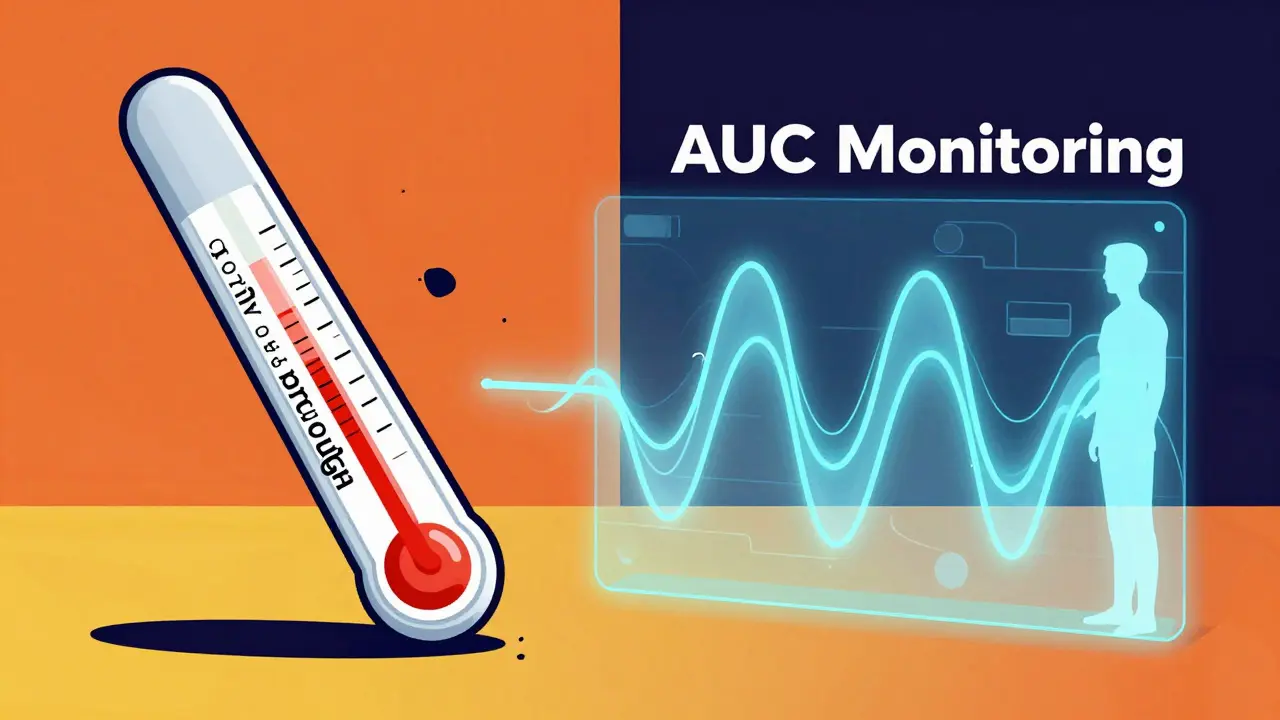
For decades, doctors relied on "trough levels"-the lowest concentration of the drug in the blood right before the next dose. But we've learned that troughs are a blunt instrument. To really protect the patient, the industry is shifting toward AUC Monitoring (Area Under the Curve). This method looks at the entire exposure of the drug over 24 hours rather than just one snapshot.
The results are impressive. Hospitals using AUC-guided dosing have seen nephrotoxicity rates drop from around 14.7% to about 8.2%. The 2023 VAN-GUARD trial reinforced this, showing that real-time AUC adjustments could nearly halve the risk of AKI without making the drug less effective. It's a shift from "one size fits all" to personalized medicine.
New software like PrecisePK and DoseMeRx are making this easier by using pharmacokinetic modeling to predict how a specific patient's body will handle the drug. Instead of guessing and checking, clinicians can now predict risks with significantly higher accuracy.
Practical Tips for Balancing the Risks
If you are managing a patient on high-dose vancomycin, a few rules of thumb can help mitigate the danger. First, be wary of the "cocktail effect." If you must use a beta-lactam like piperacillin-tazobactam, monitor the kidneys twice as often. Second, keep a close eye on the 15 mcg/mL trough mark; once you cross that threshold, the risk of kidney injury steepens dramatically while the benefit of the drug plateaus.
For hearing protection, the strategy is different. Since blood tests won't help, clinical vigilance is everything. Ask the patient specifically about ringing in the ears or a feeling of fullness in the ear canal. For those on prolonged therapy (over 7 days) or massive doses (over 4g/day), a baseline audiogram is a smart move, even if it isn't always standard practice in every hospital.
Ultimately, the goal is to use the lowest effective dose. As we fight increasingly resistant strains of bacteria, the temptation is to push the dose higher, but that is exactly where the toxicity risks skyrocket. The balance is found in frequent monitoring and a willingness to switch to alternatives like daptomycin if the patient's kidneys start to flicker.
Is vancomycin kidney damage permanent?
In most cases, no. Vancomycin-associated nephrotoxicity is typically reversible if the drug is discontinued or the dose is lowered promptly. Most patients recover renal function once the toxic levels are cleared from their system.
Can you lose your hearing from vancomycin even with healthy kidneys?
Yes. While renal impairment increases the risk because the drug builds up in the blood, there are documented cases of patients with normal kidney function experiencing ototoxicity. This is often due to individual genetic susceptibility or exceptionally high peak concentrations.
What is the safest trough level for vancomycin?
Current guidelines generally recommend targeting trough concentrations of 10-15 mcg/mL for most infections. Levels above 15-20 mcg/mL are associated with a significantly higher risk of nephrotoxicity without providing a meaningful increase in efficacy for most patients.
Why is AUC monitoring better than trough monitoring?
AUC monitoring measures the total drug exposure over a 24-hour period. This provides a more accurate picture of how much drug the body is actually absorbing and clearing, which allows for more precise dosing and a lower rate of kidney injury compared to taking a single trough measurement.
Which other drugs increase the risk of vancomycin toxicity?
Piperacillin-tazobactam is one of the most significant risk factors when combined with vancomycin. Aminoglycosides are also highly nephrotoxic and can synergistically increase the risk of acute kidney injury when used alongside glycopeptides.


Sam Hayes
April 4, 2026 AT 18:11The shift to AUC monitoring is definitely the way forward. It just makes so much more sense than relying on a single trough value that might not even reflect the actual drug exposure for the patient
Divine Manna
April 5, 2026 AT 17:58It is profoundly naive to assume that software like PrecisePK is a panacea for clinical incompetence. The mathematical elegance of AUC monitoring does not negate the fundamental necessity of a clinician's intuition. One must realize that we are treating biological entities, not algebraic equations. The obsession with precision often masks a deeper fear of uncertainty, which is the very essence of medical practice. To blindly trust an algorithm is to surrender the art of medicine to the cold rigidity of a silicon chip. We are witnessing the death of the diagnostic gaze in favor of the digital display. Truly, the tragedy is not the toxicity of the drug, but the atrophy of the medical mind.
Rob Newton
April 6, 2026 AT 13:19AUC is just overcomplicating things. Troughs worked for decades.
Mark Zhang
April 7, 2026 AT 09:16I totally see where you're coming from on the trough monitoring, but moving toward AUC really helps us keep patients safer in the long run. It's all about evolving the way we care for people!
Vicki Marinker
April 9, 2026 AT 06:19The mention of hearing loss is just depressing. Why bother with these detailed tables when the outcome is basically the same for the patient if they're unlucky?
simran kaur
April 9, 2026 AT 06:53Of course they want us to use "personalized software" now. It is just another way for big pharma and tech giants to track patient data and push their proprietary algorithms into every hospital wing. They don't tell you who actually funds the studies for these new monitoring methods. Probably the same people selling the hardware.
The Charlotte Moms Blog
April 9, 2026 AT 17:05Absolutely terrifying!!! Imagine losing your hearing just because a doctor didn't check a blood level...!!! This is pure negligence...!!!
Dee McDonald
April 9, 2026 AT 22:33We need to push for baseline audiograms as a mandatory standard! It is ridiculous that we wait for a patient to say their ears are ringing before we realize the drug has already scorched their nerves! Push the boundaries of the current protocol!
HARSH GUSANI
April 9, 2026 AT 23:11My hospital uses different methods and they are better 🇮🇳. We don't need these fancy US softwares to save people 🙄
Jenna Carpenter
April 11, 2026 AT 05:42imagine thinkin trough levels are a "blunt instrument" lol. some of u really dont know how to read a chart probly
Sakshi Mahant
April 11, 2026 AT 21:42It is quite interesting to see the different approaches to this. I think focusing on the lowest effective dose is a principle that transcends any specific region or software.
Ace Kalagui
April 12, 2026 AT 01:33I truly believe that if we just take a moment to empathize with the patients who have suffered these permanent losses, we would find the motivation to implement these AUC changes much faster across all healthcare systems, because while the technical data is impressive, the human element of losing one's hearing is something that no amount of software can ever truly quantify or repair, regardless of the cost-benefit analysis provided in the text.
Aysha Hind
April 13, 2026 AT 17:56This whole "genetic susceptibility" thing is just a convenient cover-up for when they mess up the dosage. They use these fancy gene names to distract us from the fact that they're basically playing Russian Roulette with our organs.
Lawrence Rimmer
April 14, 2026 AT 22:39The existential dread of a permanent auditory deficit is a heavy price for a cured infection. We prioritize the survival of the body over the quality of the experience. Typical.
Hudson Nascimento Santos
April 15, 2026 AT 01:55The duality of this drug mirrors the human condition-the necessity of a cure often necessitating a poison. We balance on the edge of toxicity to achieve health.