Anaphylaxis Symptom Checker
This tool follows 2023 American Academy of Allergy, Asthma & Immunology guidelines. It is not a medical diagnosis but helps identify when to seek immediate emergency care.
Check Your Symptoms
Select all symptoms present (at least 2 systems required for concern)
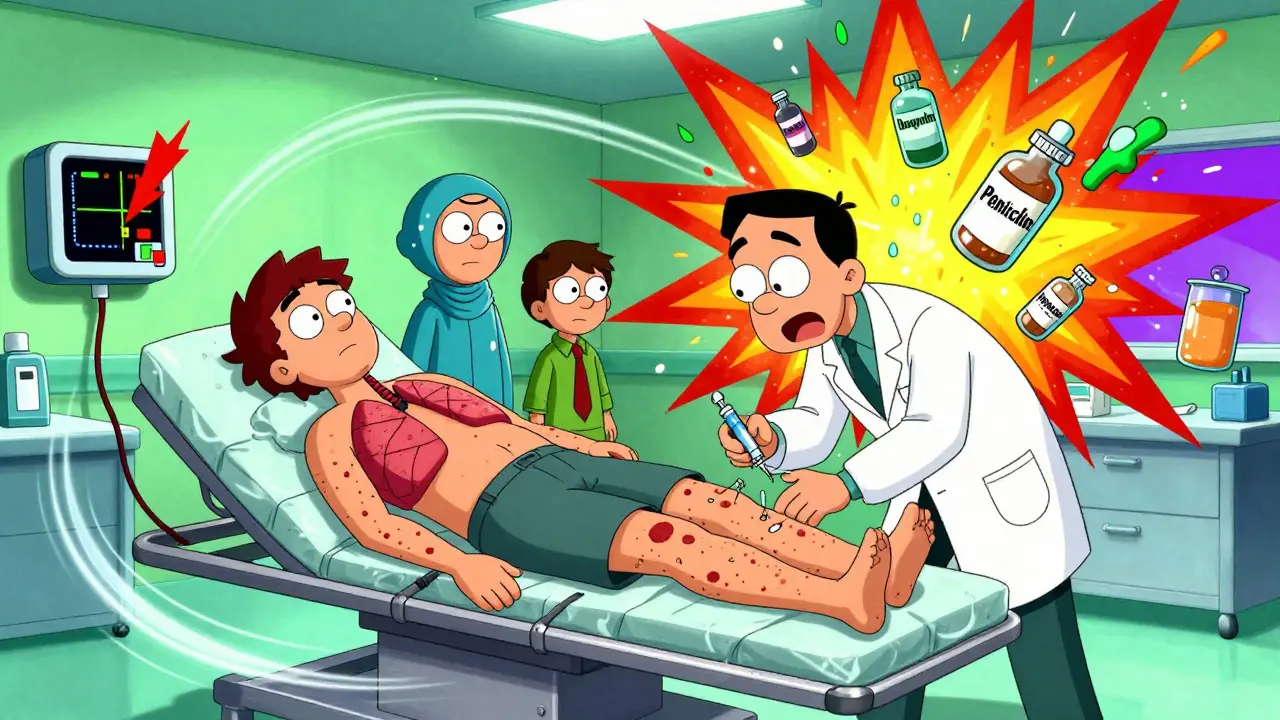
Medications save lives-but sometimes, they can trigger a response so violent, it can kill. Anaphylaxis from drugs isn’t rare. It’s not some distant medical mystery. It happens in hospitals, clinics, and even at home. And if you don’t recognize it fast, you could lose someone in minutes.
What Exactly Is Medication-Induced Anaphylaxis?
Anaphylaxis is your body’s worst-case allergic reaction. It doesn’t just cause a rash or a stuffy nose. It hits multiple systems at once-your skin, lungs, heart, gut-and it moves fast. When a medication triggers it, your immune system overreacts, releasing chemicals like histamine that make blood vessels leak, airways tighten, and blood pressure crash.
It’s not just about being "allergic" to a drug. It’s about how your body explodes in response. The most common culprits? Antibiotics-especially penicillin-and NSAIDs like ibuprofen or aspirin. Monoclonal antibodies used in cancer and autoimmune treatments are rising fast as triggers. A 2021 study found antibiotics cause nearly 70% of all drug-induced anaphylaxis cases. Penicillin alone accounts for 70-80% of those.
Reaction time matters. IV meds can set off symptoms in under five minutes. Oral drugs might take up to 30. But here’s the catch: some reactions don’t show up until hours later. That’s why you can’t just wait and see.
How to Spot It Before It’s Too Late
You don’t need a lab test to know you’re in trouble. The 2023 guidelines from the American Academy of Allergy, Asthma & Immunology give you three clear signs:
- Something hits your skin and you start having trouble breathing-or your blood pressure drops.
- Two or more body systems react at once: hives + vomiting + dizziness + wheezing.
- Your blood pressure plummets after you take a drug you’ve been told is risky.
Look for these symptoms together:
- Itchy skin, hives, swelling of lips or tongue
- Coughing, wheezing, tight throat, trouble breathing
- Dizziness, fainting, rapid pulse, cold and clammy skin
- Nausea, vomiting, diarrhea, cramps
Here’s what makes drug-induced anaphylaxis different from food reactions: more heart and lung trouble. While food triggers often bring vomiting and hives, drug reactions more frequently cause hypotension and airway collapse. A 2023 study in the journal Allergy found 58% of medication cases involved low blood pressure, compared to just 39% for food. That’s why so many cases get missed-doctors think it’s a heart issue, a panic attack, or a side effect.
Why Delays Kill
Epinephrine is the only thing that stops anaphylaxis. Not antihistamines. Not steroids. Not oxygen. Epinephrine. It tightens blood vessels, opens airways, and resets your heart rhythm.
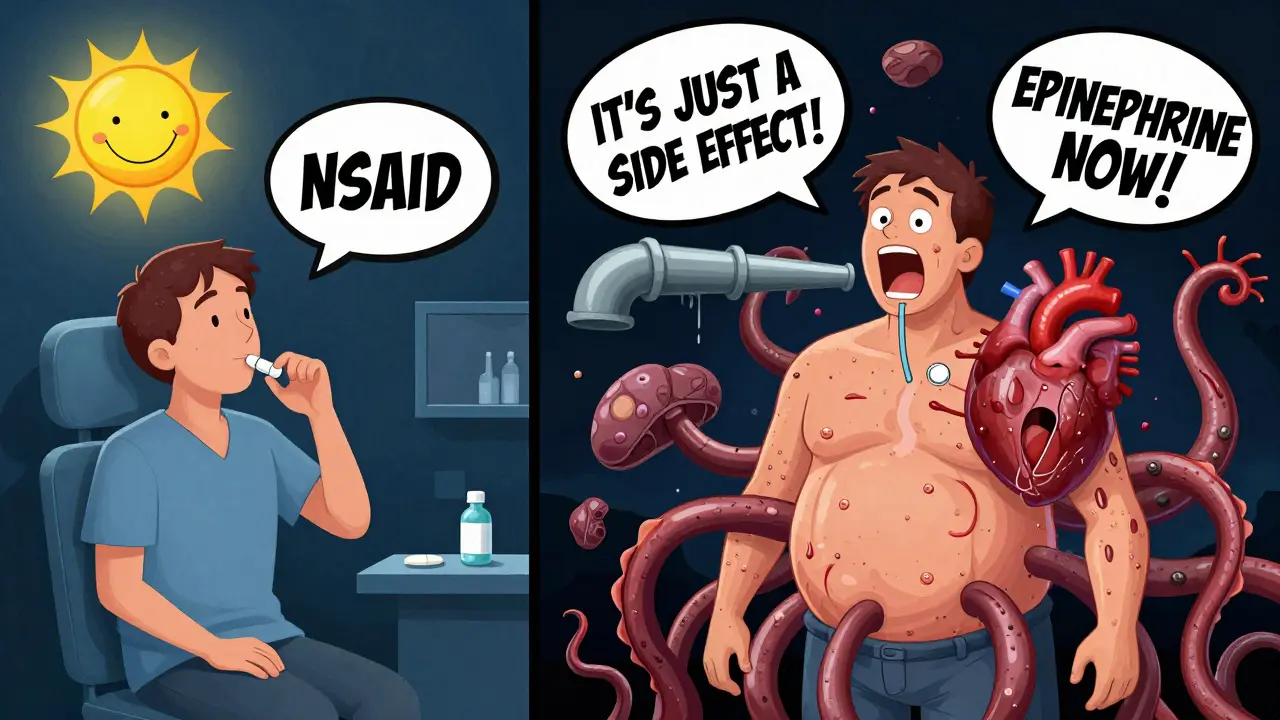
But here’s the brutal truth: 78% of fatal anaphylaxis cases involve delayed or missing epinephrine. In one ER study, 34% of patients never got it at all. Why? Because symptoms are mistaken.
Dr. Sarah Chen, an ER physician, recalls a patient who got IV contrast and started sweating and going pale. The team thought it was a vasovagal reaction-common after procedures. Only when the patient started gasping for air did they realize: it was anaphylaxis. Epinephrine reversed it in four minutes.
Another common mix-up? "Red man syndrome" from vancomycin. It causes flushing and itching, but no drop in blood pressure or breathing trouble. It’s not anaphylaxis. Giving epinephrine here is unnecessary. But missing real anaphylaxis because you think it’s just a side effect? That’s deadly.
Delaying epinephrine by more than 30 minutes triples your risk of death. That’s not a statistic-it’s a countdown.
What to Do When It Happens
If you suspect anaphylaxis, act. Now.
- Call for help. If you’re alone, call emergency services. If you’re with someone, yell for help.
- Give epinephrine. Inject into the outer thigh. Even through clothing. Adults: 0.3-0.5 mg. Use the auto-injector. Don’t wait for a doctor. Don’t hope it gets better.
- Lie down. Elevate legs if possible. Sitting up or standing can make blood pressure drop faster.
- Don’t give antihistamines first. They help with itching, but they won’t stop the crash.
- Wait for EMS. Even if you feel better after epinephrine, you need to go to the hospital. A second wave can hit hours later.
Proper injection technique matters. The American Heart Association found 87% of successful outcomes came from correct thigh injection. Injecting in the arm or buttocks? Too slow. Too weak.
Why This Is Preventable
This isn’t just about reacting-it’s about stopping it before it starts.
Johns Hopkins Hospital cut hospital anaphylaxis by 47% just by improving allergy documentation in their electronic records. They flagged known drug allergies clearly, made sure every provider saw them, and required double-checks before giving high-risk drugs.
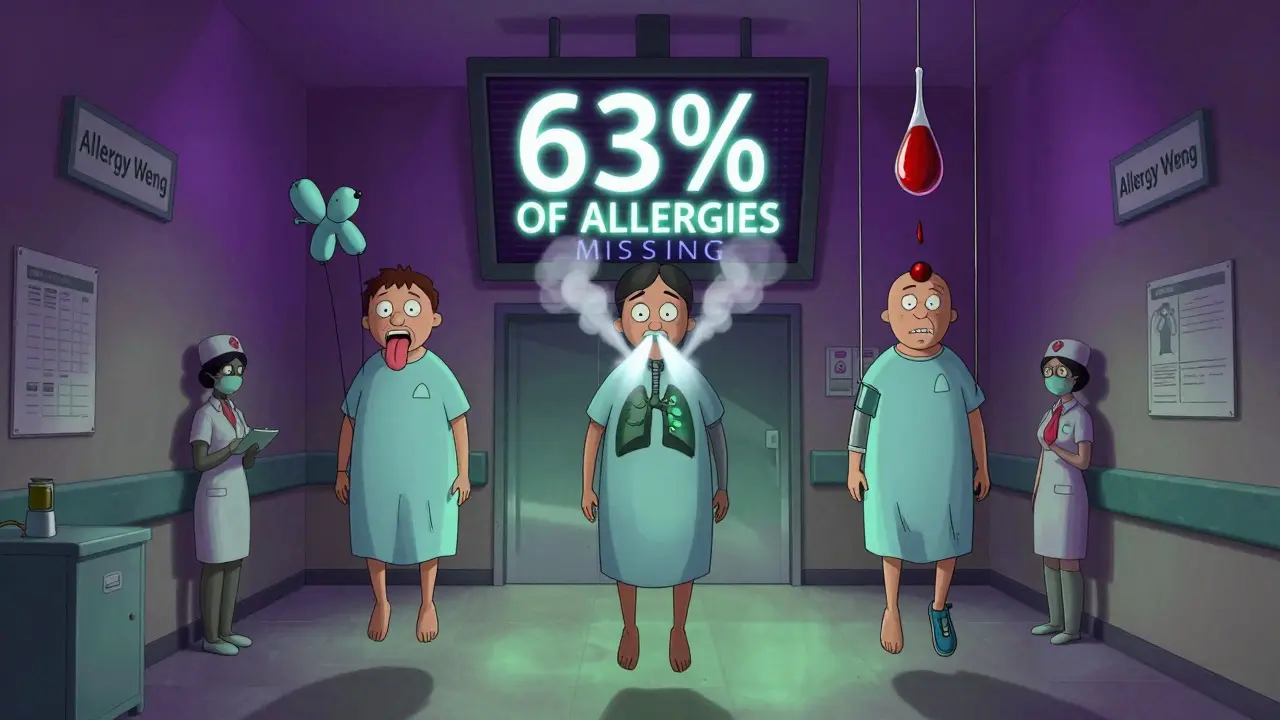
But right now, 63% of medication errors leading to anaphylaxis happen because allergy info is missing, buried, or ignored in electronic health records. That’s not a tech problem. It’s a culture problem.
Patients need to know their allergies. Clinicians need to ask. Every time. Even if the patient says "I’m fine with penicillin." That was 20 years ago. Allergies can return. Or change.
And if you’ve had anaphylaxis before? You need an epinephrine auto-injector. Always. But here’s the shocker: 53% of patients who’ve had a documented drug reaction never get one prescribed. Why? Cost? Fear? Lack of follow-up? All of the above.
The New Tools Coming
There’s hope. The FDA approved the first rapid test for penicillin allergy in mid-2023-results in 15 minutes. It’s not perfect, but it’s better than guessing.
Researchers are building AI tools that scan your medical history, current meds, and even your age and genetics to predict who’s at risk before you even get the IV. One NIH model got 89% accuracy. But tech alone won’t save lives. Not without training.
A 2022 study at a major hospital showed that after simulation training for ER staff, epinephrine use jumped from 48% to 90%. That’s 42 more lives saved per year just from better practice.
The WHO’s Global Anaphylaxis Action Plan aims to cut deaths by half by 2030. But that only works if every hospital, every clinic, every ambulance crew knows the signs-and knows how to act.
What You Need to Remember
- Medication-induced anaphylaxis kills faster than you think.
- Epinephrine is the only thing that saves you. Delay = death.
- It’s not just hives. Look for breathing trouble and low blood pressure.
- Don’t confuse it with side effects. Red man syndrome? Not anaphylaxis. Low BP? That is.
- If you’ve had it once, you need an auto-injector. Always.
- Doctors and nurses need training-not just guidelines.
This isn’t about being scared of medicine. It’s about respecting how powerful it is-and how dangerous it can be when we don’t pay attention.

Aisling Maguire
March 1, 2026 AT 09:25Doctors act like everyone knows this stuff. They don’t.
Gigi Valdez
March 1, 2026 AT 09:43Sumit Mohan Saxena
March 2, 2026 AT 10:27Multiple studies, including a 2022 JAMA Internal Medicine analysis, show that patients discharged after anaphylaxis have a 31% re-admission rate within 12 months if they do not receive an EpiPen at discharge. This is not a patient compliance issue - it is a healthcare delivery failure.
Furthermore, the notion that allergies "disappear" over time is dangerously misleading. IgE-mediated sensitization is often persistent, and re-exposure can trigger more severe reactions. Annual re-evaluation by an allergist is non-negotiable.
Vikas Meshram
March 3, 2026 AT 15:10And don't get me started on the "AI predicting allergies" nonsense. That's just Big Pharma trying to sell more tests. My cousin got charged $800 for a "penicillin risk scan" and it came back negative. Total scam.
Also, why is it always antibiotics? What about the vaccines? Did you see how many people got sick after the shot? Coincidence? I think not.
Ben Estella
March 3, 2026 AT 21:59My uncle died because the ER doc thought his wheezing was "just asthma". He had a known penicillin allergy from 1998. No one checked his chart. No one asked. Just assumed.
Meanwhile, they're spending millions on AI and fancy tests while nurses are overworked and patients are treated like numbers. Fix the system. Not the gadgets.
Jimmy Quilty
March 4, 2026 AT 19:47Why do you think they push it so hard? To make you dependent. To make you afraid. To make you pay for $600 pens that expire every year.
And don’t get me started on the "red man syndrome" thing. That’s just the body detoxing from the toxins in IV fluids. They call it a side effect to hide the truth.
My neighbor’s dog had a reaction after a vaccine. They gave it epinephrine. Dog died. Coincidence? I think not.
Sneha Mahapatra
March 6, 2026 AT 12:33I had a panic attack after my first anaphylaxis. I thought I was dying. No one believed me. Not even my mom. She said, "You’re just overreacting. You’re always dramatic."
Now I carry two EpiPens. I teach my coworkers how to use them. I don’t care if they think I’m weird. I’d rather be the weird one who’s alive than the quiet one who’s gone.
Byron Duvall
March 7, 2026 AT 15:25And why is it always "penicillin"? Why not the preservatives? The dyes? The plastic in the IV bags?
Someone’s got a lot to answer for.
Angel Wolfe
March 8, 2026 AT 07:32Meanwhile, my cousin got the COVID shot and had a reaction and they just gave her Benadryl. She’s fine now.
So why is it okay to give Benadryl to some people but not others?
Something’s not adding up. And no, I don’t trust the FDA.
Eimear Gilroy
March 9, 2026 AT 01:25Ajay Krishna
March 10, 2026 AT 14:40That’s the real crisis. Not the drug reactions - the ignorance.
Simple, clear, repeated messaging saves lives. Not just in hospitals - in homes, schools, workplaces.
Charity Hanson
March 11, 2026 AT 03:18If you’re reading this and you’re in a place with resources - don’t just share this post. Donate a few EpiPens. Teach someone. Be the change.
Because in places like mine, no one’s coming to save you. You have to save yourself.
Noah Cline
March 12, 2026 AT 00:57Consequently, the diagnostic paradigm must shift from symptom clustering to hemodynamic monitoring as the primary triage metric. Antihistamines are purely palliative and lack any effect on the underlying mediator cascade.