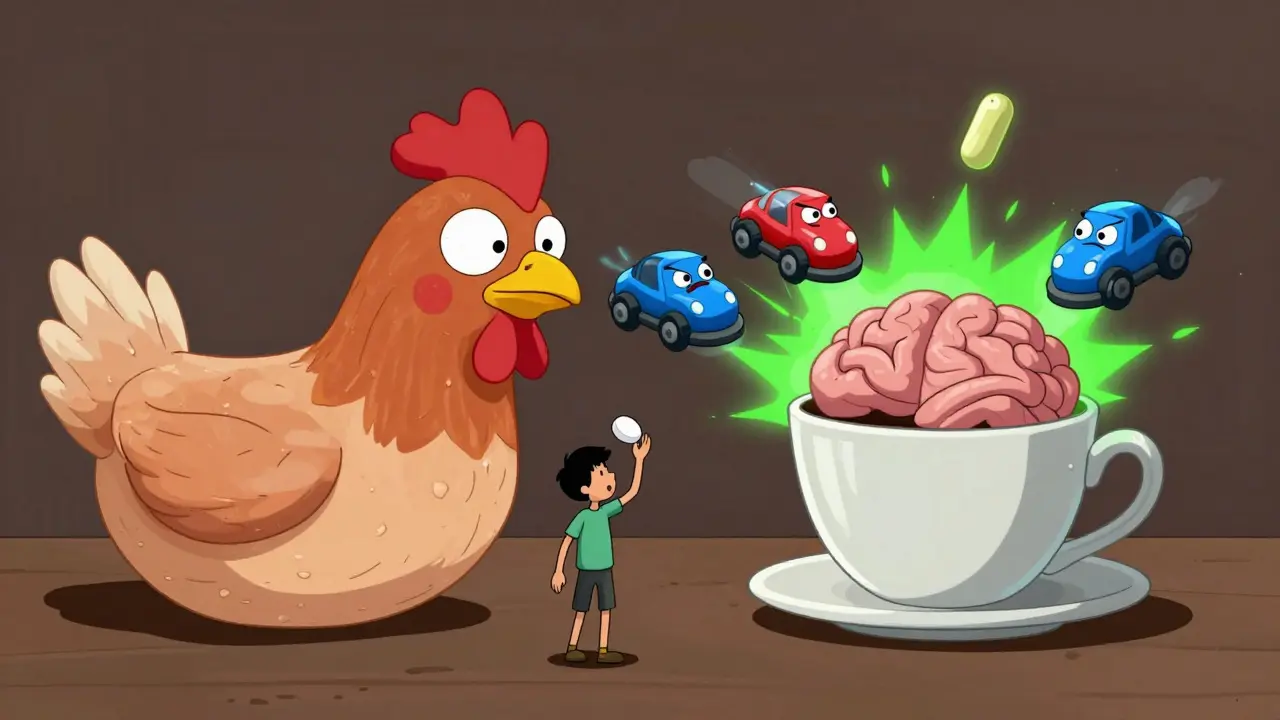
Protein Distribution Calculator for Parkinson's Patients
How Protein Distribution Affects Your Medication
For Parkinson's patients taking levodopa, protein can interfere with medication absorption. This tool helps you distribute your protein intake to maximize your medication's effectiveness while meeting your nutritional needs.
Your Protein Distribution Plan
What if the chicken breast you ate for lunch is making your medication work worse? It sounds strange, but for people taking certain drugs - especially those for Parkinson’s disease - what they eat and when they eat it can make a real difference in how well their medicine works. Protein-rich foods don’t just build muscle. They can also interfere with how your body absorbs medications, sometimes cutting effectiveness by half. This isn’t a myth. It’s backed by decades of clinical research, FDA guidelines, and real patient experiences.
How Protein Blocks Medication Absorption
The problem isn’t protein itself. It’s how your body moves amino acids - the building blocks of protein - into your bloodstream and brain. Certain medications, like levodopa (used to treat Parkinson’s), use the same transport system in your gut and blood-brain barrier as large neutral amino acids. When you eat a high-protein meal, those amino acids flood your system. They crowd the transporters, leaving little room for the drug to get through.
Studies show that a meal with 50 grams of protein - think a large steak, a big serving of tofu, or a protein shake - can reduce levodopa absorption by 30% to 50%. That means your brain gets less of the medicine it needs. You might feel fine after taking your pill, but within an hour, your tremors return, your movements stiffen, and you enter what patients call an “off” period. This isn’t your body getting used to the drug. It’s your breakfast stealing its chance to work.
This doesn’t just affect levodopa. Some antibiotics like penicillin, certain antiepileptic drugs, and even some antidepressants can be affected. The Biopharmaceutics Classification System (BCS) helps doctors understand which drugs are vulnerable. Drugs in Class III - high solubility but low permeability - are the most at risk. Levodopa is the classic example. It dissolves easily but struggles to cross barriers unless it has a clear path.
Protein vs. Fat: Why Protein Is Different
You’ve probably heard that high-fat meals slow down drug absorption. That’s true. But protein does something more complex. While fat just delays gastric emptying - making the pill sit in your stomach longer - protein actively competes for transporters. It doesn’t just slow things down. It blocks them.
Research from the NIH shows that after a high-protein meal, amino acid levels in the blood spike by 200-300% within 30 minutes. That’s enough to overwhelm the transporters that levodopa needs. Meanwhile, high-fat meals delay emptying by 60-90 minutes. Protein? It delays it by 45-60 minutes - and adds direct competition on top of that.
Even more surprising: protein can sometimes help absorption. For certain antibiotics, increased blood flow to the intestines after a protein meal can improve uptake. But these cases are rare. For most critical medications, protein is the enemy.
Who’s Most at Risk? Parkinson’s Patients
Parkinson’s patients are the most studied group when it comes to protein-medication interactions. Why? Because levodopa is essential - and the window for effectiveness is narrow. If the drug doesn’t reach the brain, symptoms return fast. The Michael J. Fox Foundation estimates that 60% of Parkinson’s patients experience reduced levodopa effectiveness due to protein intake.
Doctors used to tell patients to go on low-protein diets. But that created a new problem: muscle loss. A 2024 study in the Journal of Parkinson’s Disease found that 23% of patients on strict low-protein diets developed muscle wasting within 18 months. That’s worse than the symptoms they were trying to fix.
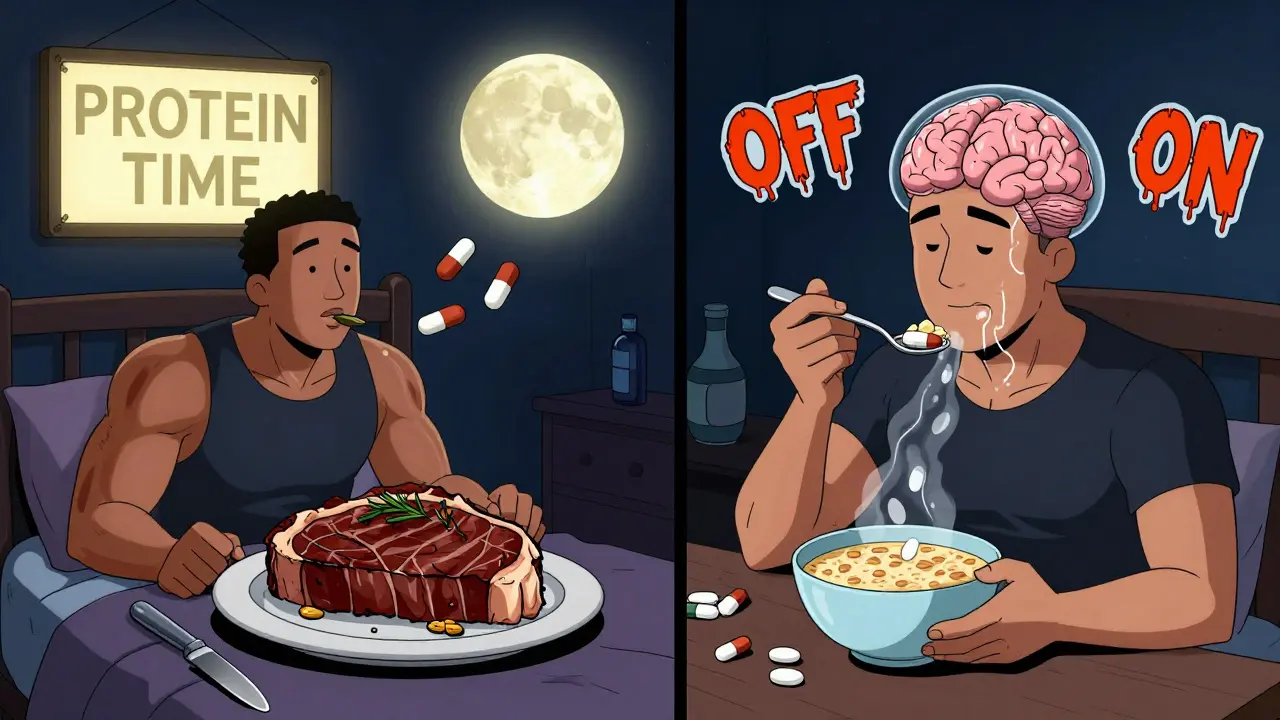
The solution? Protein redistribution. Instead of spreading protein evenly across meals, you save 70% of your daily protein for dinner. That means breakfast and lunch are low-protein - think oatmeal, fruit, toast, or vegetables. Dinner gets the steak, the beans, the eggs. This way, your levodopa works better during the day when you need it most, and you still get enough protein at night to maintain muscle.
Patients who follow this method report 2.5 more hours of “on” time each day - meaning fewer tremors, better movement, less stiffness. One Reddit user, u/ParkinsonsWarrior, tracked his symptoms with a wearable sensor and saw his “off” time drop from over five hours to just over two after switching to protein redistribution.
What About Other Medications?
Levodopa is the poster child, but it’s not alone. Some antibiotics - particularly penicillin-type drugs - absorb less efficiently when taken with protein. The drop isn’t as dramatic as with levodopa - usually 15-20% - but it’s enough to matter if you’re fighting an infection.
Statins, used for cholesterol, are slowed down by fiber, not protein. But some blood pressure medications and thyroid hormones can also be affected by meals high in protein or calcium. The key is knowing your drug’s profile. The FDA now requires food-effect studies for all new oral drugs. That means more labels will soon include protein warnings.
Right now, 61% of medication guides don’t mention protein at all - even when interactions are proven. The European Medicines Agency changed that in January 2025, requiring protein-specific instructions for all central nervous system drugs. The U.S. is catching up. The FDA’s 2025 draft guidance proposes a “Protein Interaction Score” label - similar to alcohol warnings - to make it obvious when food matters.
Practical Tips: When and How to Take Your Meds
If you’re on levodopa or another protein-sensitive drug, timing matters more than you think. Here’s what works:
- Take your medication 30 to 60 minutes before eating. This gives it a head start before amino acids flood your system.
- If nausea is a problem, have a low-protein snack (5g protein or less) like a banana, apple, or rice cake with jam. Avoid yogurt, nuts, or protein bars.
- Plan meals around protein. Breakfast and lunch should be light on meat, dairy, beans, and eggs. Use protein-modified bread (2g per slice instead of 5g) to reduce hidden intake.
- Save the big protein meals for dinner. This keeps your daytime symptom control strong.
- Use an app like ProteinTracker for PD (developed by Johns Hopkins) to log meals and track medication timing. Users report 40% fewer timing mistakes.
It’s not about cutting protein. It’s about controlling when you get it. Most people need 0.8-1.0 grams of protein per kilogram of body weight per day. For a 70kg person, that’s 56-70 grams total. You don’t need to starve yourself. You just need to rearrange your plate.
Why Doctors Often Miss This
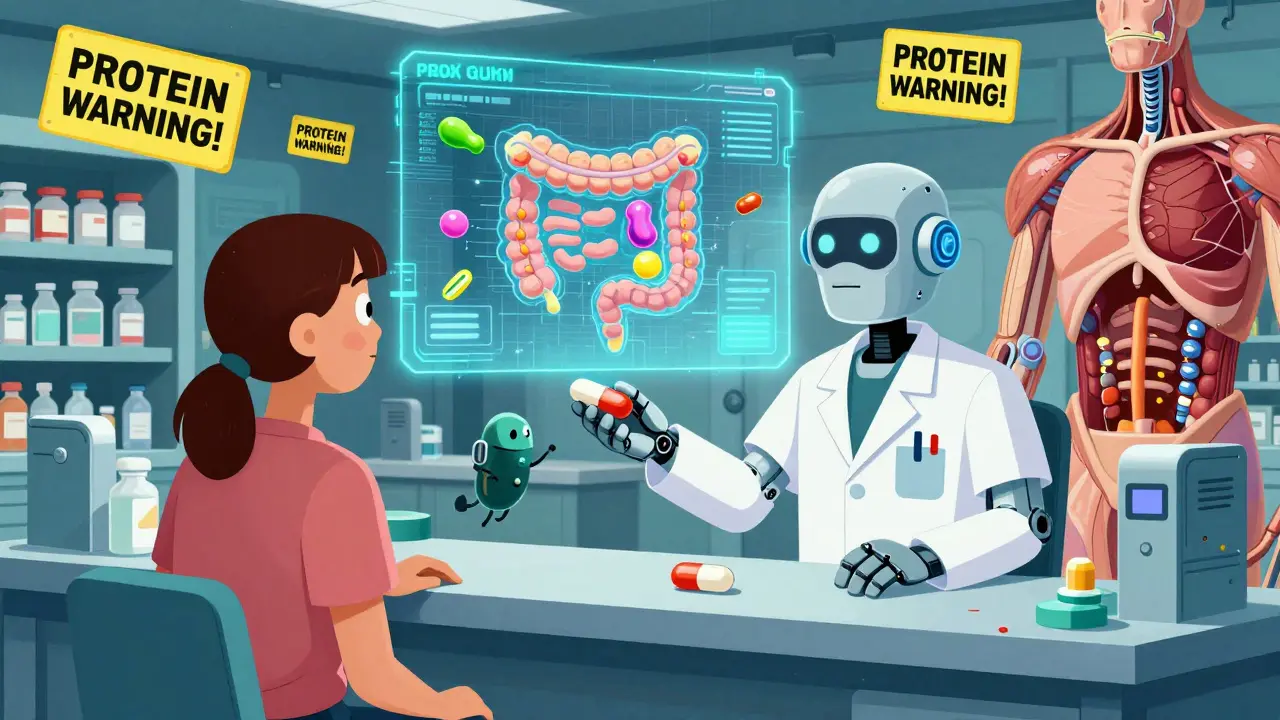
Here’s the frustrating part: most doctors don’t bring this up. The American Society for Nutrition found that 68% of clinicians never discuss protein timing with patients starting levodopa. Why? Because it’s not taught well in med school. And because it’s harder than just writing a prescription.
Dr. Alberto Espay, a leading neurologist, calls protein redistribution “underutilized despite strong evidence.” Dr. Robert Venuto points out that protein interactions cause 12-15% of therapeutic failures in Parkinson’s - yet only 37% of neurologists check patients’ diets.
It’s not laziness. It’s a gap in training. But patients are stepping in. Support groups like the Parkinson’s Foundation Forum have over 2,000 active threads on protein timing. People are sharing meal plans, app tips, and personal wins. And it’s working.
The Future: Better Tools and New Solutions
The pharmaceutical industry is waking up. In 2024, 34% of new drug applications included dietary management plans - up from 12% in 2020. Companies are now designing drugs that bypass the gut entirely. Duopa, a gel delivered directly into the small intestine, bypasses protein interference entirely. Over 12,000 people in the U.S. now use it annually.
Emerging research is even more exciting. A March 2025 study in Nature Medicine found that specific probiotics can reduce amino acid competition by 25%. That could mean future pills come with a side of good bacteria to help the medicine work better.
And AI is getting involved. Massachusetts General Hospital is testing personalized algorithms that adjust medication timing based on your daily protein intake, activity level, and even gut microbiome data. Early results show a 45% drop in therapeutic failures. By 2030, this could save over $1 billion in avoidable hospital visits.
What You Can Do Today
You don’t need to wait for new drugs or AI tools. Start now:
- Check your medication label. Does it say “take on empty stomach” or “avoid high-protein meals”? If not, ask your pharmacist.
- Track your meals and symptoms for one week. Use a notebook or free app. Look for patterns: Do you feel worse after lunch? After a protein shake?
- Try taking your morning dose 45 minutes before breakfast. See if your movement improves.
- Swap your protein-heavy breakfast for something light. Oatmeal with berries instead of eggs and bacon.
- Ask for a referral to a registered dietitian who specializes in Parkinson’s or medication interactions. Three sessions can change your life.
This isn’t about dieting. It’s about giving your medicine a fair shot. Protein isn’t the villain. It’s just a competitor. And with a few smart tweaks, you can win the race.


Neil Ellis
January 23, 2026 AT 08:35Whoa. I’ve been taking my levodopa with my protein shake since 2020 and wondering why my legs feel like concrete by noon. This is the first time anyone’s explained it like it’s actually happening to me. Not a myth. Not hype. Just biology being a sneaky bastard. Thanks for laying this out like a roadmap. I’m switching to oatmeal and berries tomorrow. My tremors might finally get a vacation.
Lana Kabulova
January 24, 2026 AT 12:32So if protein blocks absorption, why do some studies say it helps with antibiotics? Is it just the type of amino acid? Or is it the timing? Or is the whole thing just a mess of conflicting data? I need more than ‘it depends’-I need a flowchart.
Patrick Roth
January 25, 2026 AT 18:24Wow. So now we’re blaming protein? Next they’ll say caffeine ruins your thyroid meds. And carbs make your antidepressants less effective. And water dehydrates your kidneys so you shouldn’t drink it before pills. This is just pharmaceutical fear-mongering dressed up as science. I take my meds with pizza. I’m fine. Your science is broken.
Lauren Wall
January 27, 2026 AT 16:19My mom’s been on levodopa for 12 years. She eats steak for breakfast. She’s always been ‘off’ by 11 a.m. No one ever told her this. She’s now in a nursing home because they thought it was ‘progression.’ This isn’t just inconvenient. It’s criminal negligence.
Jasmine Bryant
January 28, 2026 AT 06:29Wait so you’re saying if I take my meds before breakfast and eat protein at night, I might get more ‘on’ time? I’ve been doing this accidentally because I hate breakfast… but now I’m scared to change anything. Should I start with just skipping eggs? Or just the bacon? I’m so confused. Also, I think I spelled ‘levodopa’ wrong in my notes. Oops.
Alec Amiri
January 28, 2026 AT 10:54Let me guess-you’re one of those people who thinks ‘protein redistribution’ is a miracle cure. Newsflash: your body doesn’t care what time you eat steak. It’s all in your head. If your meds aren’t working, maybe you’re just not taking enough. Or maybe you’re lazy. Or maybe you’re just addicted to the victim narrative.
Liberty C
January 28, 2026 AT 16:14How dare you suggest that a person’s dietary choices are more important than pharmaceutical innovation? This is the same logic that led people to avoid vaccines because ‘natural immunity’ is better. You’re romanticizing deprivation as wisdom. What’s next? Fasting for statins? Chewing garlic for blood pressure? This isn’t science-it’s wellness cultism.
Keith Helm
January 29, 2026 AT 19:19Protein interference is a well-documented pharmacokinetic phenomenon. The BCS Class III classification is unequivocal. Levodopa’s low permeability, coupled with competitive inhibition of LAT1 transporters, results in statistically significant reductions in Cmax and AUC. Clinical guidelines from the International Parkinson and Movement Disorder Society (2023) explicitly recommend protein redistribution. This is not anecdotal. It is evidence-based medicine. Your resistance is not valid.
arun mehta
January 30, 2026 AT 21:19India has been doing this for generations-rice and dal for breakfast, meat at night. Our grandmas didn’t know about LAT1 transporters, but they knew protein at night = better sleep, less shaking in morning. 😊 This isn’t new science. It’s old wisdom with fancy labels. Thank you for validating what our kitchens already knew. 🙏
Chiraghuddin Qureshi
January 31, 2026 AT 22:54My cousin in Delhi takes levodopa with a banana and chai at 7 a.m. and a chicken curry at 8 p.m. He’s been symptom-free for 8 years. No apps. No trackers. Just tradition. Maybe the answer isn’t in data… but in culture. 🌾🍛
Tatiana Bandurina
February 2, 2026 AT 02:05Did you even read the FDA draft guidance? It’s not even finalized. You’re treating a proposal like gospel. And you’re telling people to avoid protein? What about sarcopenia? What about kidney function? You’re trading one risk for another. This is dangerous oversimplification. I’ve seen patients lose 20 pounds in six months because of this advice. You’re not helping. You’re harming.
Philip House
February 3, 2026 AT 03:27It’s not about protein. It’s about control. The pharmaceutical industry wants you to believe that your body is broken and needs their drugs. But if you just ate less… and moved more… and meditated… maybe you wouldn’t need levodopa at all. This is all just a way to keep you dependent. They don’t want you to know the real solution: fasting and sunlight.
shivani acharya
February 3, 2026 AT 23:39Okay so let me get this straight-protein blocks meds… but then they say ‘save protein for dinner’? So they’re just moving the poison around? What if the protein at night messes with your sleep? What if your liver can’t handle it? What if this is all just a cover-up for the fact that levodopa is toxic and they don’t have a real cure? And who funded this ‘Johns Hopkins app’? Big Pharma? I’ve seen this before. They give you a tool so you think you’re in control… but you’re still their puppet.
Rob Sims
February 5, 2026 AT 23:21So you’re telling me I’ve been taking my meds wrong for five years? And now I’m supposed to eat oatmeal? That’s it? No new drug? No miracle cure? Just… rearrange your plate? I feel cheated. Like I’ve been paying $800 a month for a diet plan.