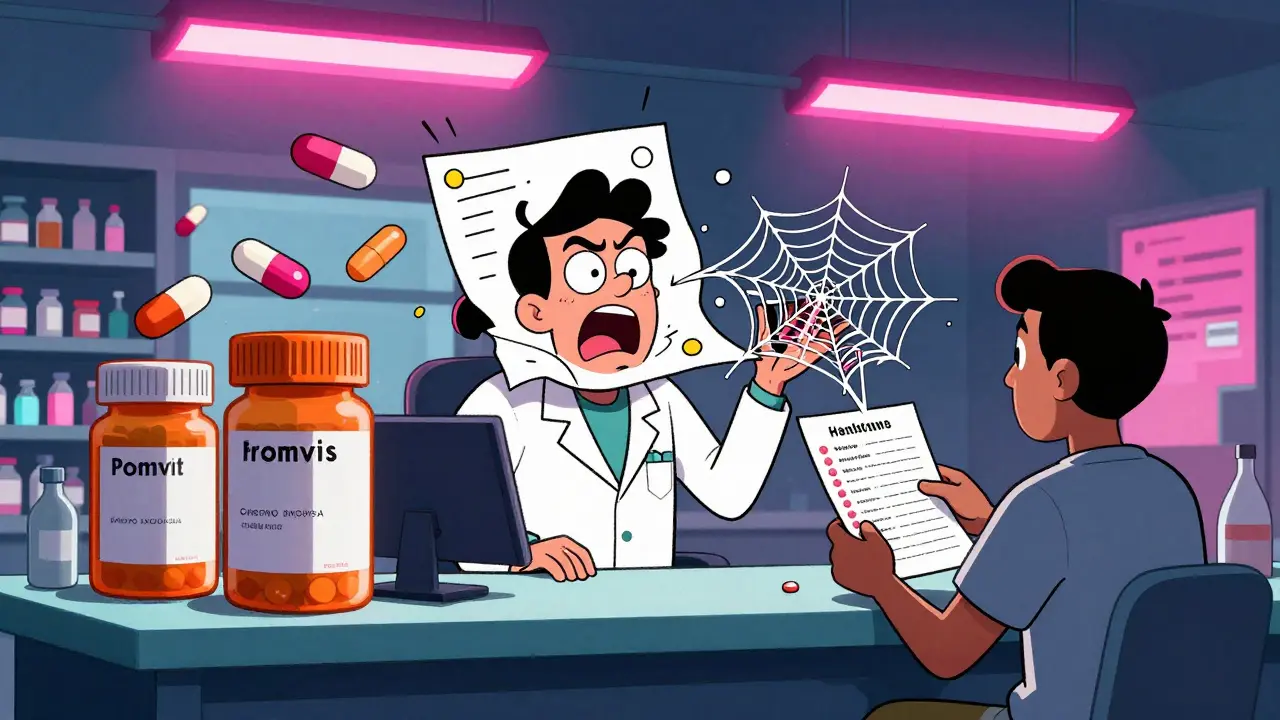
Every year in the U.S., more than 1.5 million people end up in the emergency room because of problems with their medications. That’s not just a statistic-it’s someone’s parent, sibling, or neighbor. And the scary part? About 400,000 of those cases are completely preventable. Medication safety isn’t just a hospital policy or a checklist for nurses. It’s the difference between getting better and getting worse-sometimes even between life and death.
What Exactly Is Medication Safety?
Medication safety means making sure you get the right drug, in the right amount, at the right time, and for the right reason-without harm. It’s not just about doctors writing prescriptions correctly. It’s about every step in the process: how the drug is made, stored, prescribed, dispensed, taken, and monitored. The National Patient Safety Foundation defines it as being free from accidental injury caused by medical care during the medication-use process. That includes everything from a pharmacist misreading a handwritten note to a patient mixing pills without telling their doctor.
Think of it like driving a car. You don’t just need a good driver-you need good brakes, clear road signs, working lights, and a fuel system that doesn’t leak. Medication safety works the same way. One broken part can cause a crash, even if everything else is fine.
Where Do Medication Errors Happen?
Errors don’t just happen in hospitals. They happen in doctor’s offices, pharmacies, nursing homes, and even at home. Here’s where they most often go wrong:
- Prescribing (38% of errors): A doctor writes the wrong dose, picks the wrong drug, or doesn’t check for interactions. Handwritten notes still cause problems-even in 2025.
- Administration (26%): A nurse gives the pill at the wrong time, to the wrong person, or through the wrong route (like giving a pill meant to be swallowed through an IV).
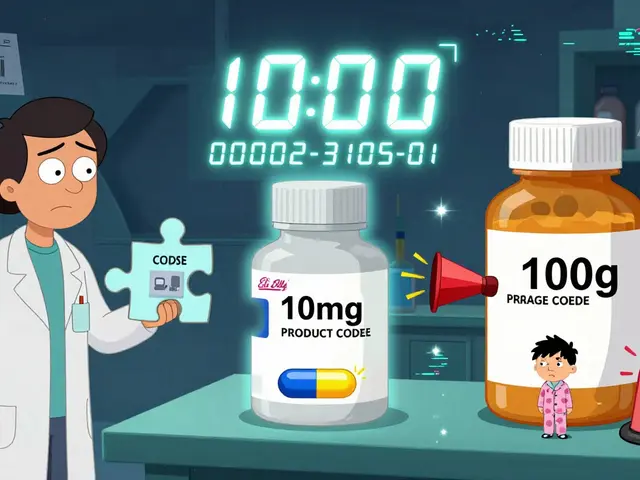
- Dispensing (16%): The pharmacy gives you the wrong medication because two bottles look too similar or the label is unclear.
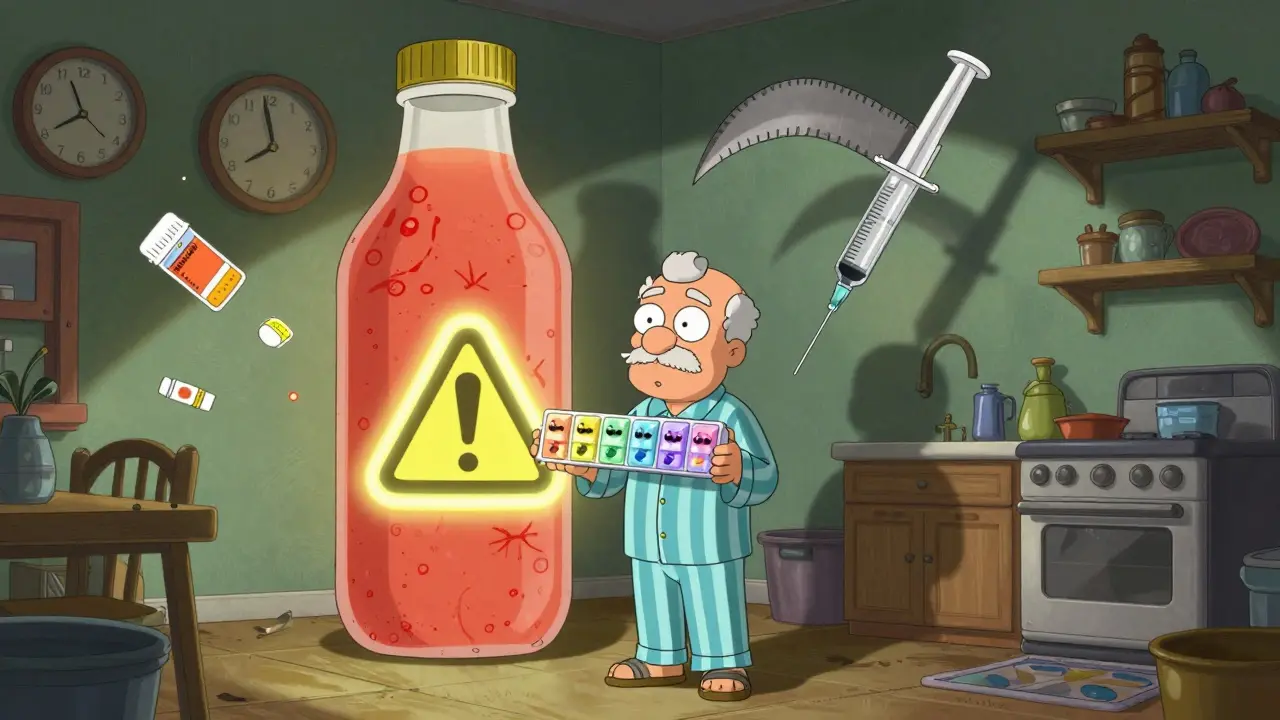
- At home: You skip doses because the pills cost too much. You take two because you forgot if you already did. You mix your blood pressure pill with grapefruit juice because you didn’t know it could be dangerous.
High-alert medications are especially risky. These include insulin, opioids like oxycodone, blood thinners like warfarin, and IV oxytocin used during childbirth. One mistake with these can lead to coma, internal bleeding, or death.
Who’s Most at Risk?
Not everyone faces the same level of danger. Some groups are far more likely to be hurt by medication errors:
- Older adults (65+): They make up half of all medication-related hospitalizations. Many take five or more drugs daily. That’s called polypharmacy-and it increases the chance of bad interactions.
- Children: They account for 20% of adverse drug events. Liquid doses are especially tricky. A teaspoon isn’t the same as a tablespoon. One wrong decimal point can overdose a child.
- Pregnant women: Some medications can harm a developing baby. Yet many women don’t know which ones are unsafe.
- People with low income: Nearly half of older adults skip doses or cut pills in half to save money. That’s not adherence-it’s a survival tactic that leads to worse health.
How Technology Helps-And Sometimes Hurts
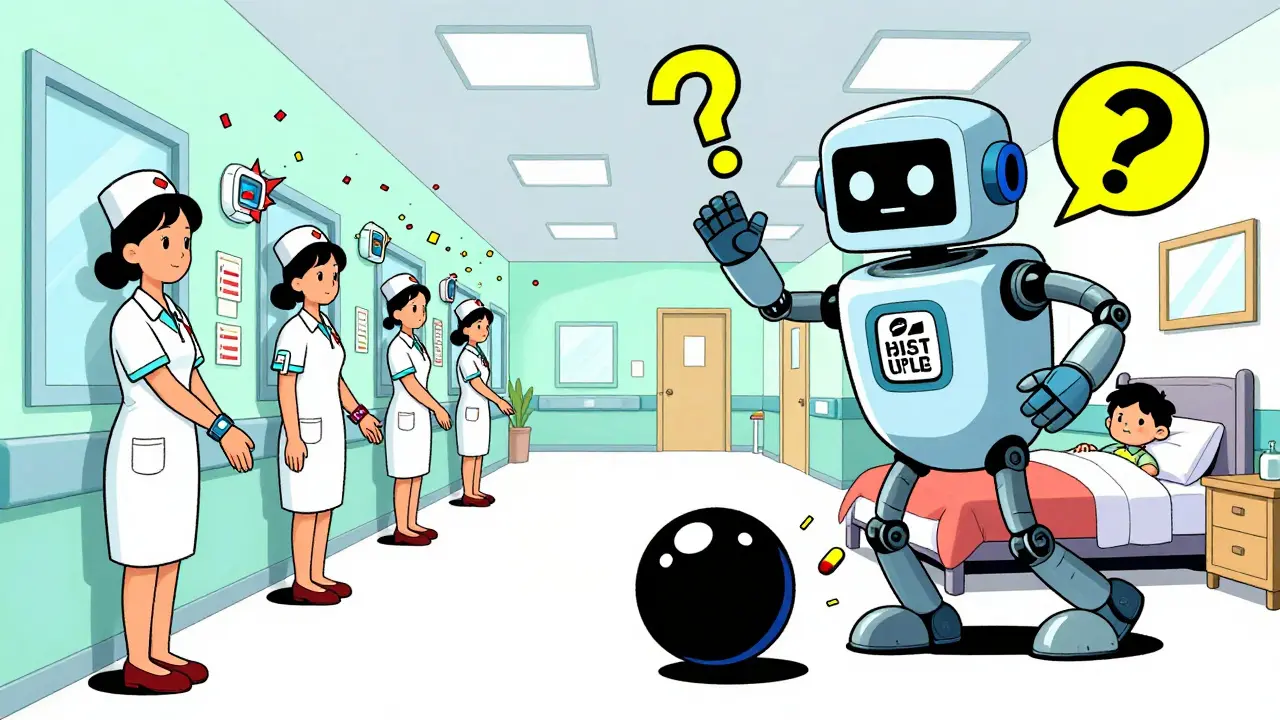
Technology has made big improvements. Electronic health records (EHRs) with built-in alerts cut serious errors by nearly half. Barcode scanning at the bedside reduces administration mistakes by 65%. But tech isn’t perfect.
Too many alerts can backfire. If a nurse gets 30 pop-ups per patient, they start ignoring them. That’s called alert fatigue-and it makes things more dangerous. Some systems even flag safe combinations as risky, leading to confusion.
Another win: the FDA now requires all prescription labels to use clear, standardized numbers. No more “.5 mg” that could be mistaken for “5 mg.” That change alone cut decimal errors by 32% in early testing.
What You Can Do as a Patient
You’re not just a passive receiver of care. You’re a critical part of your own safety. Here’s how to protect yourself:
- Keep a live list of everything you take: Include prescription drugs, over-the-counter pills, vitamins, and herbal supplements. Update it every time something changes.
- Bring your list to every appointment: Doctors often don’t know what you’re taking unless you tell them. One study found that patients who used this simple step had 45% fewer errors during hospital transfers.
- Ask questions: “What is this for?” “What happens if I miss a dose?” “Is this safe with my other meds?” Don’t be shy.
- Use pill organizers: Blister packs or weekly containers reduce missed doses by 60%. They’re cheap, easy to use, and available at most pharmacies.
- Know your high-risk drugs: If you’re on insulin, blood thinners, or opioids, ask your pharmacist for a safety sheet. Know the signs of overdose or bad reactions.
One Reddit user shared how her mother was given 10 mg of Xanax instead of 1 mg because of a sloppy handwriting error. She ended up in the hospital for three days. That could’ve been prevented with a digital prescription and a quick double-check.
Why This Isn’t Just a Hospital Problem
Medication safety isn’t just about hospitals trying to avoid lawsuits. It’s about quality of care. The American Society of Health-System Pharmacists says medications are involved in 50-70% of all healthcare encounters. That means nearly every time you see a doctor, a pharmacist, or a nurse, a drug is part of the plan.
And when safety fails, the cost isn’t just financial-it’s personal. The U.S. spends $42 billion a year treating preventable medication injuries. But behind every dollar is a person who had to go to the ER, miss work, or lose mobility because of a mistake that shouldn’t have happened.
The Bigger Picture: System Change vs. Blame
For years, the default response to a medication error was to punish the person who made it. A nurse got reprimanded. A doctor got a warning. But research shows that’s the wrong approach.
Dr. Lucian Leape from Harvard put it perfectly: “Medication safety is no longer just about catching errors; it’s about designing systems that make errors impossible to commit.”
That means better labeling. Clearer digital systems. Training that focuses on teamwork, not fear. And most importantly, a culture where staff feel safe reporting mistakes without being fired.
Right now, only 35% of healthcare organizations have truly non-punitive reporting systems. That’s why so many errors go unreported-and uncorrected.
What’s Changing Now?
The World Health Organization’s “Medication Without Harm” campaign is pushing for a 50% reduction in preventable harm by 2027. Countries that joined saw a 18% drop in serious harm within just one year.
In the U.S., the CDC is investing $15 million in community programs to help high-risk groups-especially seniors and low-income families-manage their meds safely. AI tools are being tested to predict which patients are most likely to have bad reactions before they happen. Blockchain tech is being used to track drug supply chains and stop fake pills from reaching pharmacies.
And the return on investment? Every $1 spent on medication safety saves $4.20 in avoided hospital stays, lawsuits, and long-term care.
Final Thought: Safety Is a Shared Responsibility
Medication safety isn’t something you wait for hospitals to fix. It’s something you help build every time you ask a question, update your list, or speak up when something feels off.
You don’t need to be a doctor or a pharmacist to make a difference. You just need to be informed, involved, and willing to speak up. Because when it comes to your health, no one else will fight for you the way you can.
What is the most common cause of medication errors?
The most common cause is prescribing errors, which account for 38% of all medication mistakes. This includes wrong dosage, wrong drug, or not checking for interactions. Handwritten prescriptions are still a major contributor, even though most hospitals use electronic systems now. At home, errors often happen because patients don’t know how to take their meds or forget to tell their doctor about other drugs they’re using.
How can I reduce my risk of a medication error at home?
Keep an up-to-date list of every medication you take-including vitamins and supplements-and bring it to every appointment. Use a pill organizer to avoid missing or doubling doses. Never mix alcohol or grapefruit juice with new prescriptions without asking your pharmacist. If a pill looks different than usual, call your pharmacy to confirm it’s the right one. And if you can’t afford your meds, talk to your doctor-there are often cheaper alternatives or assistance programs.
Are generic drugs less safe than brand-name ones?
No. Generic drugs must meet the same strict standards as brand-name drugs set by the FDA. They contain the same active ingredients, work the same way, and have the same risks and benefits. The only differences are in the inactive ingredients (like fillers) and packaging. Price differences don’t mean safety differences. If you’re worried, ask your pharmacist to confirm the generic version is approved and appropriate for you.
What should I do if I think I’ve had a medication error?
If you feel something is wrong-like unusual drowsiness, a rash, trouble breathing, or confusion after taking a new medication-call your doctor or go to the ER right away. Don’t wait. Then, report the incident to your pharmacy and healthcare provider. You can also file a report with the FDA’s MedWatch program. Reporting helps catch patterns and prevent others from being hurt.
Why do hospitals use barcode scanning for medications?
Barcode scanning ensures the right patient gets the right drug, in the right dose, at the right time, through the right route. Nurses scan the patient’s wristband and the medication’s barcode before giving it. If there’s a mismatch, the system alerts them. Hospitals using this system have cut administration errors by 65%. It’s not foolproof, but it’s one of the most effective tools we have.
Can medication errors be completely eliminated?
Not completely-human systems will always have some risk. But they can be reduced by 50-80% with the right tools and culture. The goal isn’t perfection-it’s prevention. Systems that focus on design over blame, like standardized labeling, electronic prescribing, and patient education, make errors far less likely. The key is consistency: making safety part of every step, every day.
If you’re managing multiple medications, start today: write down everything you take. Keep it in your wallet or phone. Bring it to your next appointment. That one step could be the difference between staying healthy and ending up in the hospital.
Nancy Kou
December 20, 2025 AT 23:32Just started using a pill organizer after my aunt nearly overdosed on blood pressure meds. Best $8 I ever spent. Seriously, if you take more than three pills a day, get one. It’s not glamorous, but it saves lives.
Update: I even color-coded mine. My grandma thinks I’m crazy, but she’s been dose-perfect for 6 months now.
Hussien SLeiman
December 22, 2025 AT 00:46Let’s be real-this whole ‘medication safety’ narrative is just corporate propaganda wrapped in a bow. Hospitals don’t care about your life; they care about liability. The real problem? Pharma companies pushing high-margin drugs on doctors who are paid to prescribe them. You think barcode scanners fix that? Please. The system is rigged. You think your ‘safe’ insulin isn’t being pushed because it’s profitable? Wake up. The FDA’s ‘standards’? Written by former industry execs. You’re being sold a fantasy of control while the real players laugh all the way to the bank.
And don’t get me started on ‘generic drugs.’ Same active ingredient? Sure. But the fillers? Totally different. And those? Can trigger autoimmune flares. No one talks about that. Because it’s inconvenient for the narrative.
Kevin Motta Top
December 23, 2025 AT 17:04Been a paramedic for 18 years. The #1 thing I see? People don’t tell providers about their supplements. Turmeric, fish oil, garlic pills-they all thin the blood. One guy took them before surgery. Ended up bleeding out in the OR. Not because anyone was negligent. Because no one asked, and he didn’t think it mattered.
Just say it. Every time.
Janelle Moore
December 25, 2025 AT 14:53Did you know the government is using your medication data to track your mental health? EHRs aren’t for safety-they’re for surveillance. Your pill organizer? It’s a tracker. Your pharmacy? They’re sharing your opioid use with insurers. They’re building profiles. They know if you skip doses. They know if you refill early. And if you’re flagged? You lose your job. Your insurance. Your kids. This isn’t about safety. It’s about control. And they’re coming for your vitamins next.
Don’t trust the system. Burn your list. Use paper. Hide it. They can’t track what they can’t see.
Henry Marcus
December 26, 2025 AT 12:31Okay, so let me get this straight: we’re told to trust the system… but the same system that let 400,000 people get hurt because someone wrote ‘.5’ instead of ‘5’? And now we’re supposed to believe that ‘standardized labeling’ is a miracle fix? HA! The FDA approved a drug last year that caused 17 deaths because the barcode scanner misread the lot number. The system is BROKEN. And you know what they do when it fails? They blame the nurse. Again. The real solution? Get rid of all electronic systems. Go back to handwritten scripts. At least then you can SEE the handwriting. And if it’s illegible? You ask. You don’t just click ‘approve.’
Also, who’s paying for these ‘AI prediction tools’? Big Pharma? Of course they are. They want to lock you into their drugs. Always.
William Liu
December 27, 2025 AT 09:29This is the kind of post that gives me hope. Seriously. People are waking up. I used to take 7 meds a day. Now I take 2. I asked questions. I got alternatives. I saved money. I saved my kidneys. You don’t need to be a doctor-you just need to be brave enough to say, ‘Wait, what’s this for?’
Start today. You’ve got this.
Andrew Kelly
December 28, 2025 AT 18:48Let’s not romanticize patient involvement. The average person doesn’t have the cognitive bandwidth to manage polypharmacy. You want them to ‘keep a list’? Sure. But then you also need to fund pharmacists to review those lists. You need to pay for pill organizers. You need to subsidize meds for low-income seniors. Otherwise, you’re just shifting the burden onto the most vulnerable. And calling it ‘empowerment.’
Real safety isn’t about asking questions-it’s about designing systems where asking questions isn’t necessary. Because not everyone can. Not everyone should have to.
Isabel Rábago
December 30, 2025 AT 13:22I’ve seen too many elderly patients die because they couldn’t afford their insulin. They cut pills. They skip days. They tell their doctors they’re ‘fine.’ And then they collapse. And we act surprised?
It’s not a medication safety issue. It’s a moral failure. We let people choose between food and life. And then we pat ourselves on the back for teaching them to use pill organizers.
Stop pretending this is about education. It’s about greed.
Dev Sawner
December 31, 2025 AT 13:44It is a matter of profound concern that the prevailing discourse on medication safety exhibits a marked tendency toward individualization of responsibility, thereby obscuring the systemic nature of the problem. The onus is placed upon the patient, who, in many instances, lacks the requisite medical literacy, socioeconomic resources, or cognitive capacity to effectively navigate an inherently flawed pharmacological infrastructure. The proposed solutions-such as pill organizers and patient lists-are symptomatic interventions, not structural reforms. One must interrogate the role of pharmaceutical lobbying, regulatory capture, and the commodification of health. Without addressing these root causes, any attempt at ‘safety’ remains a performative gesture.
Moses Odumbe
December 31, 2025 AT 23:37Just got my first AI pill reminder app. It texts me when to take my meds, checks for interactions, and even tells me if my pharmacy’s got a counterfeit batch. 😎 It’s like having a pharmacist in my pocket. Also, it tracks my mood and tells me if my meds are making me depressed. Mind blown. We’re living in the future, folks. 🤖💊
PS: My grandma uses it too. She says it’s ‘magic.’
Meenakshi Jaiswal
January 1, 2026 AT 02:53I’m a community pharmacist in Mumbai. We run free med reviews for seniors every Saturday. Most don’t know they’re taking two drugs that cancel each other out. One woman was on 11 meds-turned out 5 were unnecessary. We cut them, saved her $300/month, and she stopped falling.
It’s not about tech. It’s about showing up. Someone just listening. That’s the real safety net.
You don’t need an app. You need a neighbor who cares.
bhushan telavane
January 2, 2026 AT 19:00Back home in India, people mix Ayurvedic herbs with blood thinners. No one tells the doctor. No one knows it’s dangerous. We need more outreach. Not just in the US. Everywhere.
Simple education saves lives. Even if it’s just one person at a time.
Kelly Mulder
January 2, 2026 AT 22:38Oh please. You think this post is ‘helpful’? You’re just parroting hospital PR. The FDA doesn’t regulate supplements. So your ‘vitamin list’? Useless. Your ‘pill organizer’? A toy. Your ‘questions’? Ignored. The system is designed to fail you. And you’re proud of using a $7 plastic box? Pathetic.
Real safety? Ban all non-essential meds. Shut down pharma lobbying. Nationalize drug manufacturing. Or keep pretending your checklist makes you safe. I’ll be over here, watching the corpses pile up.
Takeysha Turnquest
January 3, 2026 AT 21:59Medication is the modern sacrament. We swallow pills like prayers. Hoping for salvation. But the church has no priests anymore-just algorithms and overworked nurses. We’ve outsourced our bodies to machines. And now we’re shocked when the gods don’t answer?
It’s not about dosage. It’s about surrender. We gave up control. And now we’re told to ‘speak up.’
But who’s listening when the system is deaf?