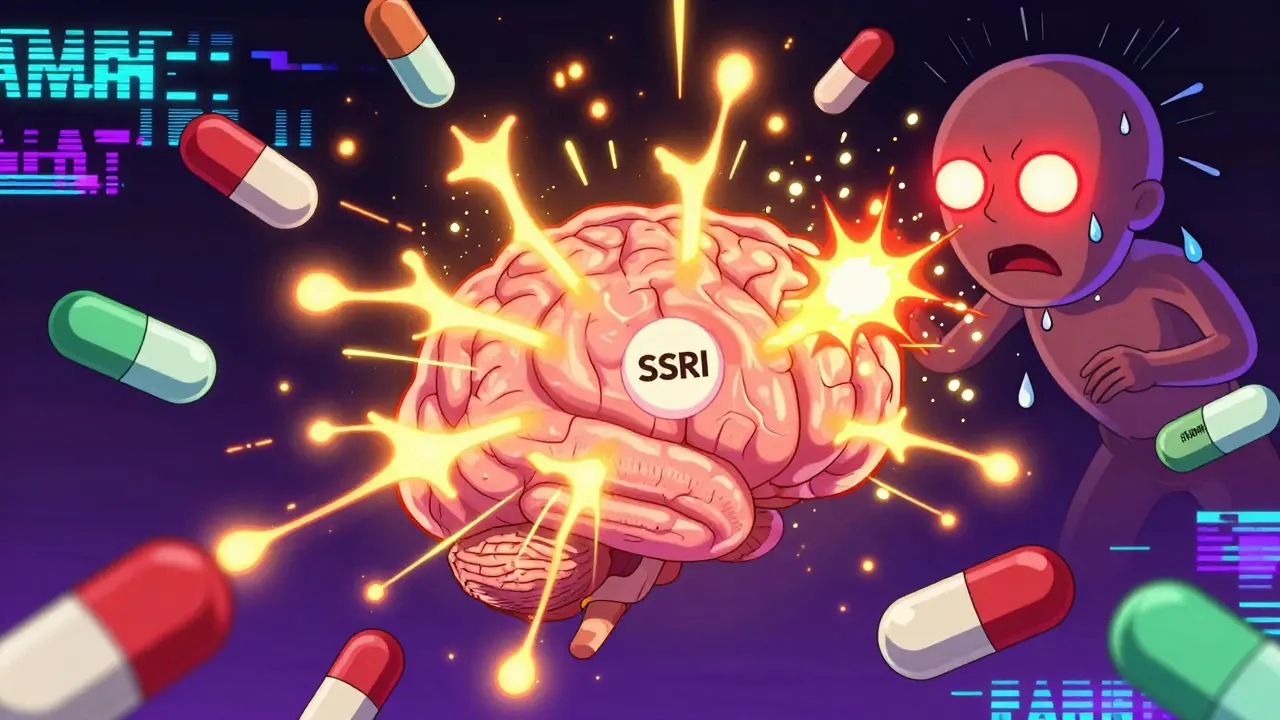
When you take an SSRI antidepressant like sertraline or escitalopram, it’s meant to help balance your mood by increasing serotonin in your brain. But what happens when you add another medication - even something as common as a painkiller or herbal supplement? That’s where things get dangerous. SSRI antidepressants are among the most prescribed mental health drugs in the U.S., but their safety relies heavily on avoiding certain combinations. The biggest hidden risk? Serotonin syndrome - a condition that can turn mild symptoms into a life-threatening emergency in hours.
What Exactly Is Serotonin Syndrome?
Serotonin syndrome isn’t just a side effect. It’s a toxic overload of serotonin in your central nervous system. Imagine your brain’s serotonin signals getting stuck on “full blast.” That’s what happens when too many drugs boost serotonin at once. Symptoms start subtly: shivering, sweating, restlessness. But they can escalate fast - muscle rigidity, high fever, seizures, or even unconsciousness. The Hunter Serotonin Toxicity Criteria are the gold standard for diagnosis: if you have one of these, you likely have it - spontaneous clonus, inducible clonus with agitation, or high temperature with clonus and confusion. It’s not rare. About 0.5 to 1.5 cases happen per 1,000 people taking SSRIs each year. But experts say it’s underdiagnosed. Many doctors mistake it for infections, heatstroke, or even panic attacks. And it’s not just about overdoses - even normal doses can trigger it when combined with other drugs.Which Medications Raise the Risk Most?
Not all drug combinations are equal. Some are deadly. Others are barely risky. Here’s what the data shows:- MAOIs - These older antidepressants (like phenelzine or selegiline) are the most dangerous. Combining them with SSRIs is absolutely contraindicated. Studies show a 30-50% death rate when these two are mixed. The FDA has black box warnings for this exact reason.
- Linezolid - This antibiotic, used for tough infections like MRSA, acts like a weak MAOI. A 2022 JAMA study found people over 65 taking linezolid with an SSRI had nearly 3 times the risk of serotonin syndrome.
- Tramadol, Dextromethorphan, Pethidine - These opioids aren’t just painkillers - they also boost serotonin. Tramadol alone increases risk by 4.7 times when paired with an SSRI. Dextromethorphan, found in many cough syrups, is a silent culprit. People don’t realize their cold medicine is part of the problem.
- SNRIs - Drugs like venlafaxine (Effexor) or duloxetine (Cymbalta) work similarly to SSRIs. Combining them raises risk by over 3 times. Yet, doctors still prescribe this combo for treatment-resistant depression.
- St. John’s Wort - This popular herbal supplement for anxiety and mild depression is a serotonin booster. One Reddit user described developing uncontrollable shaking and confusion after just three days of mixing it with Prozac.
- Mirtazapine, Trazodone, Bupropion - These are sometimes added to SSRIs for better sleep or energy. But they each carry their own serotonergic effects. A 2023 study found they collectively triple the risk.
On the other hand, morphine, codeine, oxycodone, and buprenorphine show little to no increased risk. If you need an opioid for pain, these are safer choices - if you’re on an SSRI.
Why Some SSRIs Are Riskier Than Others
Not all SSRIs are created equal. Their chemistry matters.- Paroxetine - It blocks serotonin reuptake more completely than any other SSRI (95% inhibition). That makes it the most potent - and potentially the riskiest - when combined with other drugs.
- Fluoxetine - It sticks around for weeks. Its metabolite, norfluoxetine, lasts up to 15 days. That means even if you stop taking it, you’re still at risk for interactions for over a month. Switching from fluoxetine to an MAOI? You need a 5-week gap.
- Sertraline and Escitalopram - These are the most commonly prescribed in the U.S. They have shorter half-lives (around 26 hours), which makes them easier to manage when switching medications. But they still carry risk - especially with opioids or herbal supplements.
That’s why timing matters. Stopping an SSRI doesn’t mean the risk is gone. Your body still has active drug in your system. The American Psychiatric Association recommends a 2-week washout for most SSRIs, but 5 weeks for fluoxetine. Skip this step, and you’re gambling with your health.
Who’s Most at Risk?
It’s not just people on multiple prescriptions. The real danger zone is older adults.- Over 21% of Americans aged 60+ take an SSRI.
- Over 18% use opioids for chronic pain.
- 22% of seniors take five or more medications daily.
That’s a perfect storm. A 72-year-old on sertraline for anxiety, oxycodone for back pain, and dextromethorphan for a cough? That’s not uncommon. And it’s not safe. A 2022 GoodRx analysis found 14.3% of SSRI-opioid users reported symptoms like sweating, tremors, or agitation - but only 2.1% went to the doctor. Most assumed it was “just side effects.”
Genetics also play a role. People who are CYP2D6 poor metabolizers - about 7% of the population - break down tramadol and some SSRIs slower. This means higher levels build up in their blood. A 2023 UCSF study found these individuals have 2.4 times the risk of serotonin syndrome when taking tramadol with an SSRI.
Real Stories, Real Consequences
One Reddit user, ‘AnxietyWarrior87,’ described being hospitalized after taking tramadol with sertraline. Within 12 hours: muscle rigidity, fever at 104.2°F, and uncontrollable leg movements. They spent three days in intensive care. The Libby Zion case in 1984 - an 18-year-old who died after being given meperidine while on phenelzine - led to major changes in medical training. It was the first time serotonin syndrome was clearly linked to drug interactions. Today, that same pattern repeats in emergency rooms across the country. The FDA’s Adverse Event Reporting System recorded 1,847 serotonin syndrome cases linked to SSRIs between 2018 and 2022. Sixty-eight percent involved drug combinations. Many were preventable.
How to Stay Safe
You don’t have to avoid all medications. But you need to be smart.- Always tell your doctor and pharmacist - every medication, supplement, and OTC drug you take. Even “harmless” things like St. John’s Wort or cough syrup.
- Know the 5 S’s - Shivering, Sweating, Stiffness, Seizures (rare), Sudden confusion. If you develop any of these after starting a new drug, seek help immediately.
- Don’t switch antidepressants on your own - Even if you feel better, stopping abruptly or switching too fast can trigger serotonin syndrome.
- Ask about alternatives - If you need pain relief, ask if morphine or oxycodone is safer than tramadol. If you’re using St. John’s Wort, ask about FDA-approved options.
- Use pharmacy alerts - Many pharmacies now flag dangerous combinations. If your pharmacist warns you, listen.
Electronic health records are getting better. Epic Systems’ 2022 update cut high-risk SSRI-opioid prescriptions by 32% across 200 hospitals. Pharmacists who run medication reviews reduced serotonin syndrome events by 47%. You’re not alone in this - systems are catching these risks. But you still need to be the one asking questions.
What’s Changing in 2026?
The FDA is moving fast. By 2026, all electronic prescriptions in the U.S. will be required to show mandatory serotonin syndrome alerts for high-risk combos. The European Medicines Agency is close to approving a blood test called SerotoninQuant - the first objective diagnostic tool. Right now, diagnosis is based on symptoms and history. Soon, we may have a lab test to confirm it.Meanwhile, the CDC updated its opioid prescribing guidelines in 2024: avoid tramadol, dextromethorphan, and pethidine entirely in patients on SSRIs. Use morphine or oxycodone instead.
The bottom line? SSRIs save lives. But they’re not risk-free. The most dangerous interactions aren’t always obvious. They hide in plain sight - in your medicine cabinet, in your pharmacy receipt, in your doctor’s prescription pad. Awareness saves lives.
Can serotonin syndrome happen with just one SSRI?
It’s extremely rare. Serotonin syndrome almost always happens when an SSRI is combined with another serotonergic drug. Taking an SSRI alone, at a normal dose, is very unlikely to cause it. The risk comes from mixing medications - not from the SSRI itself.
How long should I wait after stopping an SSRI before starting an MAOI?
It depends on the SSRI. For most, wait at least 2 weeks. But if you’ve been taking fluoxetine (Prozac), wait 5 weeks. Fluoxetine and its metabolite stick around much longer than other SSRIs. Skipping this waiting period can be deadly.
Are all opioids dangerous with SSRIs?
No. High-risk opioids like tramadol, pethidine, and dextromethorphan should be avoided. Medium-risk ones like methadone and fentanyl require caution. Low-risk opioids - morphine, codeine, oxycodone, and buprenorphine - show little to no increased risk. Talk to your doctor about which painkiller is safest for you.
Can herbal supplements like St. John’s Wort really cause serotonin syndrome?
Yes. St. John’s Wort is a potent serotonin booster. It’s not regulated like prescription drugs, so dosing varies. Many people don’t realize it’s dangerous when mixed with SSRIs. Cases have been documented where people developed symptoms after just a few days of combining the two.
What should I do if I think I have serotonin syndrome?
Seek emergency medical help immediately. Don’t wait. Symptoms can worsen rapidly. Tell the ER staff you’re on an SSRI and what other drugs you’ve taken. Early treatment - stopping the offending drugs, giving benzodiazepines, and supportive care - can prevent death.

Alex Brad
March 4, 2026 AT 09:53SSRIs are lifesavers when used right. But people treat them like candy. I’ve seen too many patients mix tramadol with sertraline because ‘it’s just a painkiller.’ No. It’s not.
John Cyrus
March 5, 2026 AT 07:30MAOIs are the real problem here not SSRIs. People don’t even read labels anymore. If you’re on an SSRI and you take St. John’s Wort you deserve what you get. Simple as that
Tobias Mösl
March 6, 2026 AT 22:56Let’s be real this is Big Pharma’s fault. They push SSRIs like soda then hide the risks in footnotes. The FDA knew about serotonin syndrome for decades but let it slide until lawsuits piled up. Now they’re slapping on alerts like a bandaid on a bullet wound. And don’t even get me started on how pharmacies are complicit. They make money off every combo they warn you about. It’s a profit loop. The CDC’s 2024 guidelines? Too little too late. They’re still letting oxycodone slide. That’s just sugarcoating the poison.
tatiana verdesoto
March 8, 2026 AT 09:55I’m a nurse and I see this all the time. Elderly patients on five meds including dextromethorphan for a cough and not even knowing it’s a serotonin booster. The scariest part? They never tell their doctors. I always ask ‘what supplements are you taking?’ and they say ‘oh just a little herb for anxiety.’ That’s how it starts. Just talk to your pharmacist. Seriously. They’re the unsung heroes here.
Ethan Zeeb
March 10, 2026 AT 08:06There’s no excuse for not knowing this. If you’re on an SSRI and you take anything new without checking with a professional you’re playing Russian roulette. I don’t care if it’s OTC or herbal. The data is clear. The risk is real. Stop being lazy. Your life isn’t a gamble.
Raman Kapri
March 12, 2026 AT 05:15While the data presented is statistically significant it fails to account for cultural variations in medication adherence. In India for example polypharmacy is common due to lack of access to specialists. The Western-centric framing ignores systemic healthcare disparities. This article reads like a manual for privileged patients with insurance.
Tildi Fletes
March 12, 2026 AT 15:34Based on the 2023 JAMA study and the Hunter Criteria validation data the most critical window for serotonin syndrome risk is within 72 hours of initiating a new serotonergic agent. The half-life of fluoxetine’s metabolite necessitates a 5-week washout period which is often overlooked in clinical practice. I recommend all patients on SSRIs maintain a digital medication log shared with their pharmacy.
Divya Mallick
March 13, 2026 AT 08:32They’re lying to us. The FDA knew. The AMA knew. The pharmaceutical reps knew. They let this happen because profit > patients. You think St. John’s Wort is dangerous? Try the 2021 whistleblower report from Eli Lilly detailing how they suppressed data on sertraline-tramadol synergy. And now they’re pushing this ‘SerotoninQuant’ blood test? That’s not science. That’s a cash grab. They want you to pay $300 to confirm what they already knew. This isn’t about safety. It’s about control.
Pankaj Gupta
March 14, 2026 AT 09:43It is important to recognize that while the risk of serotonin syndrome is elevated with certain combinations it is still a rare event. The benefits of SSRIs for many individuals far outweigh the potential risks when used appropriately. A well-informed patient who communicates with their healthcare providers can significantly reduce their risk. Knowledge is power.
Renee Jackson
March 16, 2026 AT 00:25You are not alone in this. If you’re on an SSRI and you’re worried about interactions please reach out. Talk to your pharmacist. Write down every pill you take. Ask for a med review. You deserve to feel safe. You deserve to be heard. And you are not crazy for being cautious. This is smart. This is self-care.
Callum Duffy
March 16, 2026 AT 00:50The pharmacokinetic differences between SSRIs are clinically meaningful. Paroxetine’s potent reuptake inhibition and fluoxetine’s prolonged half-life make them uniquely problematic in polypharmacy scenarios. I routinely counsel patients on these distinctions when switching agents. A 2-week washout is insufficient for fluoxetine. Five weeks is non-negotiable.
Helen Brown
March 16, 2026 AT 12:03They’re putting trackers in your meds. I read it on a forum. They’re using serotonin syndrome to justify implanting microchips so they can monitor your brain chemistry. Don’t take anything unless you know where it came from. Check the batch numbers. Burn the label.
John Smith
March 17, 2026 AT 19:28SSRIs are basically emotional tampons for capitalism. You’re sad? Here’s a pill. But don’t you dare ask why you’re sad. Don’t you dare stop taking it. And don’t you dare mix it with anything else because then you’re just a liability. The system wants you docile not alive. They’ll warn you about tramadol but they won’t tell you to quit your soul-sucking job. The real toxin isn’t the drug. It’s the world that needs you to be numb.
Sharon Lammas
March 19, 2026 AT 11:27There is a quiet tragedy in how we treat mental health. We give people pills but we don’t give them space. We warn them about drug interactions but we don’t warn them about loneliness. The serotonin system isn’t just chemistry. It’s connection. When we reduce mental health to pharmacology we miss the point entirely. The cure isn’t just in avoiding combinations. It’s in rebuilding communities where people don’t feel the need to numb themselves in the first place.
marjorie arsenault
March 21, 2026 AT 07:27Hey if you’re on an SSRI and you’re worried about meds just write everything down. Pills. Supplements. Even that tea you drink. Show it to your pharmacist. They’ve seen it all. They’ll tell you what’s safe. You don’t need to be scared. Just be smart. You’ve got this.