Why so many people still don’t trust generic drugs
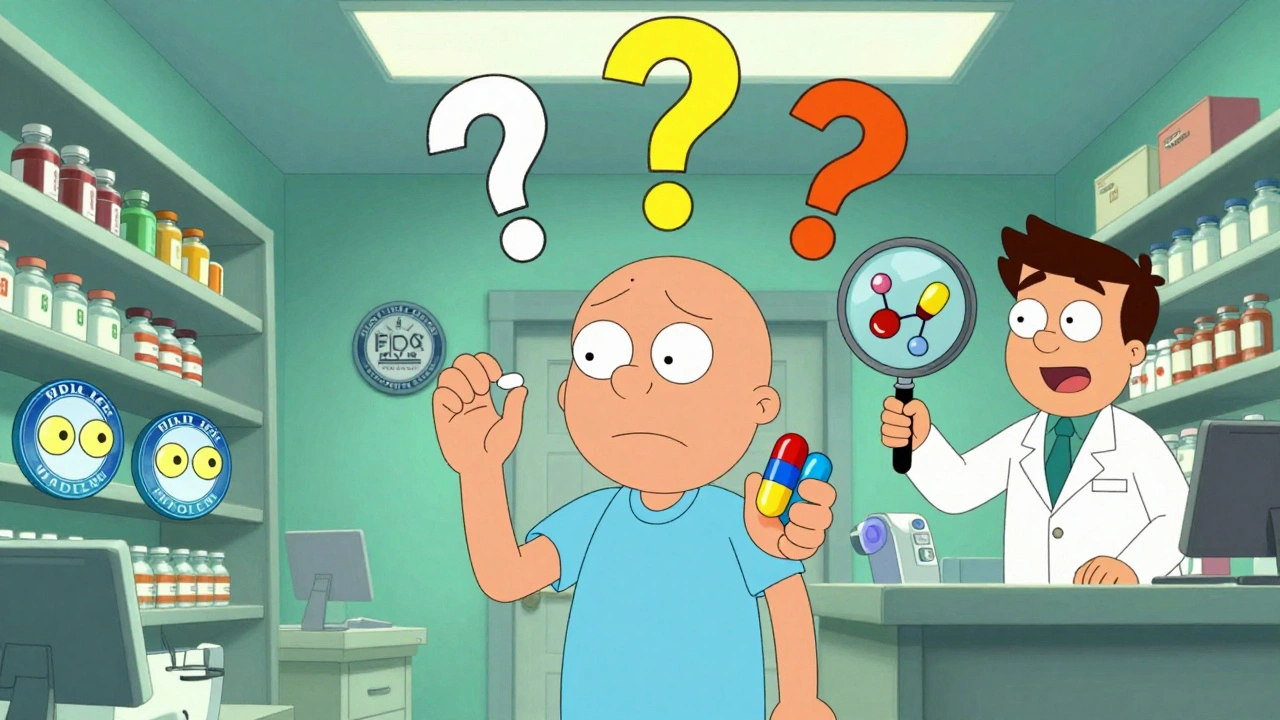
You walk into the pharmacy, handed a little white pill instead of the blue one you’ve been taking for years. You look at the label: same active ingredient, same dose, same instructions. But it doesn’t look right. You pause. You wonder: Is this really the same thing?
That moment of doubt? It’s not rare. In fact, a 2016 CVS Health survey found that 87% of patients had questions or concerns about generic drugs. Many think they’re weaker. Some believe they’re made in cheaper factories with lower standards. A few even think they’re just filler with a different name.
The truth? Generic drugs are not a downgrade. They’re the exact same medicine-just without the brand name. The U.S. Food and Drug Administration (FDA) requires every generic drug to meet the same strict standards as brand-name drugs. Same active ingredient. Same strength. Same way it’s taken-pill, injection, cream. Same quality. Same safety. Same effectiveness.
How the FDA makes sure generics work the same
The FDA doesn’t just approve generics because a company asks nicely. They run tests. Real ones. Hundreds of them.
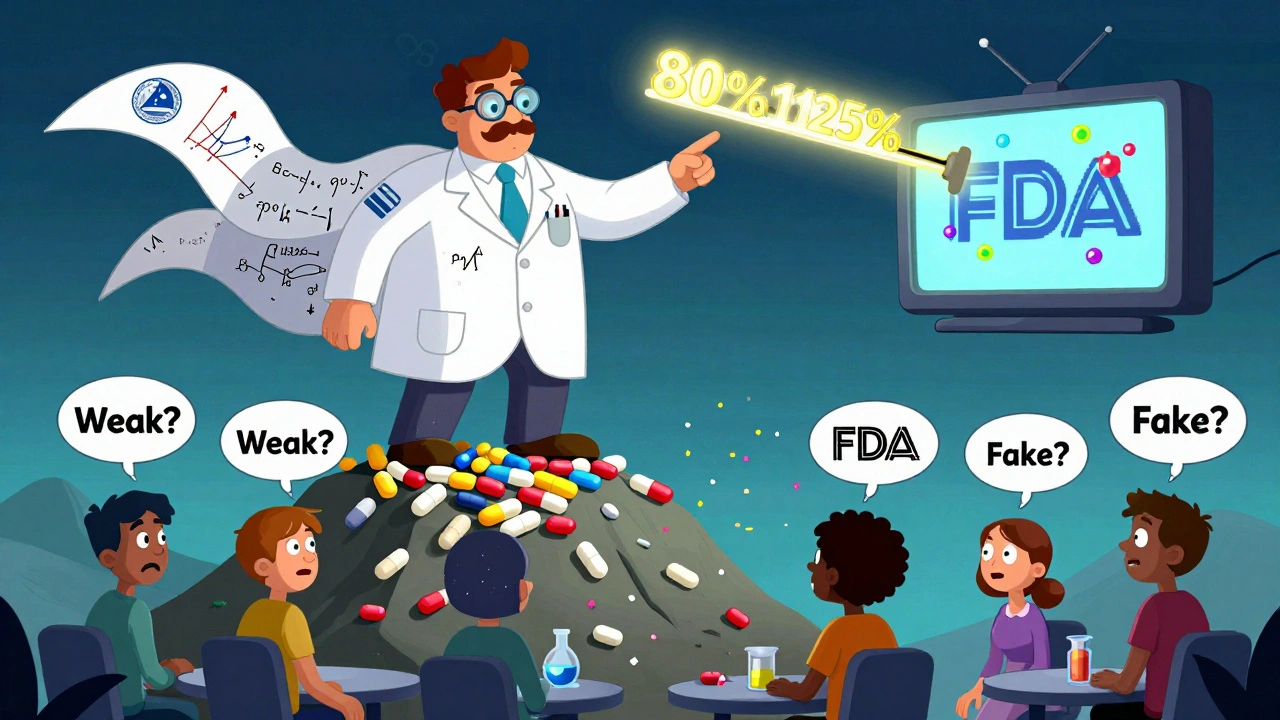
Every generic drug must prove it’s bioequivalent to the brand-name version. That means when you take it, your body absorbs the medicine in almost exactly the same way. The FDA looks at two key numbers: Cmax (how high the drug goes in your blood) and AUC (how long it stays there). The generic’s numbers must fall between 80% and 125% of the brand’s. That’s not a guess. That’s science.
And it’s not just one test. The FDA reviews about 1,000 generic drug applications every year. Each one goes through a full review process-sometimes taking months-before it’s approved. The agency doesn’t cut corners. In fact, their 2022 performance report shows they meet their own deadlines 90% of the time under the Generic Drug User Fee Amendments (GDUFA).
And here’s the kicker: the FDA says 90.8% of all prescriptions filled in the U.S. are for generic drugs. That’s over 6.8 billion prescriptions a year. If generics were unsafe or ineffective, we’d know by now. We’d see hospitals overwhelmed with bad reactions. We’d see doctors refusing to prescribe them. We don’t. We see millions of people taking them every day-safely.
How much money do generics really save?
Let’s say you need a blood pressure pill. The brand name costs $150 a month. The generic? $25. That’s not a small difference. That’s $1,500 a year in your pocket. Multiply that by millions of people, and you get $377 billion saved across the U.S. healthcare system every year. That’s according to the Association for Accessible Medicines (AAM) 2022 report.
Those savings aren’t just for you. They help keep insurance premiums lower. They mean clinics can afford to treat more patients. They let older adults choose between buying medicine or paying for groceries. In low-income communities, switching to generics improves medication adherence by 22%, according to a 2021 Health Affairs study tracking 3.2 million patients.
And it’s not just pills. Generics exist for insulin, asthma inhalers, skin creams, even cancer treatments. The cost difference is always huge-usually 80% to 85% less than the brand name.
Why do people still hesitate?
It’s not about science. It’s about perception.
One big reason? Appearance. Generic pills often look different. Different color. Different shape. Different markings. That’s because trademark laws prevent generics from copying the brand’s exact look. But that doesn’t mean they’re different inside. A 2022 University of Michigan survey found that 23% of patients questioned whether a generic was real just because it looked different.
Then there’s the nocebo effect-when your brain expects something to go wrong, and it does. A 2021 study in the Annals of Internal Medicine found that patients told they were switching to a generic were 18.7% more likely to report side effects-even when they were actually still taking the brand-name drug. Their minds made them feel worse.
Another factor? Doctors. If your doctor says, “This generic is just as good,” you’re way more likely to accept it. A 2022 JAMA Internal Medicine study showed that when doctors actively recommended generics, patient acceptance jumped from 52% to 89%. But if the doctor just says, “We’ll try this,” without explaining why, patients often say no.
What community health workers are doing right
Across the U.S., community health centers are using the FDA’s Generic Drug Stakeholder Toolkit to change minds. It’s free. It’s simple. And it works.
One center in Burlington, Vermont, trained all their pharmacists to use the “Teach-Back” method. Instead of just handing out a pamphlet, they ask: “Can you tell me in your own words why this generic is safe?” If the patient gets it right, great. If not, they try again-until the patient understands.
Within six months, patient acceptance of generics went up 37%.
Other centers are using short videos, colorful infographics, and bilingual fact sheets. The FDA has over 2,147 educational resources available-free-for clinics, pharmacies, and community groups. There are materials in English and Spanish. There are ones for seniors, for parents, for people with limited English.
And now, thanks to the 2023 Consolidated Appropriations Act, Medicare Part D plans must give standardized generic drug education to all beneficiaries by January 2025. That means every senior on Medicare will get clear, consistent info-no more confusion.
When generics might need extra care
Most of the time, generics are perfect. But there are a few exceptions.
Some drugs, like antiepileptic medicines, are so sensitive that even tiny changes in how they’re absorbed can matter. A 2023 study in Epilepsy & Behavior found a slightly higher chance of seizures when patients switched from brand to generic. But here’s the key: the American Academy of Neurology still says this is rare. It doesn’t mean generics are unsafe-it means doctors need to be extra careful with these drugs.
The same goes for complex generics like inhalers, nasal sprays, and topical creams. These aren’t as simple as a pill. Their delivery system matters. That’s why the FDA is working on new guidelines and training tools for these types of drugs.
Bottom line? For 99% of medications, generics are safe and effective. For the rest, your doctor will know.
What you can do today
- Ask your pharmacist: “Is there a generic version of this?”
- Ask your doctor: “Can we switch to the generic? Will it work just as well?”
- Don’t judge a pill by its color. Check the active ingredient on the label. If it matches your brand-name drug, it’s the same medicine.
- Use free FDA resources. Search “FDA generic drugs” online. Download a fact sheet. Watch a 2-minute video. It takes less time than scrolling through social media.
- If you’re confused, don’t stop taking your medicine. Call your clinic. Ask for help.
What’s coming next
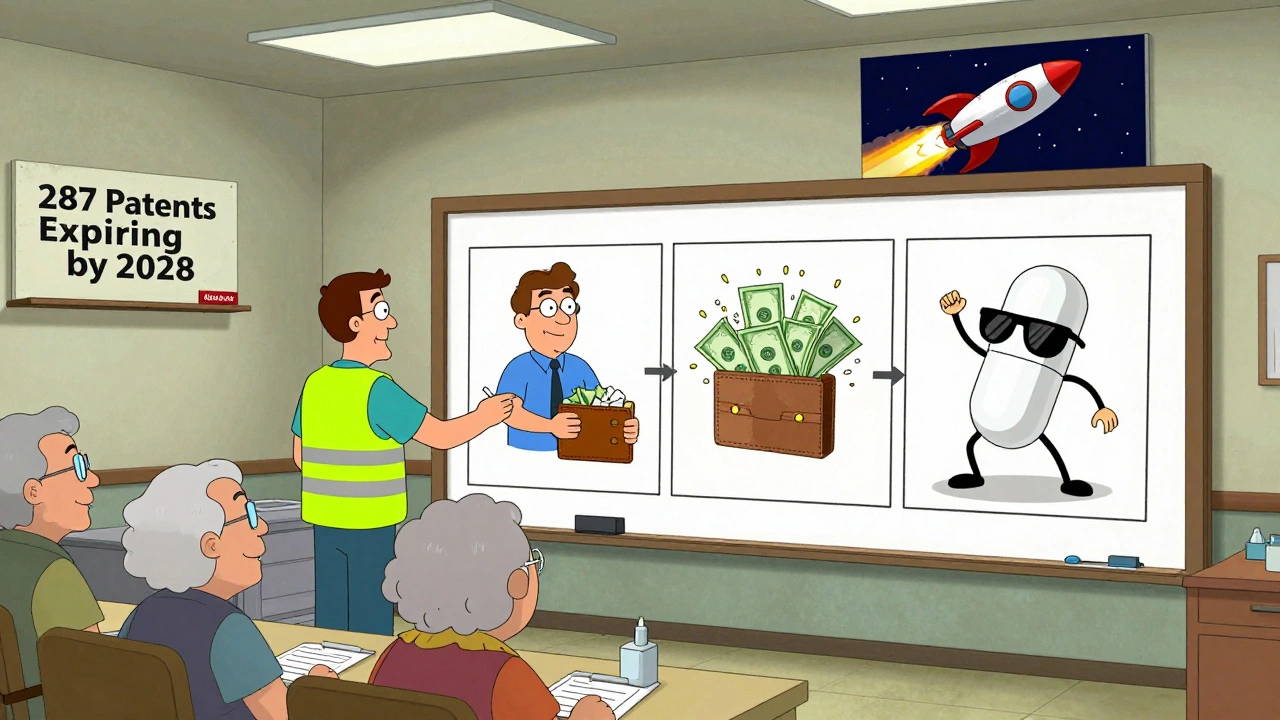
The generic drug market is growing fast. Between 2023 and 2028, 287 brand-name drugs will lose patent protection. That means more generics will hit the market. More savings. More access.
But there’s a gap. Rural areas still use generics at a lower rate-only 78% compared to 93% in cities. That’s why community health presentations are more important than ever. They’re not just about information. They’re about fairness.
By 2027, the generic drug market is expected to hit $184.3 billion. That’s not just a number. It’s more people getting the medicine they need without having to choose between health and rent.
Final thought
Generic drugs aren’t a compromise. They’re a smart choice. They’re backed by science, proven by time, and trusted by doctors and pharmacists. The only thing holding people back is a myth.
Next time you’re handed a different-looking pill, remember: it’s not a substitute. It’s the real thing-just without the price tag.
nithin Kuntumadugu
December 13, 2025 AT 10:44John Fred
December 13, 2025 AT 12:36Cole Newman
December 14, 2025 AT 13:05Casey Mellish
December 15, 2025 AT 18:01Tyrone Marshall
December 16, 2025 AT 07:17Emily Haworth
December 16, 2025 AT 17:55Himmat Singh
December 17, 2025 AT 03:41Alvin Montanez
December 19, 2025 AT 01:20Lara Tobin
December 20, 2025 AT 18:46Tyrone Marshall
December 22, 2025 AT 02:36