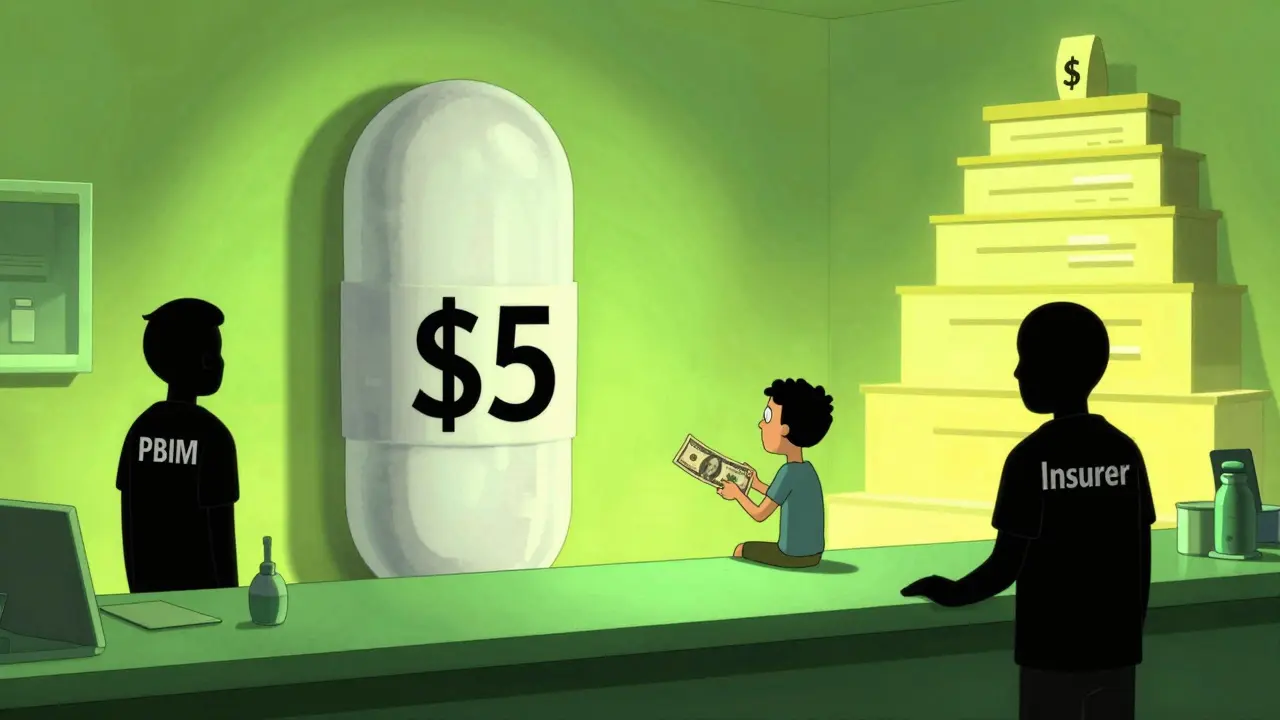
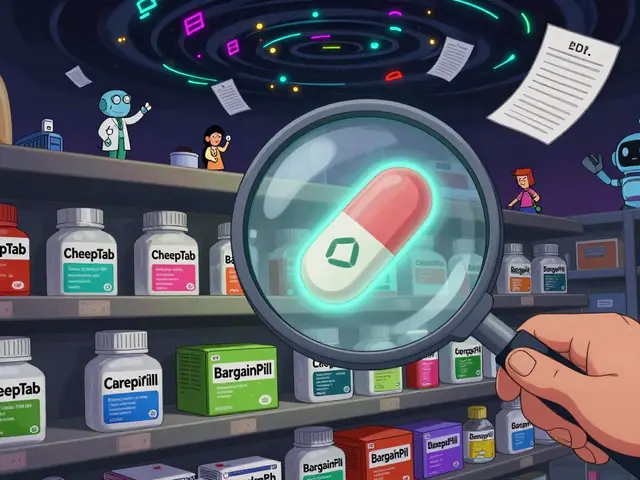
When you pick up a prescription at the pharmacy, you might not realize that the price you pay isn’t just about the drug itself-it’s shaped by your insurance plan’s hidden rules. These rules are part of something called insurance benefit design, and one of its most powerful tools is pushing patients toward generic drugs. It’s not just about saving money for insurers; it’s about how the whole system is built to steer you toward cheaper alternatives, often without you even noticing.
How Generics Became the Default Choice
The story starts in 1984, when Congress passed the Hatch-Waxman Act. This law created a clear path for generic drugs to enter the market. Before that, brand-name companies held a monopoly on their drugs after patenting them. After Hatch-Waxman, generic manufacturers could prove their version was just as safe and effective-no need to repeat expensive clinical trials. The result? Generics started flooding the market. By 2022, 91.5% of all prescriptions filled in the U.S. were for generics. Yet they made up only 22% of total drug spending. That’s the math: 9 out of 10 pills you take are generic, but they cost less than a quarter of what brand drugs do.
That’s not magic. It’s economics. A generic version of a $100 brand-name drug might cost $15. That’s an 85% drop. For insurers, that’s a massive win. For patients, it should be too. But here’s where things get messy.
How Plans Push You Toward Generics
Insurance companies don’t just hope you choose generics-they design systems to make it hard not to. The most common tool is the tiered formulary. Think of it like a pricing ladder:
- Tier 1 (Generics): $0-$10 copay for a 30-day supply. This is where most plans want you to be.
- Tier 2 (Preferred Brands): $25-$50. Only used if there’s no generic available, or if your doctor says you need it.
- Tier 3 (Non-preferred Brands): $60-$100+. You’ll pay more here unless you jump through hoops.
Most commercial plans and all Medicare Part D plans use this structure. In 2024, the Kaiser Family Foundation found that 87% of commercial plans charged $10 or less for generics. Meanwhile, brand-name drugs in the same tier often cost 3 to 6 times more. The message is clear: choose the generic, save money.
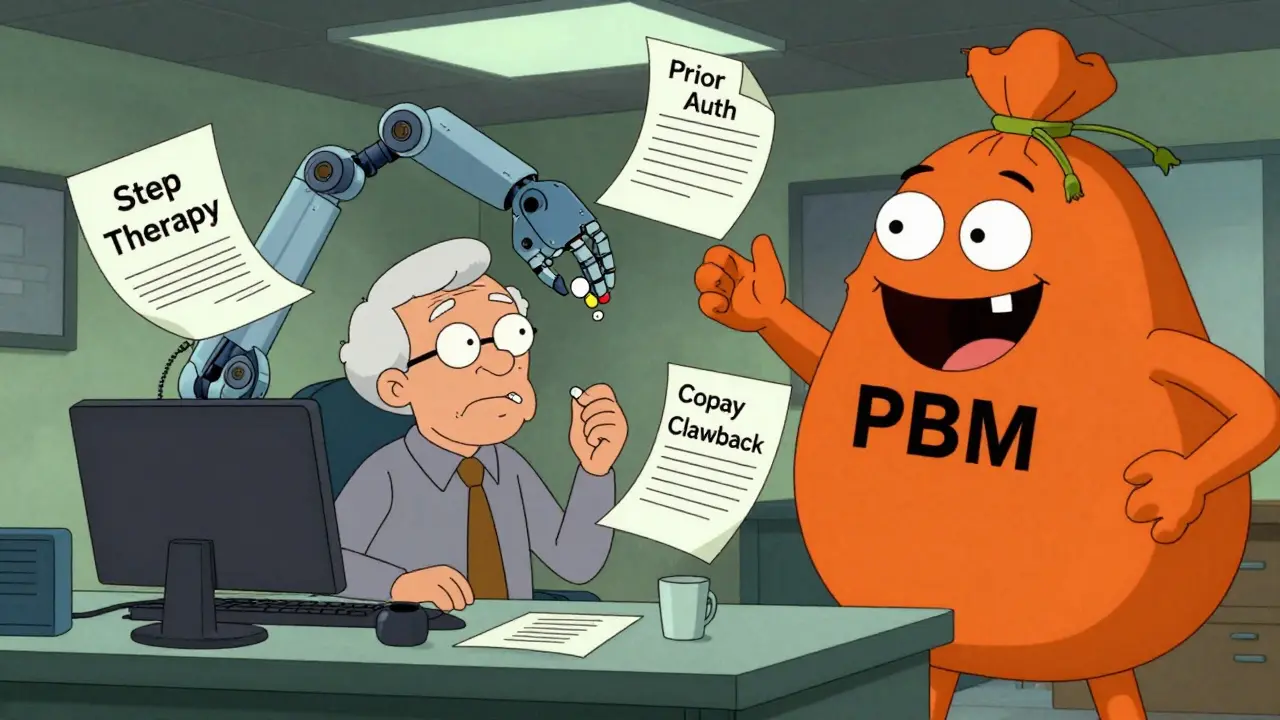
But it doesn’t stop there. Many plans use step therapy. This means you have to try the generic first. If it doesn’t work, your doctor has to prove it to the insurer-sometimes with paperwork, sometimes with appeals. In 2023, 92% of Medicare Part D plans required this. If you’re on a chronic condition like high blood pressure or diabetes, you might be switched to a generic without asking. Sometimes it works. Sometimes it doesn’t.
The Hidden Costs of Savings
Here’s the catch: you’re not always seeing the full savings. A 2022 study from the USC Schaeffer Center found that patients were often paying $10-$15 more than they should for generics. Why? Because of how pharmacy benefit managers (PBMs) set prices.
PBMs like CVS Caremark, OptumRx, and Express Scripts act as middlemen between insurers, pharmacies, and drugmakers. They negotiate discounts and rebates. But here’s the problem: they often charge you a fixed copay, then get reimbursed by the insurer for the full price of the drug. The difference? That’s called “spread pricing.” The PBM pockets it. So even if the generic costs $5, you pay $10-and the PBM keeps the $5 difference.
And then there’s “copay clawback.” Some plans set your copay higher than what the pharmacy actually paid for the drug. So if the pharmacy bought the generic for $4, but your copay is $10, you’re paying $6 more. The insurer gets the extra $6 back. You don’t. A 2024 Department of Labor report confirmed this happens in 14% of cases.
It’s not that generics aren’t cheap. They are. But the system is designed so that savings don’t always reach you. Instead, they flow to intermediaries.
How Different Plans Compare
Not all insurance handles generics the same way.
Medicare Part D plans have standardized tiers, but copays vary. In 2024, some plans charged $0 for generics. Others charged up to $15. The average was $9. But even with low copays, beneficiaries still struggle. A Kaiser survey found that 22% had trouble getting prior authorization for brand drugs when generics were required. One woman in Texas spent three months appealing before her insurer approved her original brand-after her generic caused dizziness.
Medicaid programs are even more aggressive. They cap how much they’ll pay for generics at 250% of the average manufacturer price. Some states go further with “reference pricing,” which sets a maximum reimbursement rate. In 2022, Medicaid had an 89.3% generic dispensing rate-slightly higher than commercial plans.
Commercial plans are shifting toward high-deductible health plans (HDHPs) paired with Health Savings Accounts (HSAs). These often have $0 copays for generics-even before you meet your deductible. That’s because insurers know: if you can get a drug for $5, why make you pay $200? In 2023, 31% of employer plans used this model. And for self-insured employers, the savings are real. A Johns Hopkins study found two large companies saved 9-15% on drug costs just by switching to generics, with zero drop in health outcomes.
What Patients Actually Experience
Reddit threads and patient forums tell the real story. One user wrote: “My generic copay went from $5 to $0 last month. I didn’t even know my plan changed.” That was 87% of responses in a May 2024 thread. But another user said: “I got switched to a generic and started having muscle cramps. My doctor had to fight for three weeks just to get me back on my old drug.”
Therapeutic substitution isn’t always safe. A June 2023 Medscape poll found 31% of doctors had patients who had adverse reactions after being forced to switch. Not because generics are unsafe-but because some drugs have narrow therapeutic windows. A small difference in absorption can matter for epilepsy, thyroid meds, or blood thinners.
And then there’s confusion. A Commonwealth Fund study found only 38% of Medicare beneficiaries understood how their plan’s generic coverage worked. They didn’t know about prior auth, copay clawbacks, or how PBMs set prices. They just thought, “I’m paying less-so it’s good.”
What’s Changing in 2025 and Beyond
The game is shifting. In January 2025, the Medicare Part D out-of-pocket cap kicked in: $2,000 per year. That means seniors won’t pay more than that, no matter how many drugs they take. Suddenly, the incentive to push generics for cost savings isn’t as strong-for seniors, at least. But insurers are adapting. They’re doubling down on formulary restrictions and step therapy to keep costs down elsewhere.
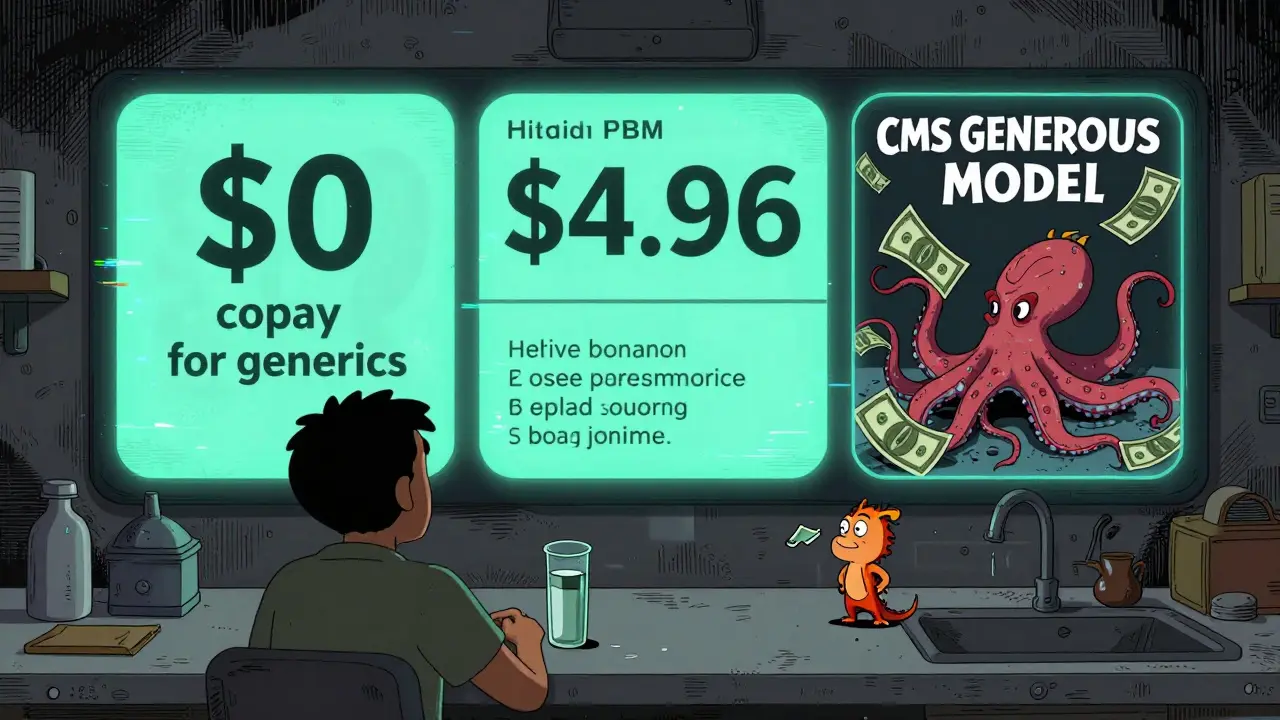
Also in 2026, the CMS GENEROUS Model launches. It’s a pilot program to let Medicaid negotiate generic drug prices directly with manufacturers. If it works, it could cut Medicaid spending by $40 billion over ten years. Meanwhile, companies like the Mark Cuban Cost Plus Drug Company are offering transparent pricing: you pay the cost of the drug plus a flat $5 fee. No spreads. No clawbacks. Just the price. In 2023, patients saved $4.96 per generic prescription on average using this model.
And starting January 1, 2025, insurers must show you exactly how much each drug costs on your Explanation of Benefits (EOB). No more hiding the PBM markup. You’ll see what the pharmacy paid, what you paid, and what the insurer paid. It’s a small change. But it could be the first step toward real transparency.
Is This System Working?
Generics have saved the U.S. healthcare system $3.7 trillion since 2013. That’s undeniable. But the system isn’t just about savings-it’s about who gets them. Right now, insurers and PBMs benefit the most. Patients get lower copays, sure. But they’re also stuck in a maze of rules, appeals, and hidden fees.
The real question isn’t whether generics work. They do. The question is: why are patients still overpaying for them? And why does the system feel designed to protect intermediaries more than the people who need the drugs?
Until the pricing structure changes-until the savings actually flow to the patient-the system will keep working… for someone. Just not always for you.
Elaine Parra
March 25, 2026 AT 10:25Generics are a scam disguised as savings. I’ve been switched to a generic blood thinner and nearly ended up in the ER because the bioequivalence was off. The PBM made $12 off my $15 copay while I was vomiting blood. This isn’t healthcare-it’s predatory accounting. They don’t care if you die, as long as their spreads stay healthy.
Natasha Rodríguez Lara
March 26, 2026 AT 03:18I appreciate the depth of this breakdown. What struck me most is how little patients are told about the mechanics behind their copays. I had no idea PBMs were pocketing the difference until I read this. It’s frustrating but also eye-opening-like realizing your grocery store’s ‘sale’ price is just a trick to make you think you’re saving. Maybe transparency is the first real step toward fixing this.
Caroline Bonner
March 26, 2026 AT 13:28It’s absolutely staggering, isn’t it? The fact that 91.5% of prescriptions are generics, yet they account for only 22% of total spending, shows how powerful this system is-on paper. But then you dig into the details, and it becomes clear that the savings aren’t trickling down; they’re being siphoned off by layers of corporate middlemen-PBMs, insurers, pharmacy networks-all of whom are incentivized to keep the patient in the dark. And then we wonder why people don’t trust the system? It’s not conspiracy theory-it’s capitalism with no moral compass. I’ve seen friends lose jobs because they couldn’t afford to appeal a drug switch. This isn’t just about money-it’s about dignity.
Linda Foster
March 27, 2026 AT 17:44While the structural analysis presented is thorough and factually accurate, I must emphasize the importance of regulatory oversight in ensuring equitable access. The current model, despite its economic efficiencies, fails to adequately prioritize patient autonomy and clinical safety. A systemic recalibration toward patient-centered outcomes, rather than cost containment alone, is not merely advisable-it is ethically imperative.
Rama Rish
March 29, 2026 AT 01:01generic save money but why u pay more? pBM is the real villain. no one talks about them. they r the middleman who rips u off. simple.
Jefferson Moratin
March 30, 2026 AT 23:26The real philosophical tension here lies not in the efficacy of generics, but in the ontological shift of care from patient to balance sheet. When health outcomes are subordinated to financial metrics, we are no longer treating illness-we are optimizing cost structures. The Hatch-Waxman Act was a pragmatic innovation, but its legacy has been corrupted by a system that conflates affordability with accessibility. The question is not whether generics work, but whether a society that allows its most vulnerable to be manipulated by opaque pricing algorithms can still claim to value human life.
Raphael Schwartz
March 31, 2026 AT 21:17all this overcomplicated bs. generics are cheaper. pBms are crooks. ins co are greedy. just fix it. stop the scams. i dont care about your spreads and clawbacks. just give me my damn pills for what they cost. america is broken.
winnipeg whitegloves
April 1, 2026 AT 03:06Man, I love how this whole thing reads like a heist movie where the vault is your medicine cabinet and the thieves are wearing lab coats and corporate ties. PBMs are like the guy who swaps the Monopoly money for real cash while you’re distracted by the rules. And we’re all just sitting there going, ‘Wait, I thought I was getting a discount?’ Meanwhile, some guy in Winnipeg is paying $4.96 for his blood pressure meds because he used Mark Cuban’s site and now he’s out here doing yoga on a beach in Tofino while the rest of us are arguing about tiered formularies like it’s a damn board game. The system’s rigged, but at least now we know the cheat codes.